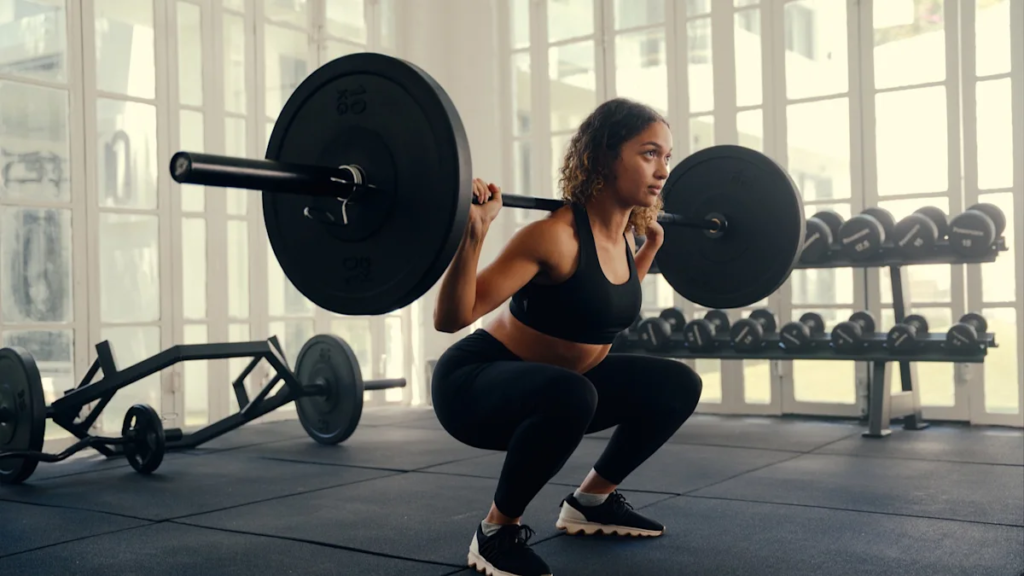


Once reserved for “gym bros” looking to gain muscle, weightlifting has become a staple part of many Americans’ exercise routines. According to a report by the New York Times, 1 in 3 Americans says they regularly strength-train, up from 1 in 5 in the early 2000s. This isn’t particularly surprising. Go to TikTok, and you’ll find millions of fitness videos, including plenty of influencers touting the best weightlifting shoes. And while actual training and diet regimens take up a decent amount of the content, what to wear has also become more popular than ever — and I’m not just talking about designer shorts and headphones. The athletic footwear market is projected to reach $205.8 billion by 2030, up from $153.9 billion in 2024. And weightlifting shoes are among the specific types seeing increased consumer demand.
Quick Overview
Reebok Nano X5
R.A.D One V2
Nobull Outwork Shoe
Lululemon Chargefeel 3
TYR L-2 Lifter
But what might not be clear from watching influencers online is if and when true weightlifting shoes are actually necessary and beneficial. To find out, I consulted with two experts in the field: Rena Eleazar, a New York state-licensed physical therapist, certified strength and conditioning specialist and USA Weightlifting Level 2 coach, and Dr. Amanda Westfall McCarty, a podiatrist with a focus on sports and regenerative medicine at Northwest Footcare and a powerlifter herself.
Here’s what they had to say about the best shoes for lifting.
Weightlifting shoes vs. cross-trainers: what’s the difference?
Weightlifting shoes are shoes designed specifically for the sport of weightlifting, often referred to as Olympic weightlifting, says Eleazar. She explains, “These shoes have a very hard, rigid sole made of wood or plastic and an elevated heel. They differ from most running or cross-training shoes because there is no cushion at all.”
Advertisement
Advertisement
Just as running shoes are carefully designed to help with shock absorption and propel the runner forward, weightlifting shoes are intentionally designed to support the moves performed in Olympic weightlifting.
“Weightlifting shoes provide a very stable base to support the receiving positions of the weightlifting movements, which are the snatch and the clean and jerk. The rigid shoe allows a lifter to produce maximal force in a vertical direction when lifting the bar, whereas if the shoe is cushioned, that force may be dissipated or dampened by the cushioning,” explains Eleazar.
An elevated heel is another hallmark of a good shoe for lifting, though Eleazar notes that while it may help achieve a deeper squat, it shouldn’t be an excuse not to work on improving ankle mobility.
Cross-training shoes, on the other hand, have a firmer sole than traditional running shoes but still offer enough flexibility for short runs or plyometric movements common in CrossFit, Hyrox and HIIT workouts.
Most gym-goers don’t need a dedicated weightlifting shoe
“In general, most people do not need true weightlifting shoes,” says Eleazar, though she cautions this doesn’t mean you should start doing deadlifts or squats in your running shoes. “Many people go to the gym in very cushioned shoes, such as running shoes, and those may not be the best for lifting,” she says. “In running shoes, the cushioning may cause someone to shift their weight too far forward or backward, which can affect how well they perform the lift.” Instead, both Eleazar and McCarty recommend a cross-training shoe as a well-rounded pick.
Advertisement
Advertisement
“I talk daily to patients who weight-lift. I recommend a flatter, sturdy cross-training shoe for people who are lifting in the gym a few times a week,” says McCarty. She also recommends a cross-trainer or running shoe if you primarily do HIIT or boot camp-style workouts.
One of the benefits of a true lifting shoe is that it can help someone with limited ankle mobility maintain better form during squats. However, Eleazar says you can get the same effect by simply placing small weight plates under your heels.
Best cross-training shoes for lifting
Amazon
Sizes: Women’s 5-15; men’s 4.5-14 | Width: Medium | Category: Cross-training/HIIT | Drop: 8 mm | Weight: 12 oz.
The Reebok Nano line is the one cross-training shoe named by both Eleazar and McCarty, with McCarty specifically calling out the X4 and X5. The line is well-loved in the CrossFit community thanks to its moderate drop and firm, stable base.
Compared to other Nano shoes, the X5 is designed to provide just the right balance of stability, responsiveness and shock absorption for moving between lifting and high-intensity exercises. It even works for short runs. That said, if strength training is a larger part of your routine than HIIT or CrossFit, the Nano X5 Edge may be the better pick.
- True cross-training option
- Can be worn for short runs
- No wide sizes
- Relatively heavy
- Mixed reviews on toe box room
- Some reviewers say they run small
R.A.D
Sizes: Women’s 5.5-15.5; men’s 4-14 | Width: Medium | Category: Cross-training/HIIT | Drop: 6 mm | Weight: 13.7 oz.
R.A.D is a performance footwear brand launched in 2022 to make cross-training shoes. It was founded by Ben Massey, a former CrossFit Games athlete. While the brand has expanded its line, the One V2 is the latest iteration of the original shoe and one of Eleazar’s personal favorites. Its moderate 6 mm drop works well for strength training and intervals, and it has a reinforced toe bumper and springy Swellfoam midsole to keep your feet protected and comfortable as you move.
The latest model is designed to offer an even better balance between a stable TPU heel clip for lifting and flex in the forefoot for dynamic movements.
- Designed specifically for strength training and dynamic movements
- Wide range of men’s and women’s sizes, as well as colorways
- Hard to find outside the company’s website
- Reviewers say it fits a tad tight and isn’t ideal for truly wide feet
Amazon
Sizes: Women’s 5–11; men’s 7-16 | Width: Medium | Category: Cross-training/strength training | Drop: 4 mm | Weight: 9.7 oz.
The Nobull Outwork is one of McCarty’s picks and has a loyal following among gym-goers, as well as those who are on their feet most of the day, like nurses. Out of the cross-training shoes our experts listed, this one has the lowest drop, giving you a more grounded feel for lifting.
It features high traction, max stability and medium shock absorption for a true full-gym shoe. It also has a solid reputation for durability.
- Low, firm platform that’s good for lifting
- Good grip
- Easy to clean with multiple colorways
- Minimal shock absorption, so may not be as good for HIIT
- Reviewers say it runs small, especially in the toe box
Lululemon
Sizes: Women’s 5–12; men’s 7-14 | Width: Medium | Category: Cross-training/running | Drop: 6 mm | Weight: 8 oz.
Another one of Eleazar’s personal favorites, the Lululemon Chargefeel 3 is a lightweight hybrid running and training shoe that’s particularly well-suited for HIIT or boot camp-style workouts rather than heavy barbell work. The ShiftFoam midsole features plenty of spring and energy return, ideal if you’ll be doing a lot of jumping, while the breathable upper helps keep your foot from getting overly sweaty.
- Good for HIIT, bootcamp and light running
- Bouncy, springy midsole
- Good arch support
- Not as stable as some other cross-trainers for heavy lifting
- Can be hard to find outside of Lululemon’s website
- Those with wide feet may want to go up a half size
True lifting shoes can still be helpful for serious lifters
Even though cross-training shoes tend to be a better choice for most people, that doesn’t mean weightlifting shoes have zero utility. “For someone who is more dedicated to weightlifting, a lifting shoe is beneficial,” says McCarty, specifically calling out people who are training for weightlifting competitions. “The platform and elevated heel help to assist in the barbell squat, power cleans, front squats and bench press,” she adds. Eleazar agrees, noting that these shoes are primarily beneficial for someone focusing on squats.
What surprised me, though, is that not all lifts benefit from the rigid sole and lifted heel. “For a deadlift, a flatter shoe is more beneficial,” says McCarty. Eleazar agrees, adding, “Sometimes, such as when performing deadlifts, people prefer to lift in socks so that they can feel the ground well and keep their balance.” If you want a shoe for deadlifts, McCarty recommends the classic Converse Chuck Taylors, noting they’re “flat and flexible,” or a zero-drop shoe like the Inov-8 Bare-XF V2 or Reebok Nano Zero.
Advertisement
Advertisement
Other exercises where Eleazar doesn’t recommend lifting shoes include:
Hinging movements, like deadlifts
Lateral movements, like side lunges
Jumping and other high-volume plyometrics
Note for competitive lifters: The International Weightlifting Federation notes that weightlifting shoes are designed to help lifters achieve a deeper squat. If you plan to compete in lifting, always check with the governing body, as most competitions have strict rules on footwear.
Best dedicated weightlifting shoes
TYR
Sizes: Women’s 6-15.5; men’s 4.5-14 | Width: Medium (wide toe box) | Category: Olympic lifting/squats | Effective heel height: 21 mm | Closure: Laces + 2 straps
The TYR L-2 Lifter is a premium weightlifting shoe, which is reflected in its high price. That said, it was recommended by both McCarty and Eleazar, with McCarty recommending it for anyone training for competition. The shoe features a 21 mm effective heel height to promote optimal posture and squat depth. The TPU midsole is rigid with two straps for a truly secure fit, while the rubber grip keeps your feet securely in place.
While the toe box is intended to be roomy, allowing for natural toe splay, TYR and many reviewers note that the shoe runs small and recommend sizing up by a half size, especially if you have wide feet.
- Tall heel for deep squats
- Very secure fit
- Wide toe box for a lifting shoe
- Expensive
- Runs small, consider going up a half size
- May be too much heel for some lifters
Amazon
Sizes: Women’s 5-19.5; men’s 3.5-18 | Width: Medium | Category: Olympic lifting/squats | Effective heel height: 20 mm | Closure: Laces + 2 straps
The Nike Romaleos 4 is one of the most popular weightlifting shoes and was recommended by both McCarty and Eleazar. The latest edition features two midfoot hook-and-loop straps over the laces and a wide, flat base to keep your feet secure for heavy lifts. The heel lift is just slightly lower than the TYR L-2 Lifter’s (20 mm versus 21 mm), which some lifters may prefer. Just keep in mind that it runs small, so consider going up a half size.
- Trusted, proven lifter
- Rigid TPU heel and winged outsole help keep you steady side to side when you catch a heavy lift
- Secure fit
- Runs small and narrow
- Some reviewers say the grip could be better
Luxiaojun
Sizes: Women’s4.5-15; men’s 3-13.5 | Width: Medium | Category: Olympic lifting/squats | Effective heel height: 24.5-27 mm | Closure: Laces +2 straps
Backed by Chinese Olympic weightlifting champion Lu Xiaojun, Luxiaojun weightlifting shoes are designed for Olympic weightlifting and heavy squats. The PowerPro is one of Eleazar’s recommendations. It’s considered a professional-grade lifting shoe with a rigid TPU heel and S-shaped sole to help keep you stable and minimize rotational foot movement.
The shoe also comes with thinner interchangeable insoles to dial in the fit. Where it stands out most is the heel height (Luxiaojun lists 24.5 to 27 mm), making it potentially easier to squat deeper while keeping your torso upright. However, the height isn’t for everyone.
- Excellent stability
- Adjustable fit, including two straps and interchangeable insoles
- Roomy toe box
- Can be hard to find
- Exact heel height isn’t listed online
- Heel may be too high for some
Meet our experts
Rena Eleazar, PT, DPT, a New York state-licensed physical therapist, certified strength and conditioning specialist and USA Weightlifting Level 2 coach
Amanda Westfall McCarty, DPM, a podiatrist with a focus on sports and regenerative medicine at Northwest Footcare and a powerlifter herself
Advertisement
Advertisement
Our health content is for informational purposes only and is not intended as professional medical advice. Consult a medical professional on questions about your health.
Source link