Single-leg stability is one of the most important fitness skills to maintain with age, playing a role in fall prevention and long-term independence. Balancing on one leg always sounds simple, but if you notice yourself wobbling during exercises like reverse lunges or single-leg deadlifts, it’s probably a good indication that your single-leg stability could use a tune-up. In fact, one study found that older adults who failed to balance on one leg for 10 seconds had an 84 percent higher risk of all-cause mortality than those who could balance.
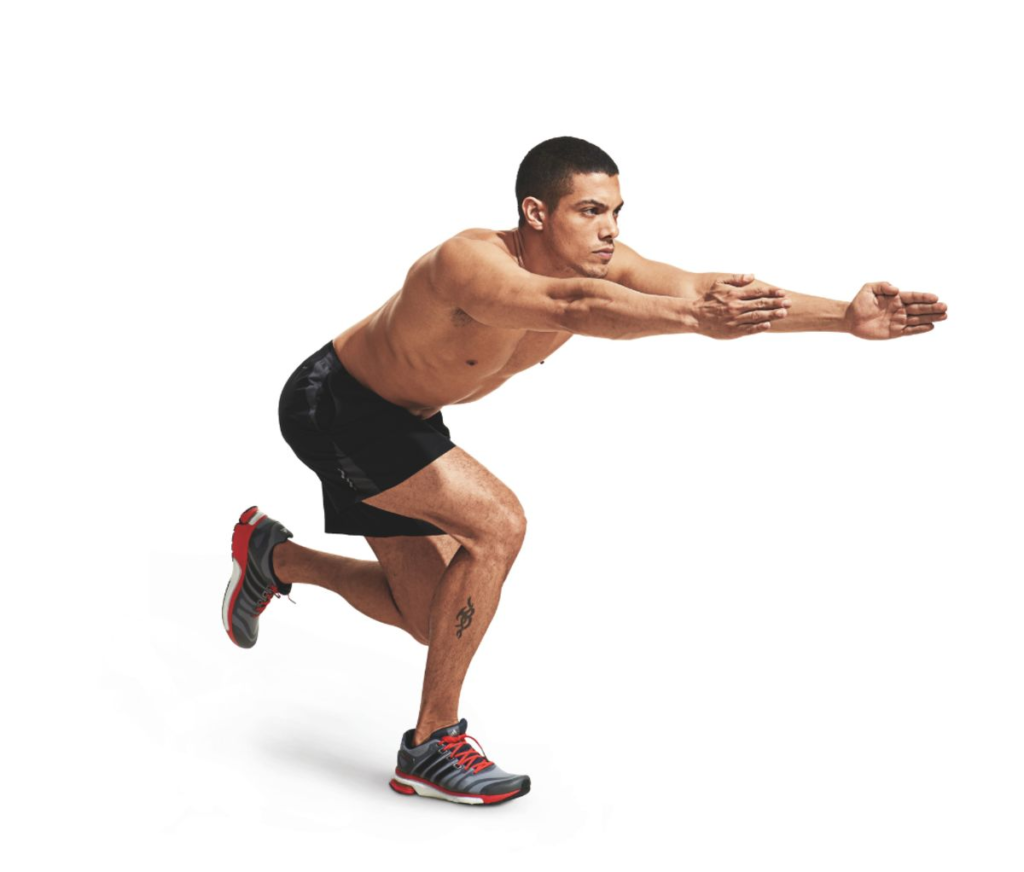
Exercises like skater squats are a great way to develop that very skill. Since your back leg stays lifted throughout the movement, your front leg has to handle the job of lowering and raising your body while keeping your knee, hip, and ankle stable. With consistent reps, skater squats help develop the single-leg strength and stability that carry over to daily activities like climbing stairs, stepping off a curb, and reacting to a stumble. Even better, they require no equipment, making it an easy exercise to perform just about anywhere.
Related: Need More Explosive Power? This Single-Arm Overhead Floor Jump Hits Your Entire Posterior Chain
How to Do Skater Squats

-
Stand upright with your feet hip-width apart and arms extended in front of you for balance.
-
Shift your weight onto one foot and lift the opposite foot slightly off the floor behind you.
-
Bend your standing knee and push your hips back as you lower into a single-leg squat, reaching your lifted leg behind you toward the floor.
-
Continue lowering until you’ve reached your desired range of motion, keeping your chest lifted and standing knee aligned with your toes.
-
Drive through your standing foot to extend your knee and hips, returning to the starting position.
-
Complete your reps on one leg before switching sides.
Related: The Plyometric Calf Move Runners Use to Build Springy, Fast-Absorbing Ankle Power
Why You Should Trust Me
I’m a health and fitness writer for Men’s Journal and an ACE-certified personal trainer with more than five years of experience training clients and coaching various group fitness modalities, from HIIT to indoor cycling.
Sources

This story was originally published by Men’s Journal on Nov 10, 2026, where it first appeared in the Fitness section. Add Men’s Journal as a Preferred Source by clicking here.