As part of the Future of Beauty Awards, the ELLE beauty team looked ahead at what will be next in beauty and wellness.
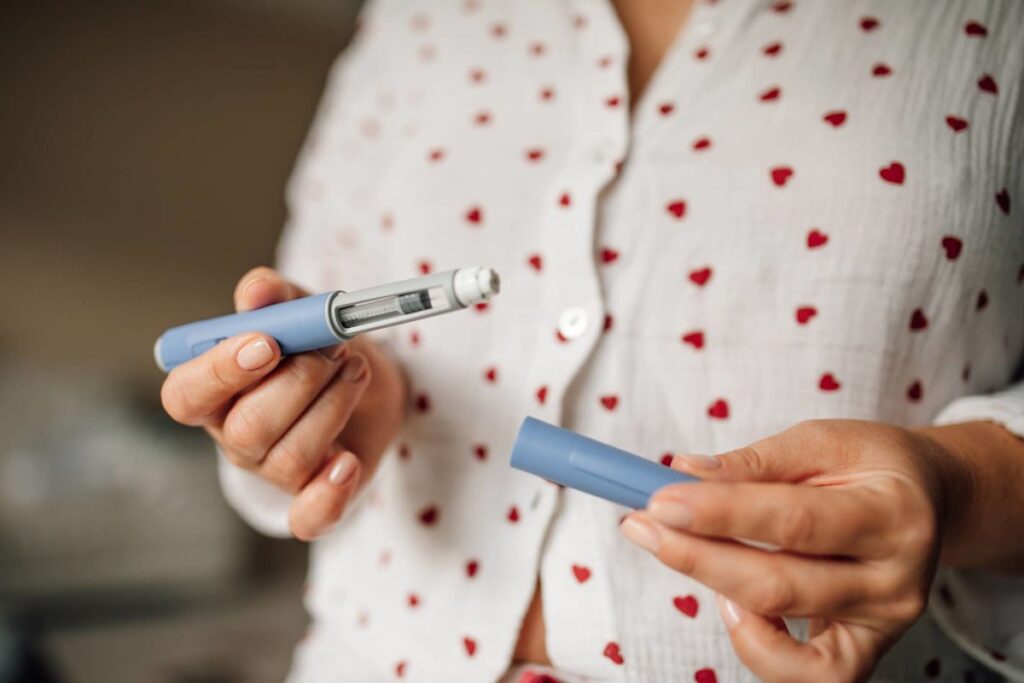
It’s been a trying decade: A pandemic, political turmoil, and everyday stressors are enough to make anyone’s hair fall out, and it has. Nearly 30 million women in the United States experience pattern hair loss, according to the Cleveland Clinic. Add on the potential of GLP-1-related hair loss, and we seem to be in an endless cycle of shedding. But could we finally be approaching a way to cure it? New in-office injectables and prescription drugs are poised to change the game for good.
The scalp injection
Newly available at dermatologists’ offices, Xvie is a multi-signal, exosome-rich concentrate made from amniotic fluid. Exosomes are tiny vesicles released by cells; they contain proteins, lipids, and nucleic acids. “Xvie takes a multi-signal approach to hair thinning by supporting cellular communication,” says Trillitye Paullin, PhD, a founding member and chief scientific officer of Xvie. Amy B. Lewis, MD, a dermatologist in New York who uses Xvie clinically, says she has seen it work its magic in real time and uses a magnifying camera to show patients where it has helped encourage new growth—which she calls a “quantitative result,” since they’re able to count new follicle growth. Xvie is currently in trials as an injectable, but right now, doctors can apply it topically on the scalp after microneedling to bolster hair growth.
The new topical
One topical drug, PP405, currently in clinical trials has doctors excited for its ability to wake up dormant stem cells in hair follicles. A Phase 2 trial done with UCLA found that patients who applied the molecule to their scalps for four weeks didn’t just get peach fuzz—they experienced “terminal hair” growth, meaning full shafts that have the potential to be long and thick. “Importantly, it regrew hair even on bald scalps,” says Marc R. Avram, MD, a clinical professor of dermatology at Weill Cornell Medical College specializing in hair loss. “That’s against dogma.” While the molecule still needs to go through Phase 3 trials, Avram is hopeful that it could be available for patients within two years. Once it’s approved, it will likely be a great option for reversing female- or male-pattern baldness (otherwise known as androgenetic alopecia).

Matteo Valle – LAUNCHMETRICS SPOTLIGHT
The experimental molecule
PP405 isn’t the only molecule with potential. Flourish Biologics is developing a patented technology based on the discovery that the parathyroid hormone—which binds to receptors in the body to control calcium levels in the blood—also contributes to hair growth. Its injectable targets androgenetic alopecia. Right now, it’s only being tested on animals, but David Leffell, MD, an emeritus dermatological surgeon at Yale and the chief executive officer of Flourish Biologics, thinks that a shot for humans is on the horizon. “While early animal tests have been strong, there are a number of steps before the human trials, which will probably occur in 12 to 18 months,” he says.
The next-gen pill
Doctors are also excited by a new form of minoxidil. “It works even better,” confirms Avram, based on data from ongoing clinical trials, though he notes that peer review and approval are still pending. Everyone has heard of Rogaine, a topical form of the drug. (Cue Aidan snatching his from Carrie’s hands in Sex and the City and snarling, “It’s preventative!”) The current version of oral minoxidil spikes quickly in the bloodstream, which may cause dizziness and heart palpitations—and while it does work, it isn’t the ideal concentration for sustained hair growth, according to a paper published in Dermatology Times. The new extended-release form has been shown to stay at the ideal dosage for hair growth over the course of 12 hours, with less risk of cardiac side effects. Biopharmaceutical company Veradermics finished a Phase 2 trial with encouraging results, and a long-acting oral minoxidil pill might be available as early as 2027. But for anyone worried about hair loss, it’s worth talking to a doctor now. “We’re in an era where if you seek treatment early, you can keep a good head of hair on your head,” Avram says.
A version of this story appears in the November 2026 issue of ELLE.
GET THE LATEST ISSUE OF ELLE
You Might Also Like