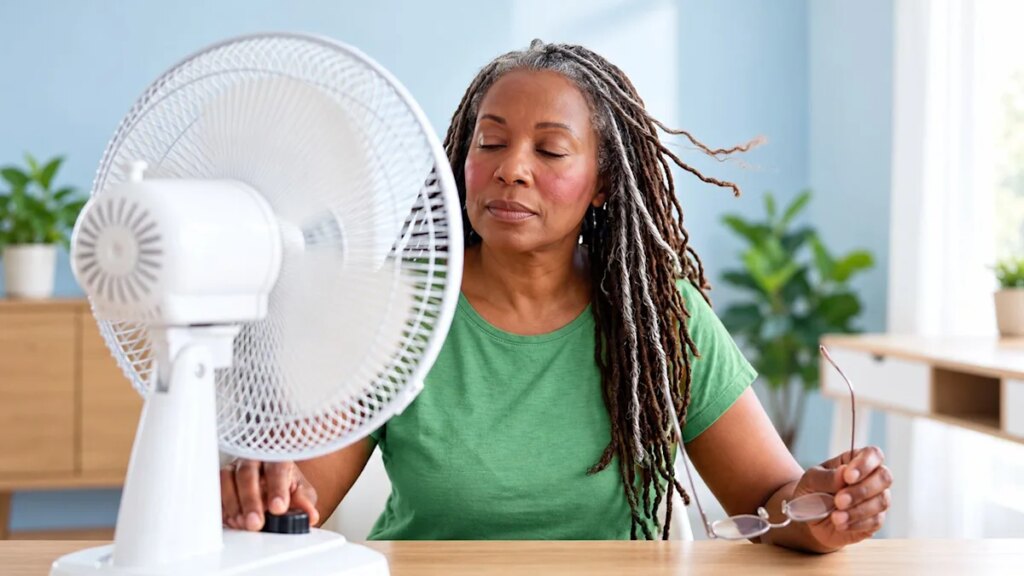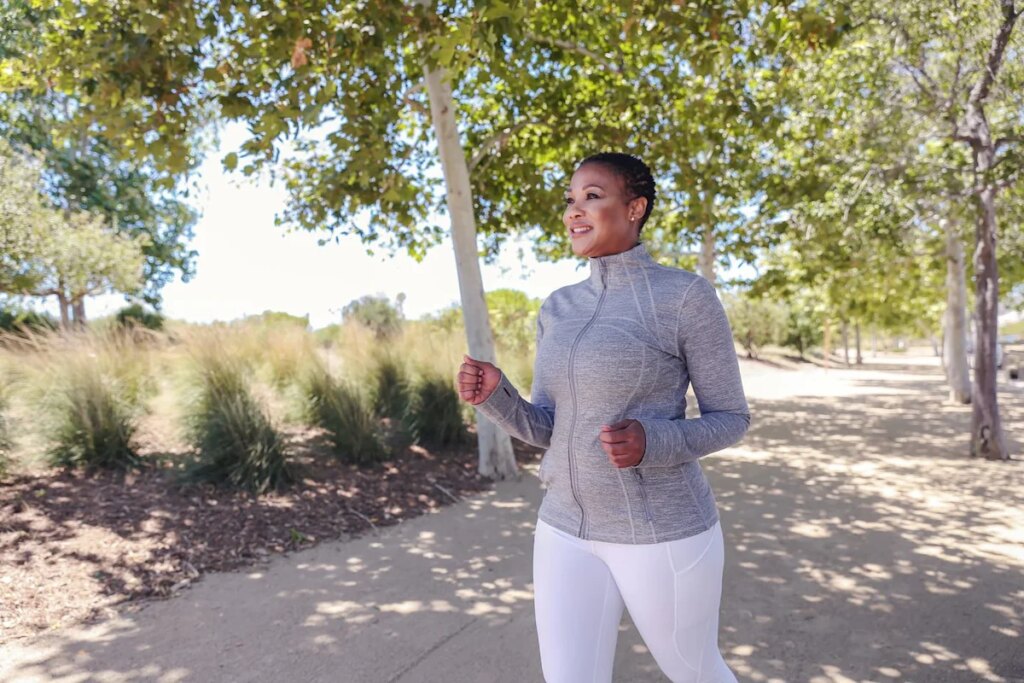
When you’re in the throes of perimenopause, being told to “exercise more” can feel dismissive. Sometimes just getting through the day is an enormous ask, especially if your sleep is off, you’re fighting hot flashes, and little things are getting on your nerves more than usual.
But new research published in the journal Menopause suggests there’s a real reason to consider exercise: Physical activity may help ease the low moods and depressive symptoms some women experience during this transition.
This is huge, seeing as approximately three-quarters of menopausal women experience mood fluctuations, irritability, or anxiety during perimenopause, per the American College of Obstetricians and Gynecologists (ACOG).
Advertisement
Advertisement
The new findings don’t mean exercise can fix everything—or that you should push harder if you’re still struggling. “It’s important that women don’t feel they simply need to exercise more if they’re still struggling,” says Simone Saidel, DClinPsy, a clinical psychologist and lead author of the review, which she conducted while a researcher at University College London.
However, working out could be a useful tool for many women. Here’s what Saidel’s team found, why movement might help, and how to put the findings to use.
What the researchers did
The researchers set out to answer a practical question: Can physical activity help with some of the psychological difficulties women experience during menopause? To do this, Saidel and her colleagues pulled together 12 studies involving 1,003 women ages 40 to 65 across seven countries, all of whom were either going through perimenopause or within the first five years of menopause.
In each study, women were randomly assigned to different groups. Usually, one group started an exercise program while the other continued with their usual care; some studies compared different activities. The team searched for research published through April 2025, then combined results where possible to get a clearer picture of what helped.
What the study found
Overall, exercise helped women feel better and led to improvements in depressive symptoms, mood, and quality of life—both during perimenopause and in the first few years after menopause.
Advertisement
Advertisement
“We couldn’t establish that one type of exercise was definitively better than another as there were relatively few trials examining each individual exercise, so we grouped interventions into two broader categories: aerobic-based exercises, such as walking, Zumba, and dancing, and mind-body activities, such as yoga, Pilates, and tai chi,” Saidel explains.
When the researchers looked more closely at the activities, they found that the aerobic activities (walking, dancing, Zumba) helped more with depressive symptoms and overall quality of life while the mind-body activities (yoga, Pilates, tai chi) helped more with emotional well-being and ability to cope.
However, it’s worth noting that the findings come with a few caveats: Ten of the 12 studies were rated as having a high risk of bias. The participants knew whether they were exercising, often reported their own symptoms, and some studies had missing data—all things that can affect the results. The workouts and the women taking part also differed quite a bit from study to study.
Why exercise might help
During perimenopause, changing hormone levels play a direct role in what’s happening in your brain. For instance, estrogen interacts with serotonin and dopamine (both of which help regulate mood), while progesterone affects brain signaling.
Advertisement
Advertisement
As hormones fluctuate, some women are more sensitive to those shifts than others, explains Katya Rubinow, M.D., a board-certified endocrinologist at UW Medicine in Seattle. However, exercise may help in a few ways. “Certain activities prompt your brain to release chemicals involved in mood and reward, including endorphins and dopamine,” says Dr. Rubinow.
With activities like yoga and tai chi, breathing and paying attention to how your body feels may help you manage your emotions, Saidel adds. And if you’re taking a group fitness class, spending time with other people could be part of what makes you feel better, too. This research study couldn’t pinpoint how much each of these factors contributed.
“Over time, regular exercise can also make your body less reactive to stress and help you sleep better, which can make a difference in how you feel during the day, whether you’re going through menopause or not,” Dr. Rubinow points out.
It’s also worth noting that you can exercise regularly and still experience menopause symptoms that need treatment. “Exercise does not impact the underlying changes in ovarian hormones that occur during the menopause transition,” Dr. Rubinow says. “As a result, exercise alone will not be sufficient for symptom management for many women, particularly those with moderate to severe symptoms.”
What type of exercise works the best?
Before you sign up for a new workout class, know that the researchers couldn’t say which routine would help most—or how quickly you might feel a difference. The programs they looked at ranged from six weeks to six months, with anywhere from two to seven sessions a week. For now, their advice is to find something you really enjoy and can realistically keep doing.
Advertisement
Advertisement
Check in with yourself after every workout. Do you feel better, or are you wiped out? How do you feel the next day? Dr. Rubinow recommends using the answers to those questions to help figure out what works for you, especially as your symptoms change. “I doubt we will ever find a single exercise regimen that is best for everyone,” she adds.
For overall health, the Centers for Disease Control and Prevention (CDC) recommends at least 150 minutes of moderate-intensity activity (like brisk walking) or 75 minutes of vigorous activity (like HIIT workouts) each week, plus strength training at least twice a week.
The bottom line
This new research shows that exercise can make the emotional challenges of the menopause transition a little easier. It may help lift your mood, improve your sleep, and make it easier to handle stress.
However, if you’re already exercising regularly and still feel low, bring it up with your health care provider, especially if symptoms are affecting your work or relationships. Depending on what’s going on, therapy, hormone therapy, or a nonhormonal treatment may help.
Advertisement
Advertisement
“Psychological symptoms during menopause can have many contributing factors, including hormonal changes, disrupted sleep, physical symptoms, and wider life stresses,” says Saidel. “Exercise alone won’t necessarily address all of these, so it’s important that women don’t feel they simply need to exercise more if they’re still struggling.”
You Might Also Like