

At LAIKA, the Oregon-based stop motion animation studio behind films like Coraline and Missing Link, no detail is small enough to overlook. The characters may be 10-inch-tall puppets, but the costume department dresses them with as much care and consideration as if they were a group of A-list actors. Every button and baby shoe is made in house; each tattoo is hand painted. All of the pompoms and zipper pulls are carefully animated to move in time with their owners.
The looks featured in the studio’s latest film, Wildwood, are no exception. Out on October 23, the movie features 200-plus costumes, all made from custom fabric produced in house (save for a single pair of socks made with store-bought textile). Based on a beloved children’s book of the same name, Wildwood follows 13-year-old Prue after her baby brother Mac is abducted by a group of crows. Prue and her classmate Curtis venture into a magical forest in search of her brother, and encounter a world of talking animals along the way.
“For us to be able to make Wildwood right now, we needed the knowledge from our previous movies to be able to do justice to this story,” says Deborah Cook, the head costume designer at LAIKA, in InStyle’s Behind the Seams video series. The studio acquired the rights to Wildwood in 2011, two years after its critically acclaimed debut film Coraline came out. But it took nearly two decades of learnings for the team to feel ready to bring the fantastical world of Wildwood to life. “Everything we’ve learned over all of our movies, everyone that worked on them, everyone that brought every ounce of creativity and skill to those movies has played a part in this movie,” Cook says.
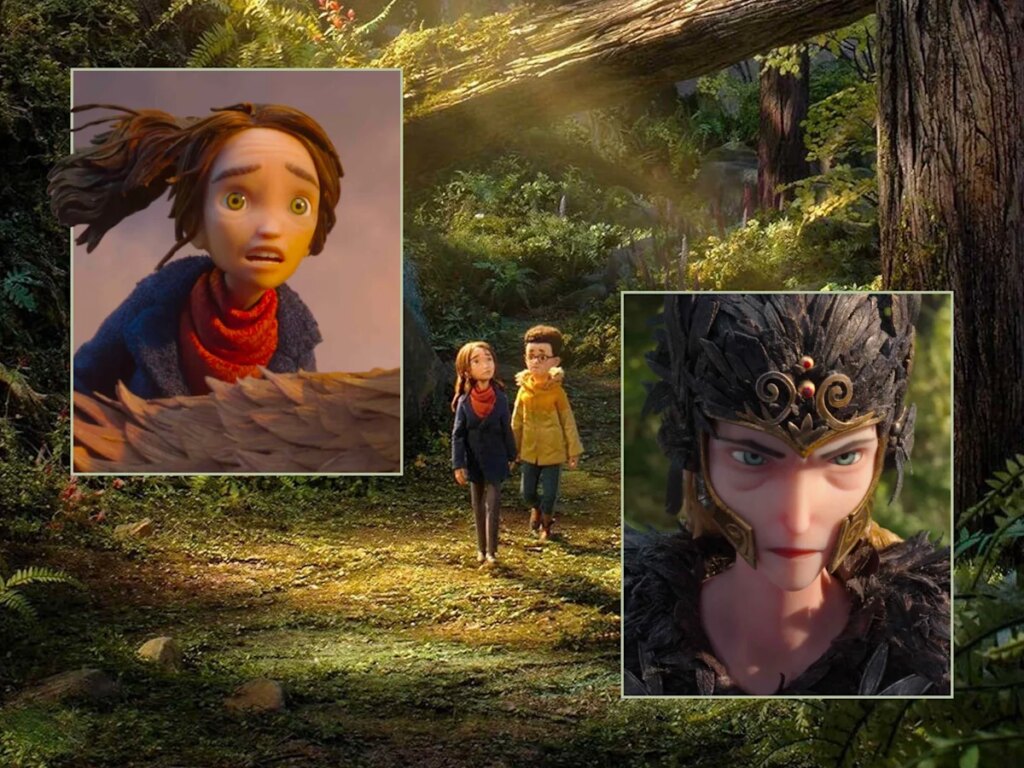
The (tiny) clothes offer insights into each character’s personality. The McKeel family, who reside in Portland, Oregon, includes Prue’s dad, a crafty homebody who’s dressed in soft knit joggers, a hoodie and a beanie. Prue’s mom, on the other hand, wears cat eye glasses, three necklaces, and a multi-pattern housecoat. “It’s a patchwork from some old quilting that she maybe made herself, or maybe it came from a vintage store in Portland,” Cook says.
As the story progresses, the costumes evolve to match each character’s emotional world. Early on, Prue is seen in a fitted peacoat and neatly coiled scarf. “At this point in the story it’s very indicative that she thinks she knows everything,” Cook says. Later, she’s seen dressed for battle: hair up, athletic jacket zipped, boots laced.
For other characters, the changes are more subtle. Take Alexandra, a former royal on a revenge mission. She’s first seen in a deep red dress, but her clothes darken as the movie progresses. “She’s at a point where she’s so grief-stricken and deconstructed and broken down emotionally, and the dress reflects that,” Cook says.
The character Prue McKeel in the stop motion animated film ‘Wildwood,’ out October 23.
Credit: Laika
One of the biggest challenges of creating costumes for a stop motion project is working on such a small scale. The shoes that appear in Wildwood are so teensy that the shoelaces are made from thread. Attaching the buttons required extra thin needles, and mini irons were used to fuse shoe parts together. Even creating familiar fabrics and finishes for pieces this size requires some extra creativity. “We’re not going to use knitting in this scale because one item might end up bigger than the other,” Cook says, pointing to a pair of cable knit pants made from embroidered fabric.
The LAIKA team’s attention to detail is so exacting that they often use magnifying glasses to see their work—which means there’s plenty of minutiae work a closer look. Take Alexandra’s dresses, which are dabbed with moss around the hem to signify that she comes from the forest. Or the fleur-de-lis motif, found on a medallion on one character’s armor, which is mirrored in the buttons of another character’s coat. (Both are so mini that they must be handled with tweezers.) And because every element of a character’s outfit needs to move with them, each costume is lined with tiny paper wires that help animators manipulate them. Even the pompom atop baby Mac’s hat and the tongue inside a pair of Converse sneakers are rigged up. Needless to say, most shoes take two weeks to make.
Curtis Mehlberg and Alexandra pictured in the stop motion animated film ‘Wildwood’ from LAIKA studios.
Credit: Laika
There’s also the “chatter” to consider: an industry term for an error that occurs when objects aren’t placed in precisely the same spot from frame to frame, and appear to move or recalibrate. Solid backings are added to pieces like jackets to ensure that each replica folds uniformly. “It means that within all the puppets that we make—and I think there was about 16 of these coats—we knew that every single one is going to crease the same whenever she bends her arm, and is going to age the same throughout production so that we can’t tell the difference between Prues on set,” says Nadine Patterson, lead costume fabricator at LAIKA. Even the stain on Mac’s bib is printed in a carefully measured spot to ensure it can be replicated.
“Wildwood is by far the most heavily designed stop motion feature I believe that will ever be made,” says Morgan Hay, the RP character lead at LAIKA. “You have people breathing real human life with real world physics into these characters, and I cannot overstate how magical that is.”
Mr. and Mrs. McKeel and their son Mac in the stop motion animated movie ‘Wildwood.’
Credit: Laika
Read the original article on InStyle
Source link