
 3 min read
In the 1980s, Azzedine Alaïa acquired a title that followed him for the rest of his career: the “King of Cling.” The moniker was a fitting one: the Tunisian couturier was renowned for his sculptural, body-centric designs. He experimented with stretch jersey and “anti-stress” fibers to sculpt the body without restricting movement.
But the nickname was also limiting, failing to capture the full scope of his work. The first major U.S. retrospective devoted to Alaïa, “Azzedine Alaïa: Sculpting Fashion,” at San Francisco’s Legion of Honor, brings his broader legacy into focus through 80 garments and selections from his personal collection of historic fashion.
“As my research went on, I came to realize how important the U.S. market was in Alaïa’s launch,” Laura L. Camerlengo, co-curator of the exhibit and curator in charge of Costume and Textile Arts at the Fine Arts Museums of San Francisco, tells ELLE. “By the [brand’s] third season, the U.S. was the second highest market after France, [with interest from] both luxury department stores and small independent retailers.”
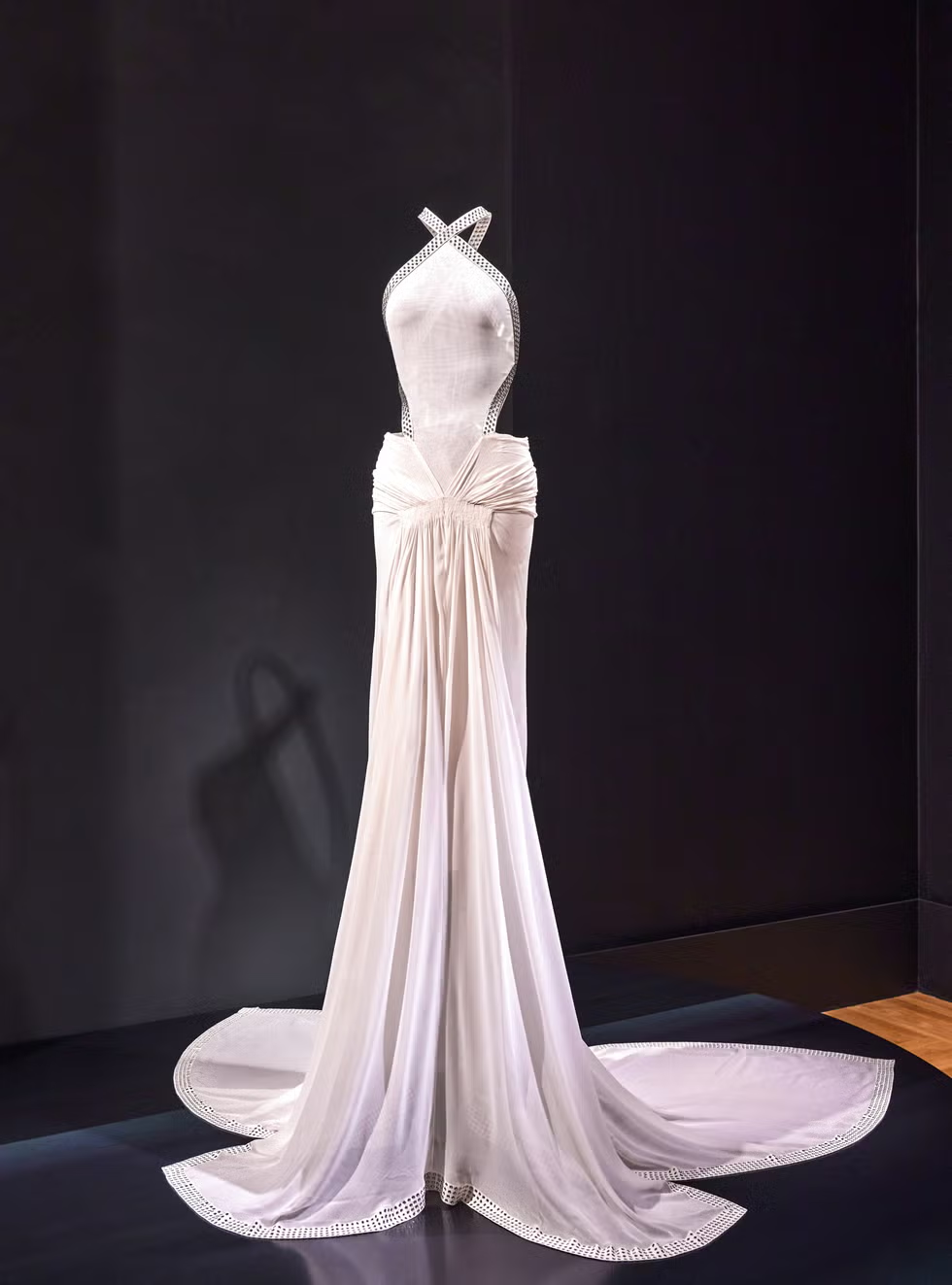
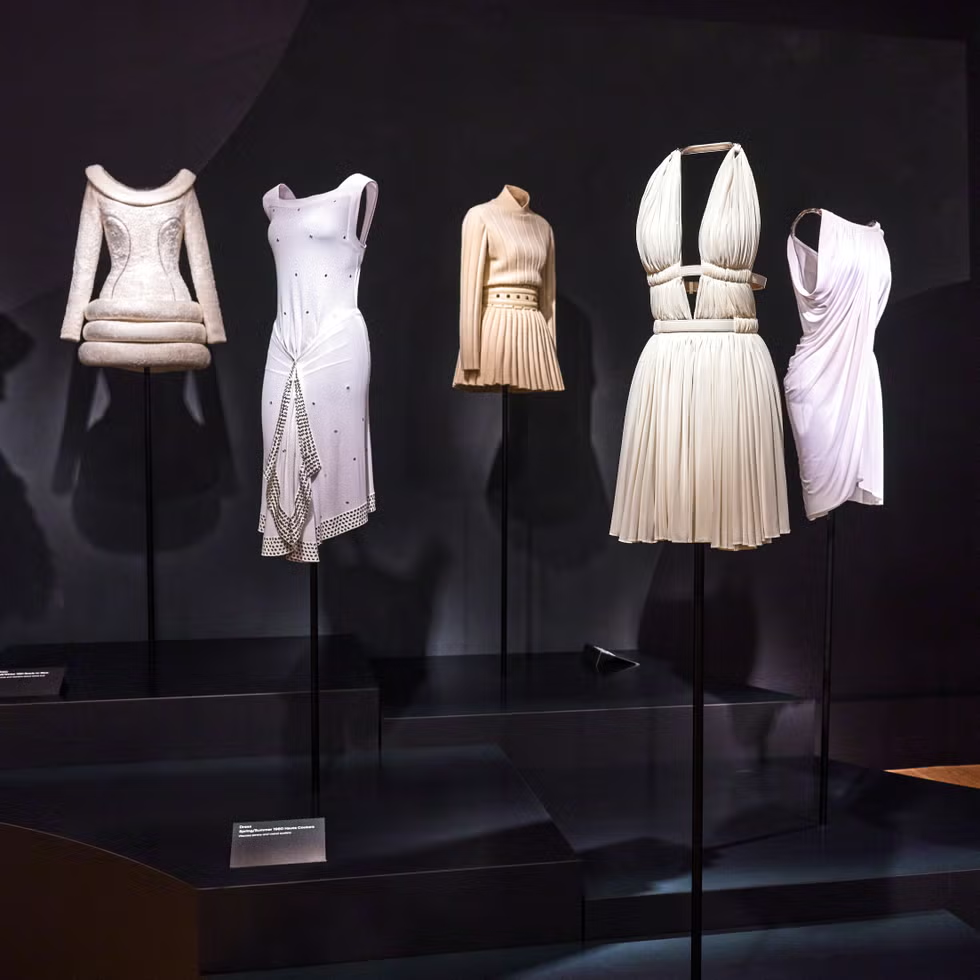
A dress from the 1980 couture collection.
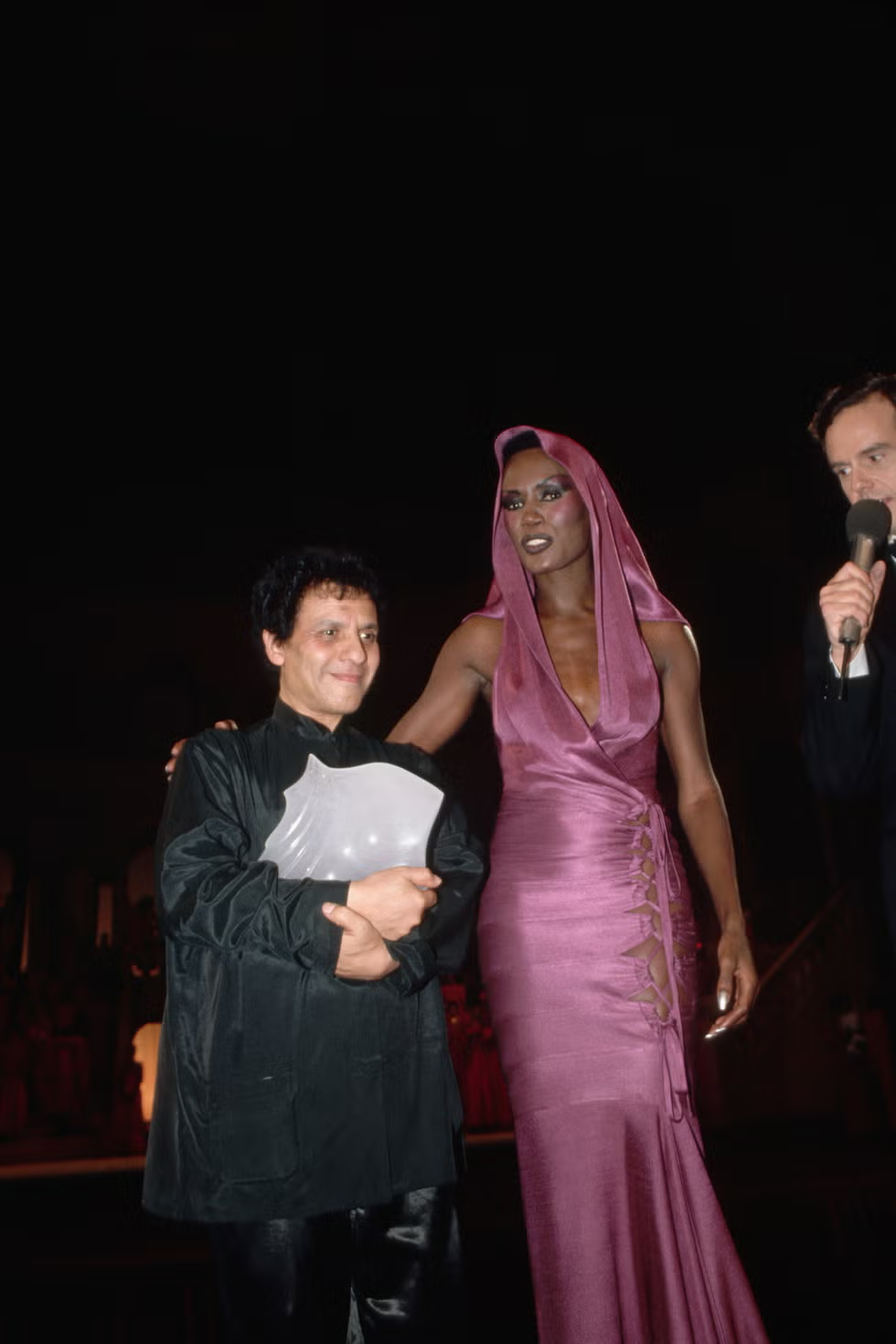
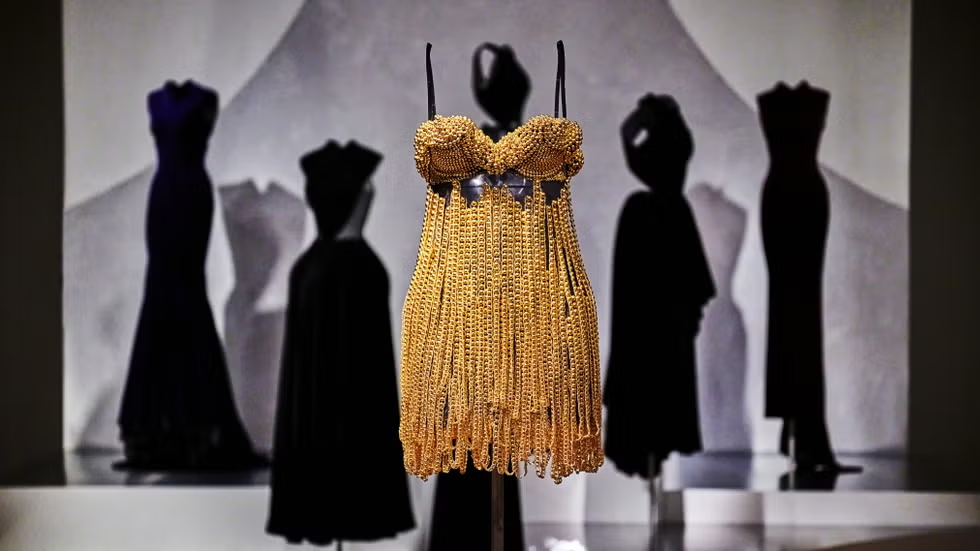
The exhibition took shape after Camerlengo reached out to Olivier Saillard, director of the Fondation Azzedine Alaïa in Paris, who became her co-curator. As visitors enter the Legion of Honor’s Rosekrans Court, they encounter a dress designed for Grace Jones: a spring/summer 1986 haute couture look that Jones modeled on the runway and wore to the 1985 Oscars de la Mode. Part of the opening display, titled “The Women Who Made Alaïa,” it sets the tone for a show that recognizes the muses—both famous and private clients—who wore and supported his work.
Also on view are looks made famous by Rihanna—namely, a sheer red halter gown with a flowing train that she wore to the 2013 Grammys—and Tina Turner, whose silk-organza dress embroidered with gold-tone beads from Alaïa’s spring/summer 1989 concludes the exhibition.
Rihanna at the 2013 Grammys in Alaïa.
Alaïa and Grace Jones in 1985.
A spring/summer 1989 couture dress worn by Tina Turner.
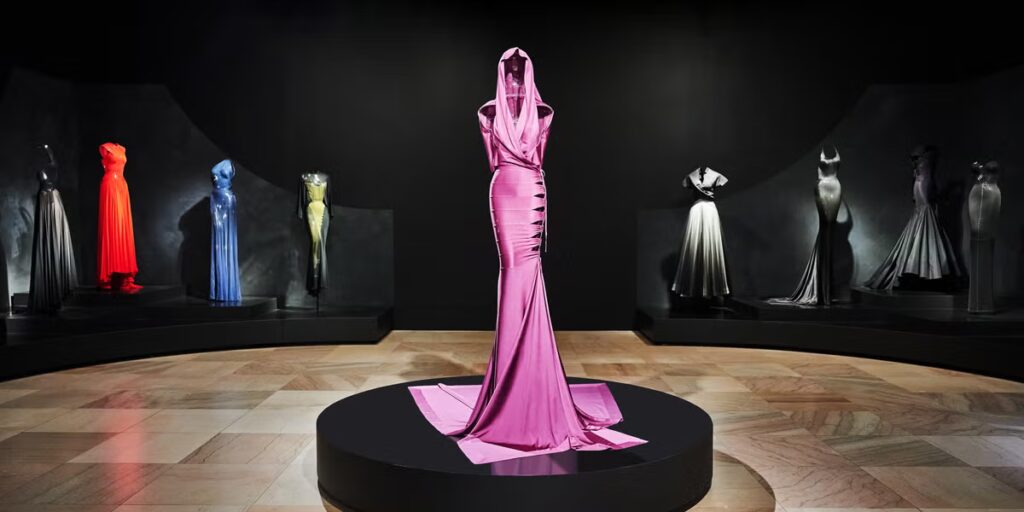
The show then turns to Alaïa’s iconography, as Camerlengo puts it: the bandage dress, his work in denim, and zippered dresses, as well as rare, lesser-seen gems. “I was really keen to have early works on view, particularly the pieces from the 1980s, when he was launching his brand,” the curator says. “These are pieces that would have been shown at Bergdorf Goodman when he had his first fashion show in the United States.”
Designs featured in the “Art of Haute Couture” gallery.
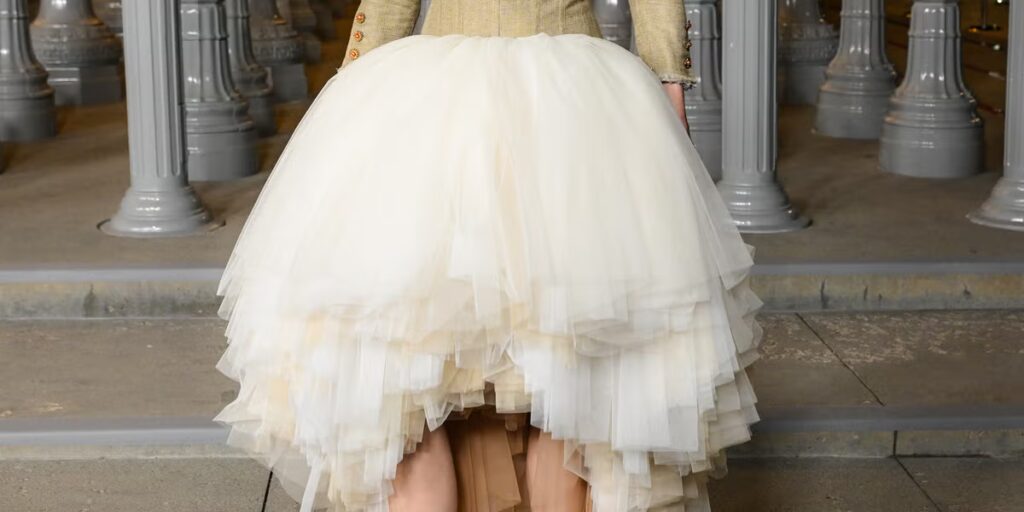
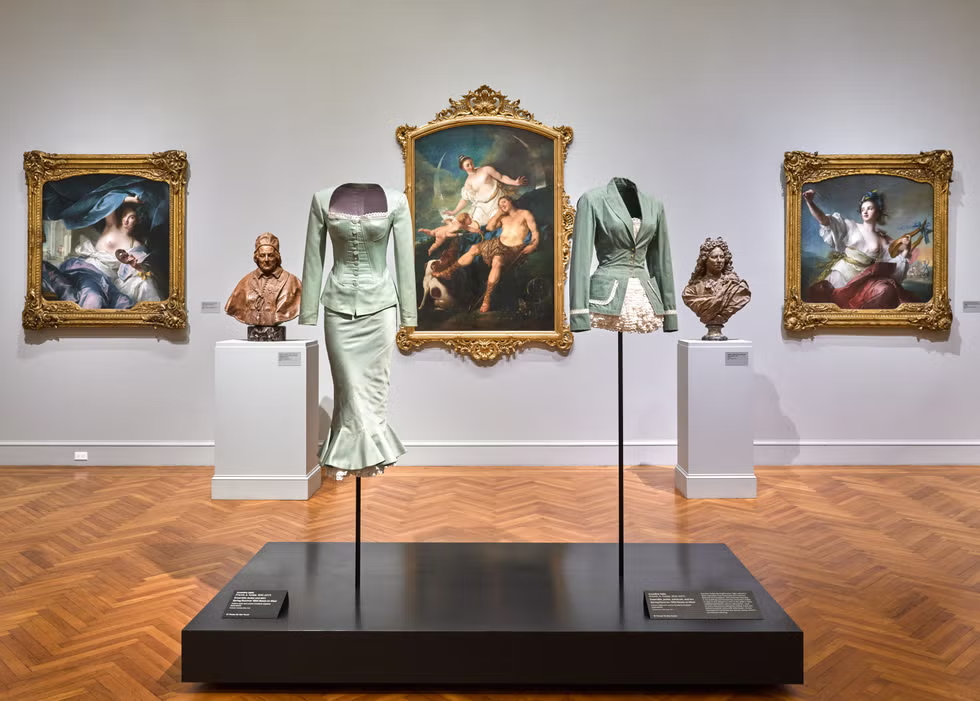
The exhibition also places Alaïa’s designs in conversation with the museum’s permanent collection. Belle Epoque-style ensembles from his spring/summer 1992 collection appear among 18th-century European paintings and furnishings, including a Canaletto view of Venice and a sofa commissioned for Marie Antoinette.
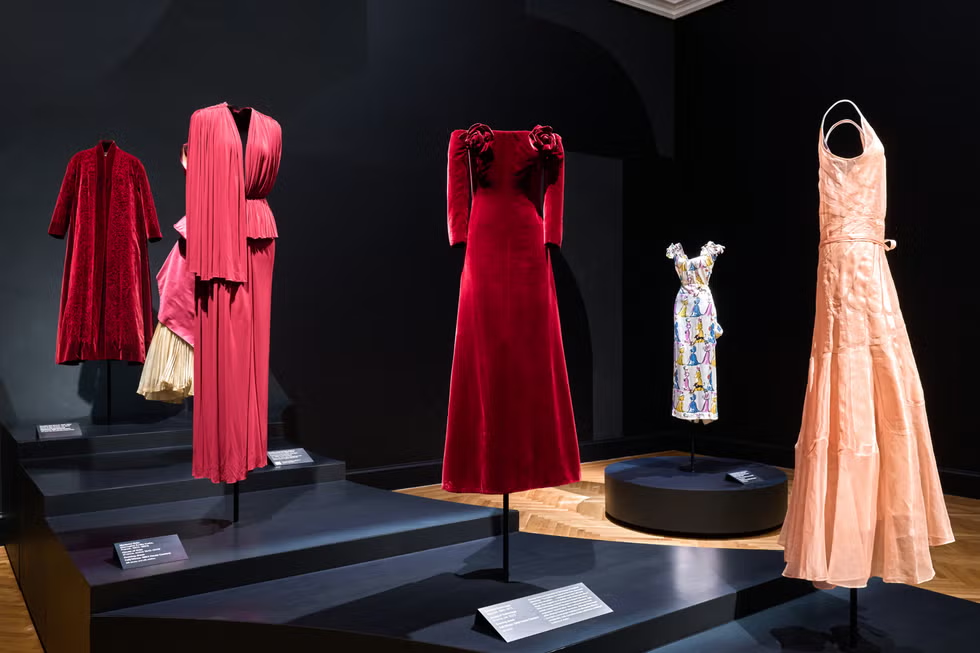
Alaïa’s own collection of historic fashion, previously shown in the 2023 Paris exhibition “Azzedine Alaïa, couturier collectionneur,” is represented here, too. The gallery includes pieces by fashion houses he admired, such as Lanvin, Chanel, Balenciaga, and Schiaparelli.
Pieces from spring/summer 1992 shown with artwork by Jean-Marc Nattier and Michel-François Dandré.
Though Alaïa, who died in 2017 at age 82, is remembered for the body-conscious designs that earned him that “King of Cling” title, he was also a renegade in an industry built around constant production. He showed collections only when he felt they were ready—a maverick approach that still resonates today—and had his creations worn by a who’s who of the modeling world, from Naomi Campbell to Gisele Bündchen. Many of his designs were featured in the pages of ELLE over the decades.
Designs from Madame Grès, Balenciaga, Chanel, and more from Alaïa’s personal collection.
“He was someone who pioneered a new way of thinking about fashion,” Camerlengo says. “He was one of the first to question the fashion system and seasonal calendars and the need for trends. He was focused on meticulous craftsmanship and intentionality in design, a sort of precedent to what we think about today, where we are critical of overproduction and overconsumption in fashion.”
“Azzedine Alaïa: Sculpting Fashion” is on view at the Legion of Honor Museum from Nov. 21, 2026, to Apr. 11, 2027.
Source: ELLE
Source link