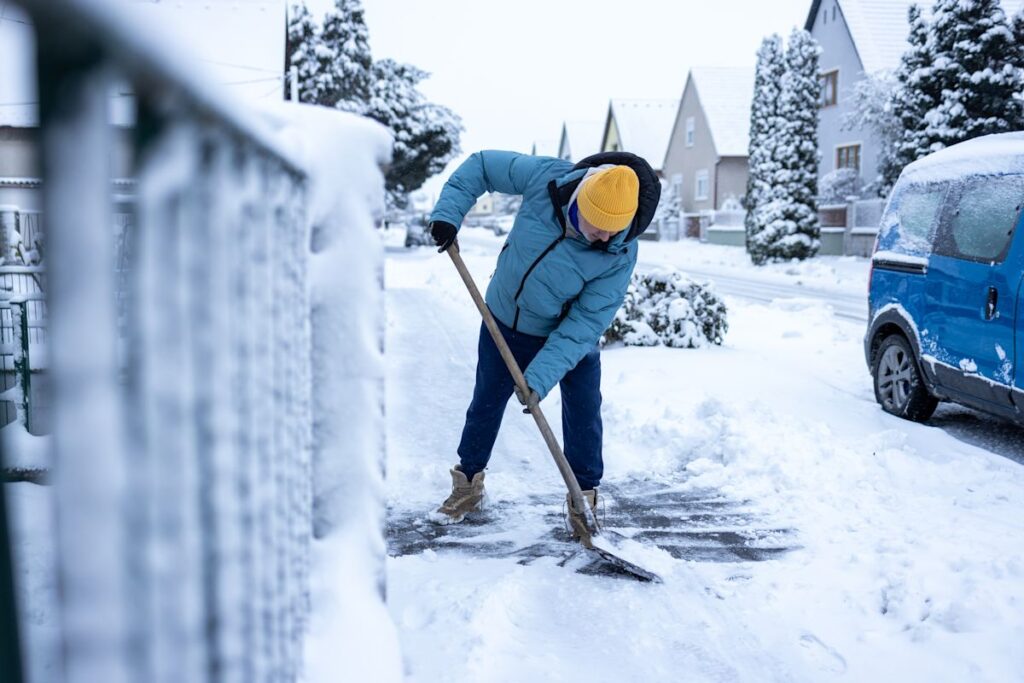


As temperatures drop and winter storms start blowing through, the anticipation of the season’s first snow hangs in the air with a mix of excitement and dread — and the not-so-exciting task of digging out your trusty shovel to clear a path from the front door of your home.
But it’s not just the physical drudgery of snow shoveling that can take a toll. “Shoveling snow may look like an ordinary winter chore, but for the heart, it can be one of the most demanding activities we do all year,” says Dr. Nicholas Ruggiero, cardiologist and senior director of medical affairs at Abbott Structural Heart. In fact, older data from U.S. emergency departments (1990 to 2006 — the most recent available) shows about 11,500 shoveling-related injuries and medical emergencies a year, with cardiac events accounting for the only deaths — an average of a little less than 100 per year.
Why snow shoveling is so hard on the heart
Snow shoveling is strenuous, arm-heavy and done in the cold, a three-punch combination that can raise cardiovascular risk, particularly for people who are already susceptible.
Advertisement
Advertisement
“Using your arms for strenuous activity can place greater demands on the heart than using your legs. And because we tend to stand in one place while we shovel, blood can pool in the legs and feet instead of flowing back to the heart,” says Ruggiero, adding that the challenge is made worse, especially with heavy, wet snow. “Many people also hold their breath as they lift, which adds even more strain,” Ruggiero says.
Then, there’s the cold. “Cold weather can induce constriction or vasospasm of the heart vessels, which can further lead to conditions like arrhythmias or heart attacks,” says Dr. Cheyenne Falat, associate professor of emergency medicine at the University of Maryland School of Medicine and assistant medical director of the adult emergency department at the University of Maryland Medical Center.
In fact, evidence indicates that some cardiac patients develop angina at lower workloads when exerting themselves in cold environments — and snow shoveling isn’t a “lower workload” activity. While rigorous research is limited, an older, smaller study found that snow shoveling for just 10 minutes caused participants’ heart rates to soar to over 85% of their maximum at two minutes, then continue rising to 97% by the end of the 10 minutes.
Who’s at greatest risk
“The populations who seem to be most high risk are men, older individuals, people who do not exercise regularly and people with known coronary artery disease or other cardiac risk factors such as high blood pressure, high cholesterol and diabetes,” says Falat.
Advertisement
Advertisement
Of course, that’s not to say women or younger individuals are clear to go gangbusters with a snow shovel. Certainly, anyone with undiagnosed heart disease risk factors could also be flying in the danger zone. “We often see cardiac events in people who sit at a desk all day and get little exercise, then head outside once or twice a year to dig out the driveway after a heavy snowfall,” says Ruggiero. So before you assume you’re good to go, take a minute to think about your current lifestyle and health — if it’s been a minute since you made it to the gym or had a checkup with your doc, you might want to think twice before you hit the pavement.
Dr. Brett Sealove, chair of cardiology at Hackensack Meridian Jersey Shore University Medical Center and associate professor and vice chair of cardiology at Hackensack Meridian School of Medicine, says some people should skip shoveling altogether and outsource the task. “This includes anyone with a history of heart disease, a previous heart attack or stroke and even some susceptible patients with extremely high blood pressure. People who live a mostly sedentary lifestyle and are not used to vigorous exercise are also at a much higher risk and should hire someone or ask for help to clear their driveways and sidewalks.”
Other health concerns
While heart attacks and cardiac events are the greatest concern when you shovel snow, they’re not the only concern. In fact, about 54% of all snow-shoveling-related ER visits are for musculoskeletal injuries, with another 20% from slips and falls and 15% from being struck by a shovel. “Other frequent injuries include back strains, slips and falls, snowblower injuries and frostbite,” says Falat.
This is why it’s so important to view the activity as a workout. Warming up, donning the right equipment and checking your form can help keep you injury-free. “Back and shoulder strains are concerns with snow shoveling because the same movements are repeated over and over. Lifting a heavy load while reaching forward or twisting to one side puts additional strain on these areas,” says David Zhong, registered kinesiologist and certified personal trainer, and president of Fitness Refined.
How to shovel more safely
Check with your doctor first
It may seem like an unnecessary step, but Falat and Sealove state that checking in with your doctor is a must, especially if you have any hesitations. “If someone has a concern or question, the default should be not to shovel and to ask a medical provider at their next follow-up visit,” says Sealove.
Warm up like it’s a workout
Snow shoveling is a workout, so you need to prepare like you would for any other workout. “Start with five to 10 minutes of light movement to warm up, especially if you’ve been sitting for most of the day,” says Zhong. Try simple activities like brisk walking, marching in place, stretching your upper body and doing some snow shoveling movements with an empty shovel before heading outside to load it up.
Watch your footing
“Slips and falls can be prevented by wearing shoes or boots with [traction], walking carefully while paying attention to your surroundings and spreading grit like salt or sand over walkable surfaces,” says Falat.
Amazon
Amazon
Amazon
Amazon
Cover up against frostbite
Don’t go bare-knuckled with a snow shovel, even if you think, “Hey, I can get this cleared in no time at all.” Falat emphasizes that all body parts should be covered, including the fingers, ears and nose, adding that dressing in layers, wearing waterproof boots or shoes and limiting time outside can all help prevent frostbite.
Amazon
Amazon
Amazon
Push when you can, and lift small
“Pushing snow is generally less strenuous on the heart than lifting and throwing it. If you do need to lift, it’s safer to lift smaller amounts more often than to move huge shovelfuls,” says Ruggiero. That said, “less strenuous” doesn’t mean “without risk.” Sealove specifically warns that even a pusher “should be used with caution, especially for those most at risk.”
The Home Depot
Amazon
Engage your legs while lifting
Even though your arms are doing the shovel work, your legs don’t get a pass. By bracing your core and engaging your hips and knees, you can help protect your low back from injury. “Bend through your hips and knees, keep the load close and turn with your feet instead of rotating at the waist,” says Zhong, adding, “Avoid reaching far ahead or twisting your torso to throw snow to the side. Instead, move your feet and turn your whole body toward the spot where you’re placing it.”
Clear early
Even if you don’t have to leave the house for a few days, don’t put off shoveling. “Start when there’s a light covering of snow on the ground, rather than waiting until it’s deep, packed and heavy,” says Ruggiero.
Rest before you need it
Heart rate rises quickly when you’re shoveling snow, so plan to rest early and often. “Take breaks before you feel exhausted rather than waiting until your muscles are already struggling,” says Zhong.
Stop for sharp pain
If you experience sharp pain in your muscles or you feel like you’ve tweaked your low back, it’s time to call it quits. “Stop rather than trying to work through it,” says Zhong, adding, “Losing your footing or struggling to maintain control of the shovel is also a good reason to take a break.”
Never stick your hand in a snowblower chute
This may sound like a no-brainer, but the thousands of people who have lost fingers this way could have used the reminder. “If you have to unclog the snowblower, make sure that it is off and that you use a clearing stick instead of your hands,” says Falat.
Have a way to call for help
This is not the time to leave your phone inside. “Make sure that you have someone or some way to call for help,” says Falat.
Make the task easier
Clearing snow isn’t an easy task. Period. “The easiest way to lower your risk is to hand off the job. Ask a neighbor or family member, or hire a snow removal service,” says Ruggiero. But if you’re not quite ready to give up your shovel, there are ways to help protect your health.
Salt before a storm
Falat notes that putting down salt before a snowstorm hits can help ease the snow-clearing burden.
Walmart
Amazon
Amazon
Amazon
Consider a smaller, ergonomic shovel
“For back safety, look for shovels with a curved or adjustable handle. These are designed to reduce the need to bend forward, which helps to keep your back straighter,” says Sealove. And while you may be tempted to buy a bigger shovel to clear more snow, Ruggiero actually suggests the opposite: “A smaller shovel naturally limits how much snow you lift at once.”
Amazon
Amazon
Amazon
Amazon
Invest in a snowblower or electric snow shovel
These tools can be spendy, and they still require manual labor, but Falat notes that snowblowers “seem to pose less of a cardiac risk.” Just be sure you use them according to their instructions, as they can pose their own injury risks.
Amazon
Amazon
Amazon
Amazon; background edited with ChatGPT
Signs to stop, and when to call 911
A little breathlessness is normal when you’re working hard, but it’s important to pay attention to how your body responds. “Normal breathlessness from exertion should begin to improve with rest. Symptoms that don’t ease, or that just feel different, are a reason to stop right away,” says Ruggiero.
Advertisement
Advertisement
Sharp muscle pain is a reason to stop, but chest pain or pressure is a different story altogether. Heart attack symptoms aren’t always clear-cut. “Men often experience classic heart attack symptoms, such as intense chest pressure, cold sweats and pain radiating down the left arm. Women may also have chest pain, but they’re more likely than men to report subtle warning signs, including extreme fatigue, nausea, shortness of breath and pain in the jaw or upper back,” says Sealove. “If someone feels something significant that they haven’t experienced before, they should seek medical attention. It’s simply not worth the risk of getting it wrong.”
If you notice any of these signs, stop shoveling and get help right away. Ruggiero says to “call 911 immediately, even if the symptoms come and go. Don’t wait to see if it passes.” He also cautions against driving yourself: “Don’t drive yourself to the hospital, and don’t worry about overreacting.”
And if you see someone else collapse while shoveling, act fast. “Check for pulse and call 911, and start CPR immediately if you do not feel a pulse (or if you are unsure),” says Falat. The American Heart Association has a quick guide to hands-only CPR.
Meet our experts
Nicholas Ruggiero, MD, cardiologist and senior director of medical affairs at Abbott Structural Heart
Cheyenne Falat, MD, associate professor of emergency medicine at the University of Maryland School of Medicine and assistant medical director of the adult emergency department at the University of Maryland Medical Center
Brett Sealove, MD, FACC, FAHA, chair of cardiology at Hackensack Meridian Jersey Shore University Medical Center and associate professor and vice chair of cardiology at Hackensack Meridian School of Medicine
David Zhong, registered kinesiologist and certified personal trainer, and president of Fitness Refined
Health disclaimer
Our health content is for informational purposes only and is not intended as professional medical advice. Consult a medical professional on questions about your health.
Source link