

You’d think picking a seat on your first coach tour is the easiest decision of the whole trip. Window or aisle, front or back, done. But the choice you make in the first ten minutes can quietly shape a week of glare, queasiness, chilly vents, and seatmates you never planned on.
Here’s the twist: the biggest regrets rarely come from the seat itself. They come from rules nobody explains, myths that even seasoned travelers swear by, and one safety question most people never think to ask. Start with the one that catches almost everyone off guard.
#17 – Assuming Your Day-One Seat Is Yours for the Whole Week
#17 – Assuming Your Day-One Seat Is Yours for the Whole Week (Image Credits: Gemini)
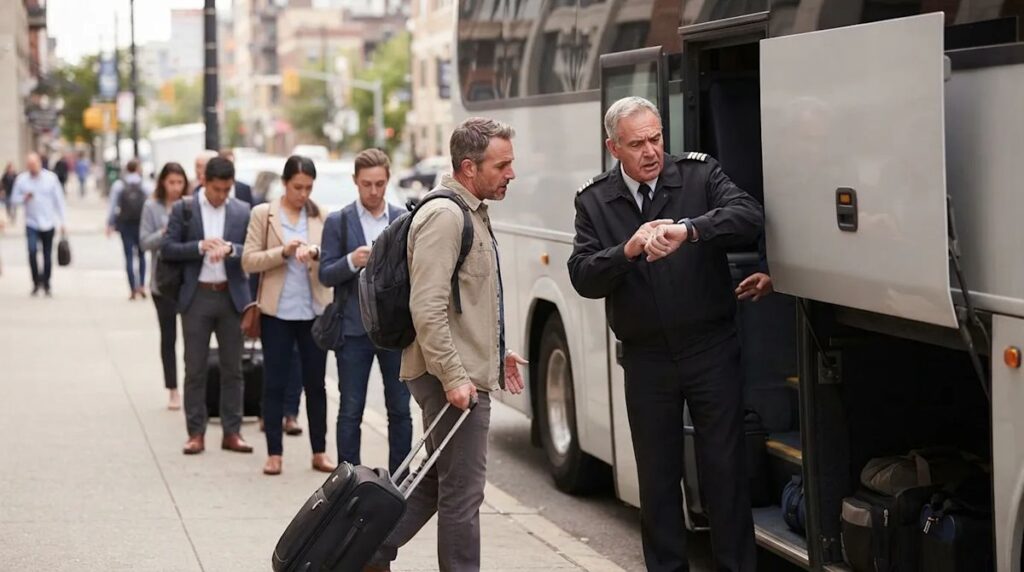
Picture it: you board early on Day 1, claim a window seat halfway back, and settle in like it’s your favorite chair at home. Then the tour director explains the rotation, and your perfect spot is history by breakfast. According to one first-timer’s guide, almost all professional tours use a seat rotation policy. Each day everyone shifts, typically two rows forward or backward in a clockwise direction.
Advertisement
Advertisement
Insider Tip: On some tours, the tour director explains a posted seat assignment on every traveling day. Look for the chart before you board, not after you’ve settled in.
Rules differ by company. The number of seats you move depends on how many guests are on the tour, so the shift isn’t always the same. If you were counting on a permanent window, find out how your operator handles it before you get attached. But the front row is where the real argument starts.
#16 – Treating the Front Row Like a Guaranteed Upgrade
#16 – Treating the Front Row Like a Guaranteed Upgrade (Image Credits: Gemini)
Many travelers rank the front row as the best seat on the coach, and it’s easy to see why. You get the big windshield view and the first look at every mountain pass and village square. Others find it wildly overrated because of the glare and the constant braking happening right in front of you. It’s a real split, and nobody on the coach will agree on the answer.
Did You Know: Front seats often have less legroom than other rows, and they may not have tables or other accessories.
Advertisement
Advertisement
There’s also the heat. That large windscreen can make the front seats quite warm on a sunny afternoon. If you like to read or stretch out, the postcard view may cost you more than it gives. Next up is a mistake that happens before you even book.
#15 – Never Asking Whether the Company Rotates Seats at All
#15 – Never Asking Whether the Company Rotates Seats at All (Image Credits: Gemini)
Seat policy isn’t universal, and plenty of people only learn that once they’re already on the coach. In one UK comparison, Leger lets guests pre-book and request seats, so it doesn’t rotate seats on tour. Grand UK Holidays also lets you pick at booking from a seating plan and doesn’t rotate.
Others work the opposite way. Titan, Travelsphere, and Saga all rotate seats on tour. Those are UK examples, but the lesson travels across the Atlantic just fine. One question before you pay can save you from a policy you’d never have chosen. The next error is quieter, and it comes down to glass.
Quick Compare
Pick at booking, no rotation: Leger and Grand UK Holidays
Rotate on tour: Titan, Travelsphere, and Saga
Your move: ask which system applies before you pay
#14 – Ignoring the Glass, the Sun, and Uneven Air Conditioning
#14 – Ignoring the Glass, the Sun, and Uneven Air Conditioning (Image Credits: Gemini)
Here’s something brochures never mention: coach air conditioning isn’t equal at every seat. One tour operator admits it isn’t possible to produce an even degree of cool or hot air at each seat. A big reason is the tremendous amount of glass on the coach, especially at the front.
Advertisement
Advertisement
Try This: Keep a light layer in your day bag, not in the luggage hold. You can’t reach the hold at 10 a.m. when the vents blow cold.
So a seat that looks perfect on paper can feel like a different climate zone by midday. Rotation actually helps here, since you won’t sit in one microclimate all week. A warm or chilly row is a one-day problem, not a verdict on the whole trip. The back of the coach tells a different story.
#13 – Believing the Back Row Is the Fun Zone
#13 – Believing the Back Row Is the Fun Zone (Image Credits: Gemini)
Plenty of travelers swear the back of the coach is where the fun happens. Jokes travel faster back there, and it can feel like the last row of a school bus in the best way. Over a rotation, everyone gets a turn, and a day back there suits a nap just fine.
The catch is motion. The back is where movement is amplified, and every bump or turn feels stronger. If your stomach is sensitive, the party seat can turn into a very long day. Treat it as a one-day novelty, not a home base. And there’s a hidden hot spot a few rows forward.
#12 – Sitting Right Over the Wheel Arch
#12 – Sitting Right Over the Wheel Arch (Image Credits: Gemini)
Most people don’t realize that where you sit along the length of the coach matters as much as front versus back. One motion-sickness guide advises that if bumps bother you, you should avoid a seat directly above a wheel arch. It’s an easy detail to miss on a seat chart, and it can be the difference between a smooth ride and a rattling one.
Advertisement
Advertisement
The Science Behind This: Motion sickness on a bus comes from constant acceleration, braking, and side-to-side sway. Seats over the wheels tend to feel road bumps more directly.
The same source suggests a seat between the axles is another option. Coach layouts vary, so ask the tour director which rows sit over the wheels. One small question can spare you hours of discomfort. Window or aisle is the next dilemma.
#11 – Choosing the Aisle and Losing the Horizon
#11 – Choosing the Aisle and Losing the Horizon (Image Credits: Gemini)
The aisle feels roomy, and on a 2-and-2 layout it’s tempting. Most coaches seat two people on each side of a central aisle, so you’d get easy stretching and a quick dash to the restroom. But for anyone prone to queasiness, the window may matter far more.
One travel-health guide says window seats toward the front or middle are best on a bus. The CDC suggests looking at the horizon if you can. The aisle trades that steady view for easy movement. If you’ve ever felt sick in a car, think twice before giving up the glass. Medication is the next trap.
Worth Knowing
Most coaches use a 2-and-2 layout, so only half the seats touch a window.
Window seats toward the front or middle are often recommended for queasy riders.
The CDC suggests keeping your eyes on the horizon.
The aisle wins on legroom and quick exits, not on view.
#10 – Trusting a Pill to Do a Seat’s Job
#10 – Trusting a Pill to Do a Seat’s Job (Image Credits: Gemini)
Many first-timers figure a motion-sickness tablet means any seat will do. But the CDC points out that many motion-sickness medicines cause drowsiness. That’s a poor deal if you paid good money to see the Alps, not sleep through them.
Advertisement
Advertisement
Why It Works: Motion sickness happens when the movement you see differs from what your inner ear senses. A forward-facing seat with a clear view narrows that gap.
The CDC’s non-drug advice starts with simple moves, including sitting in the front of a car or bus. If you’re considering medicine, talk to a healthcare professional first, as the CDC advises. Seat choice is the free fix that comes with no side effects. Then comes a safety detail people skip.
#9 – Skipping the Seat Belt Because It’s a Big Bus
#9 – Skipping the Seat Belt Because It’s a Big Bus (Image Credits: Gemini)
A huge coach feels safer than a car, so some travelers never reach for the belt. It’s an understandable instinct. But one bus operator’s guidance is blunt: if your seat has one, wear it. Size isn’t a substitute.
The reason is rollovers and frontal crashes. In announcing its rule, NHTSA said seat belts significantly reduce the risk of fatalities and serious injuries in frontal crashes, and of ejection in rollovers. Click it early, before the coach pulls out. It takes two seconds, and nobody will notice. But not every coach has one to click.
Fast Facts
If your seat has a belt, wear it for the whole ride.
NHTSA says belts cut the risk of serious injury in frontal crashes.
They also reduce the risk of being thrown out in a rollover.
Buckle up before the coach pulls away, not after the first curve.
#8 – Assuming Every Coach Has Belts Built In
#8 – Assuming Every Coach Has Belts Built In (Image Credits: Gemini)
Here’s the surprise: federal law drew a line in time, and older coaches fall on the wrong side of it. Lap and shoulder belts have been required at every passenger seat on new over-the-road buses since November 28, 2016. Coaches built before that may not have them.
Advertisement
Advertisement
By The Numbers: NHTSA data showed 21 motorcoach and large-bus occupants killed and 7,934 injured annually, and said belts could cut fatalities by up to 44 percent.
NHTSA also looked at refitting older coaches and decided not to pursue a retrofit requirement. So belts depend on the specific vehicle in front of you. Fleets often mix new and old, so ask the operator about the coach on your tour. Timing matters too.
#7 – Booking Late and Getting the Seat That’s Left
#7 – Booking Late and Getting the Seat That’s Left (Image Credits: Gemini)
On some tours, the seat map is decided by the order of payment, not by who gets on the coach first. One operator says seats are assigned by booking order, and the earlier you book, the closer you are to the front on Day 1. Wait too long, and the best rows are already spoken for.
Insider Tip: When you book, ask whether the seat plan is fixed, assigned by order, or open on Day 1. It’s a one-line question that tells you where you stand.
Advertisement
Advertisement
Not every tour works this way. On others, you can usually choose your seat on Day 1 before rotation takes over. Either way, a standard coach seats roughly 47 to 55 people, so there are plenty of rows to compete for. Which leads to the scramble.
#6 – Racing Back to the Coach to Grab a Better Seat
#6 – Racing Back to the Coach to Grab a Better Seat (Image Credits: Gemini)
At a rest stop, some travelers cut lunch short and hurry back to claim a favorite row. It’s a real habit, and it can turn a relaxing break into a sprint. Rotation exists partly to end it: one operator says its system removes the need to rush back to the coach for a “better seat”.
For many older travelers, hurrying over curbs and up high coach steps is the real risk. A lost row isn’t worth a stumble. If a particular seat matters for health reasons, tell the guide instead of racing for it. The next error involves who ends up beside you.
#5 – Expecting a Double Seat to Yourself
#5 – Expecting a Double Seat to Yourself (Image Credits: Gemini)
Solo travelers sometimes assume the seat beside them is theirs by default. It’s a cozy thought, right up until it isn’t. One operator says that in almost every situation, you may be required to sit beside a fellow passenger. It adds that your fare entitles you to one single seat.
Advertisement
Advertisement
Editor’s Note: Spreading across two seats may feel harmless on Day 1. By Day 3 it’s usually the thing the whole coach quietly resents.
That’s worth knowing before you pile coats and shopping bags onto the empty cushion. Whether you planned it or not, you may end up chatting with someone new for hours. Rotation can even help, since seatmates change. On some tours, though, it works the opposite way.
#4 – Not Realizing Your Seat Picks Your Social Circle
#4 – Not Realizing Your Seat Picks Your Social Circle (Image Credits: Gemini)
On a locked-seat tour, the seat you grab on Day 1 may decide who you talk to all week. One travel feature put it bluntly: whoever books first essentially picks their social circle for the whole journey. Seats become friendships, or long silences.
The Psychology Behind This: Familiar seats feel safe, so people resist moving. That’s why even a mild rotation rule can stir strong feelings.
Advertisement
Advertisement
Rotation does the opposite. It forces new seatmates every few days. Some people love that, and some quietly hate it. Either way, decide whether you’d rather have a fixed neighbor or a fresh face before you choose. Packing matters more than you’d think.
#3 – Picking a Seat Without Planning Where Your Stuff Goes
#3 – Picking a Seat Without Planning Where Your Stuff Goes (Image Credits: Gemini)
A coach seat is more than a cushion. It’s your little home base for the day, and a pile of bags can make it feel like a closet. Coaches typically have luggage racks above the seats for carry-on bags, which keeps the floor clear for your feet.
Many coaches also have a personal reading light and an adjustable air outlet above the seat. A tidy day bag keeps your legs free and your essentials close. Pack water, medication, and a light layer where you can reach them without climbing over a seatmate. Boarding is the next hidden problem.
At a Glance
Overhead rack: carry-on bags and a light jacket
Under your feet: keep it clear for legroom
Above your seat: reading light and adjustable air outlet on many coaches
Within reach: water, medication, and a light layer
#2 – Forgetting How Hard Boarding and Exiting Can Be
#2 – Forgetting How Hard Boarding and Exiting Can Be (Image Credits: Gemini)
Coaches sit high off the ground, and those steps add up over a long day of photo stops and bathroom breaks. A seat near the front can make a real difference. One bus guide says the front section is easy to get in and out of quickly.
Try This: If steps or stiff knees worry you, say so at booking and again on Day 1. Ask which rows give the shortest walk to the door.
There are rules behind this, too. Federal rules generally require large motorcoach operators to provide accessible service, usually with advance notice. That makes early notice important. The last error is the most common of all.
#1 – Staying Quiet About What You Actually Need
#1 – Staying Quiet About What You Actually Need (Image Credits: Gemini)
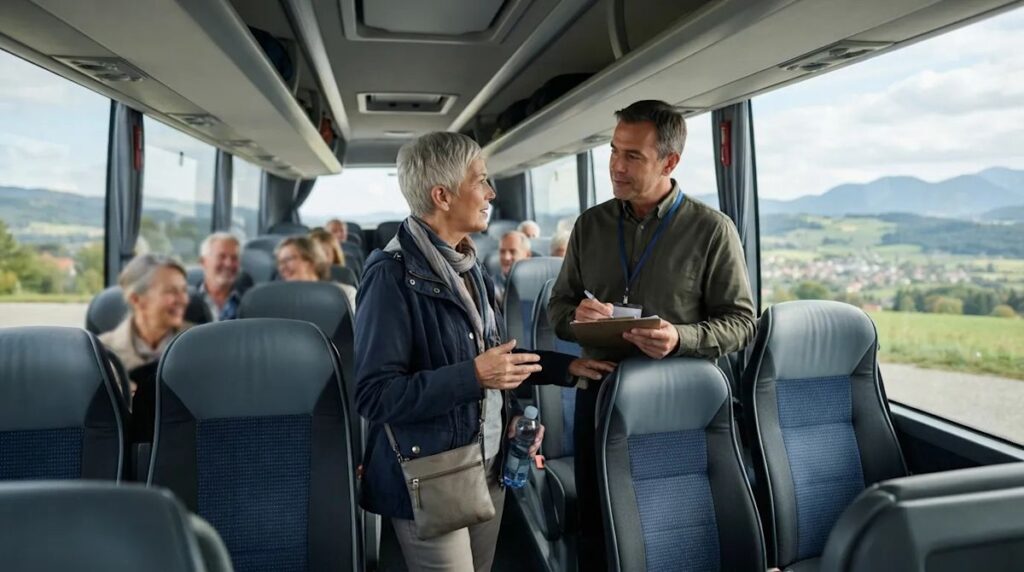
The costliest mistake is saying nothing. Many travelers don’t want to seem like a bother, so they quietly sit through a week of discomfort. One guide says to speak up early, and most guides will hold a seat for you without announcing why to the group.
Why It Works: A guide can only solve a seat problem they know about. Telling them on Day 1 gives them time to plan the rotation around you.
One forum poster on Rick Steves and Road Scholar tours recalled a guide asking the group to leave a front row seat open for a tour mate prone to motion sickness. The same poster said most people were very kind and accommodating. The seat you need is usually one polite sentence away.
The funny thing is that the best seat on a coach tour is rarely the one with the best view. It’s the one that fits your stomach, your knees, and your week.
Ask the question before you book, and say the sentence on Day 1. Then settle in and enjoy the ride.
Source link