


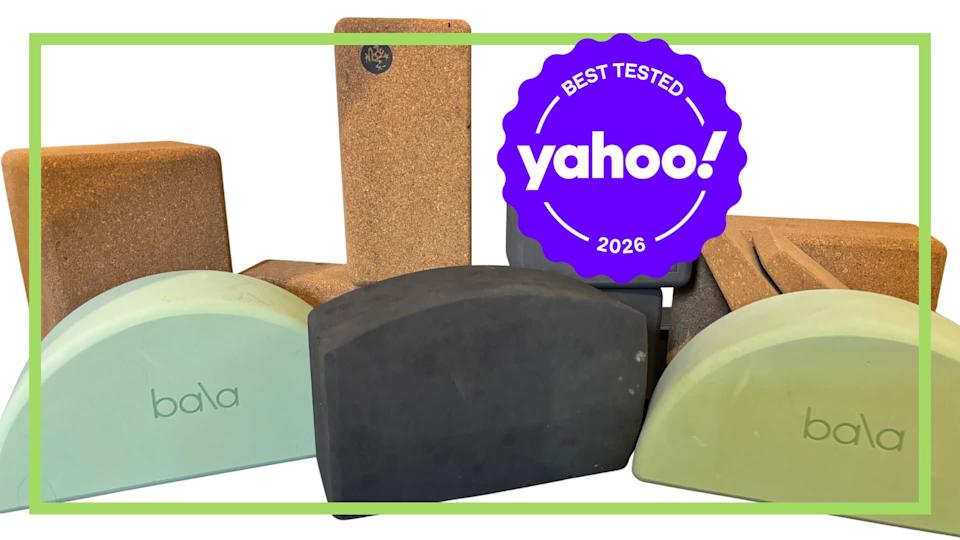
Yoga blocks aren’t a crutch — they’re the single best investment for instantly improving your alignment, stability and flexibility during your yoga practice. (Laura Williams)
You probably walk right past that stack of foam blocks in the corner of the yoga studio without a second thought. It’s easy to assume those props are just training wheels for beginners who cannot touch their toes, but you’re missing out on a serious game-changer. On the most basic level, yoga blocks help bring the ground closer to your fingertips, shortening the distance between your body and your yoga mat. After all, it’s comparatively easier to bend over and touch the top of a block than it is to bend over and touch the mat itself. However, as our experts share, blocks have many other benefits, including improving alignment and deepening stretches.
“Yoga blocks are especially valuable for beginners,” says Vania Garcia, a RYT 200 registered yoga teacher. “They make poses more accessible, improve alignment and act as an extension of the arms, allowing students to stretch safely without strain.” They can also provide support during restorative poses, like fish pose, and can even be used for extra resistance during abdominal workouts.
“For people who are growing their yoga practices and working toward more advanced postures, blocks are a key tool,” says Mandy Enright, registered dietitian and 500-hour RYT and author of 30-Minute Weight Loss Cookbook: 100+ Quick and Easy Recipes for Sustainable Weight Loss. “They can help with arm balances, inversions and press practices.” They’re also excellent for enhancing balance — you can make balancing poses more challenging if you try the pose while standing on a block.
Shopping for yoga blocks is relatively simple, but small differences matter. Most blocks are made from foam, cork or wood, and while many come in standard sizes, variations in material, weight, texture and shape can significantly affect how they feel in practice. To better understand the uses of yoga blocks and the differences between types, our team (including several certified yoga instructors and yoga enthusiasts) spoke with four experts, researched more than 10 yoga brands and put 14 blocks to the test across standing, seated, supine and balance poses. Here are our top picks for the best yoga blocks of 2026.
Learn to put yoga blocks to use with the help of our favorite online yoga classes.
Best yoga block overall

Laura Williams
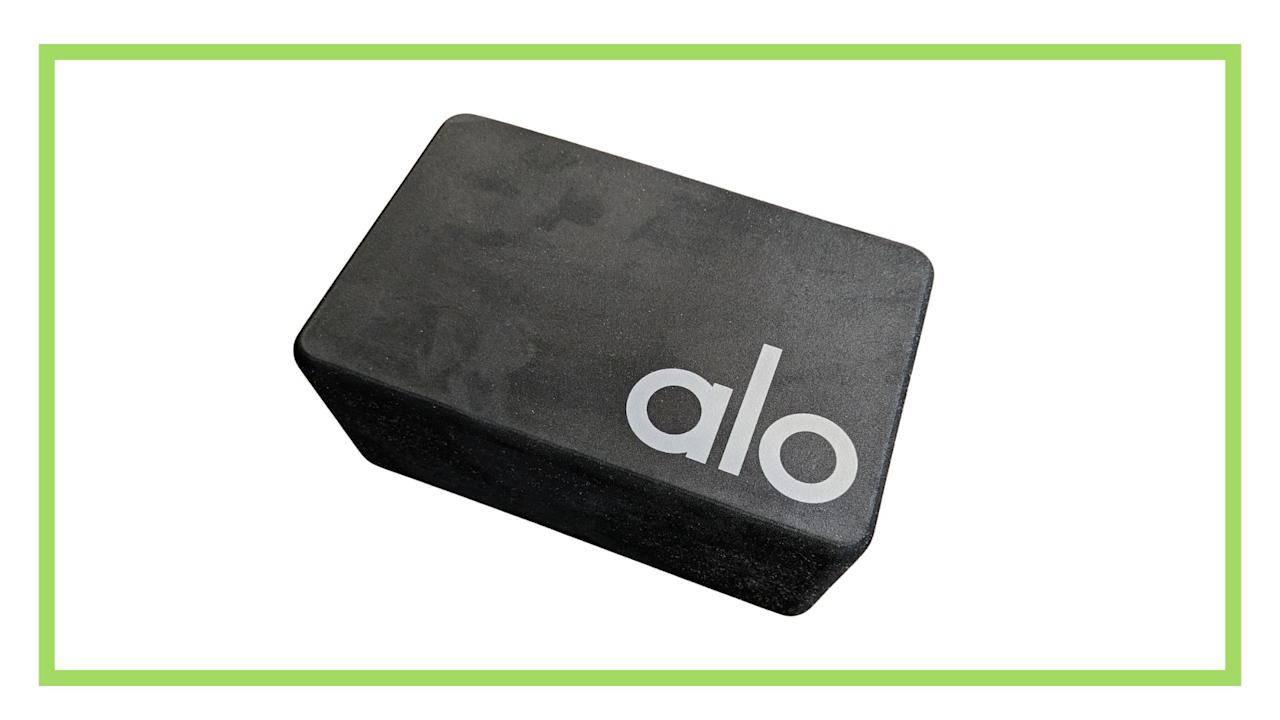
Sizing: Standard | Materials: EVA foam | Dimensions: 4 x 6 x 9 inches | Weight: 0.6 pounds
The Alo Uplifting Yoga Block is our best overall yoga block thanks to its beveled edges, excellent grip (even when sweaty) and durable EVA foam. Plus, despite weighing less than a pound, the block remained stable and supportive, even when our balance was shaky during half moon pose.
If you’re only going to buy one type of yoga block, many of our experts agree that a foam block is your best bet. They’re generally lighter and more comfortable than wood or cork blocks, making them more versatile — which rang true during testing. The Alo Uplifting Block was lightweight for core exercises, comfortable during restorative poses and stable during balance work.
The biggest drawback is the price. At $34 per block, it’s certainly not a budget-friendly option, especially if you purchase two. However, if you plan on using it regularly, the quality makes it worth the higher cost. We also like that it comes in multiple colors including various neutrals, black, white and even a highlighter yellow, allowing you to flex a little style or match your mat, if you’re so inclined.
- Great grip, even when sweaty
- Lightweight yet stable
- Comfortable
- Beveled edges
- Available in multiple colors
- Higher price point
- Only available in standard size
More yoga blocks we like for 2026
Rumi
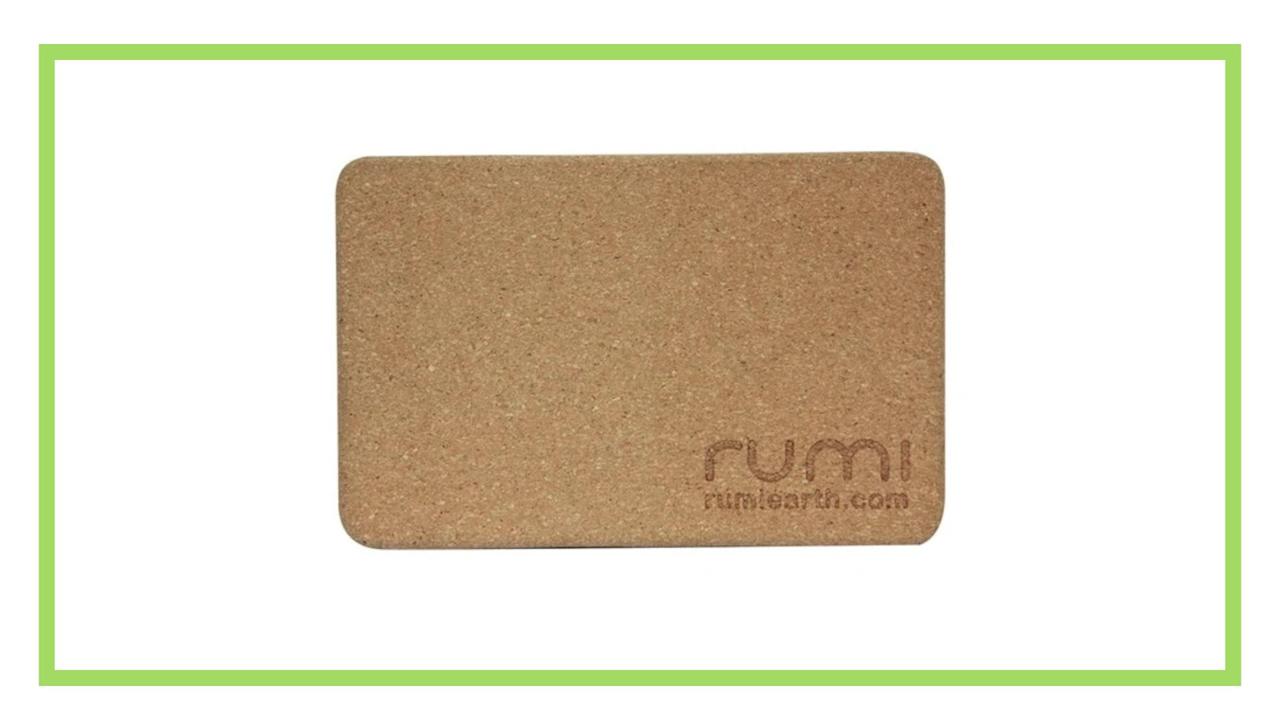
Sizing: Standard or mini | Materials: Sustainably sourced fine-grain cork | Dimensions: 8.7 x 5.7 x 3 inches | Weight: 1.14 pounds
Made entirely from eco-friendly cork, the Rumi Cork Yoga Block stands out from other yoga blocks in this category. Its beveled edges give it a solid, grounded grip even during more challenging poses.
While we preferred the softer feel of the overall winner, the Rumi cork block is reliably supportive, particularly in standing and balance poses where stability matters most.
Cork blocks often tend to be more expensive than foam blocks, but on sale, the Rumi block is an economical $13 per block. Picking up a set for $26 is actually a steal considering most cork blocks clock in around $20 a piece. The more affordable price also won’t leave you feeling like you’re buying something that’s less durable — these blocks are well-made and feel like they’re built to last. As yoga instructor Marisa Barsotti notes, “My personal brand of choice tends to be cork blocks because they don’t slide around as much during practice and tend to last longer.”
The block is available in two sizes: a standard version and a smaller mini. The mini is slightly slimmer, which can be easier to handle for smaller hands and more convenient if you plan to travel with your props.
- Durable, sturdy construction
- Good grip, even when sweaty
- Available in a mini, travel-friendly size
- Heavy
- More expensive than foam blocks
Jade Yoga
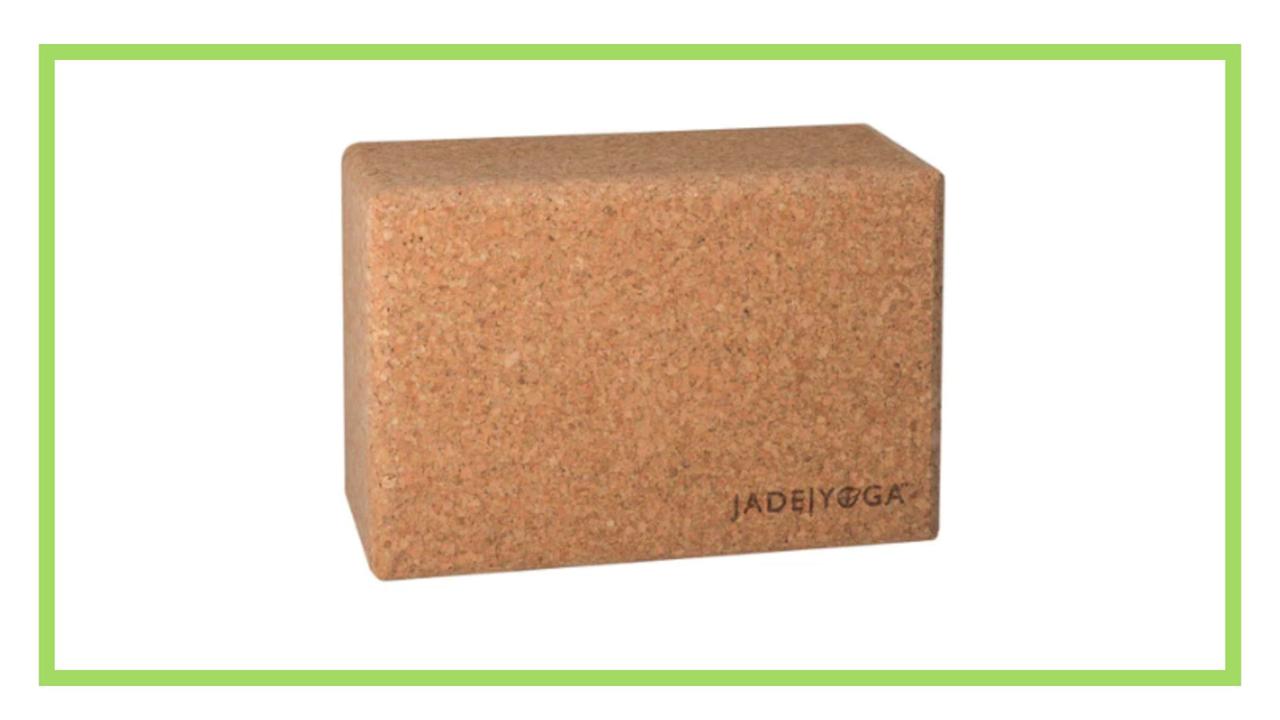
Sizing: Small (large size also available) | Materials: Sustainably harvested cork | Dimensions: 3 x 4.75 x 9 inches | Weight: 1.1 pounds
For yogis with smaller hands, grabbing a standard 4-inch wide block can be challenging. The JadeYoga Small Yoga Block solves this by maintaining the standard 9-inch height to retain the lift, while shaving down the width and thickness. This slimmer profile makes it incredibly nimble, which is handy when you’re trying to make adjustments quickly during your flow.
It’s crafted from sustainably harvested cork, providing solid stability and a natural grip that absorbs sweat rather than getting slick. At 1.1 pounds, it’s significantly lighter than full-sized cork blocks, which makes a huge difference during abdominal exercises. The only trade-off is the non-beveled edges, so the block isn’t quite as comfortable under your back or hips.
The smaller footprint is convenient if you plan to practice outdoors or take it with you on vacation. But JadeYoga also offers a large version of the block, featuring the same high-quality, sustainably sourced construction but with the width and thickness of a standard yoga block.
- Comfortable for smaller hands
- Great grip
- Lighter than the Manduka cork blocks
- Sustainably sourced cork
- Large size available
- Naturally antimicrobial
- Pointed edges may be uncomfortable
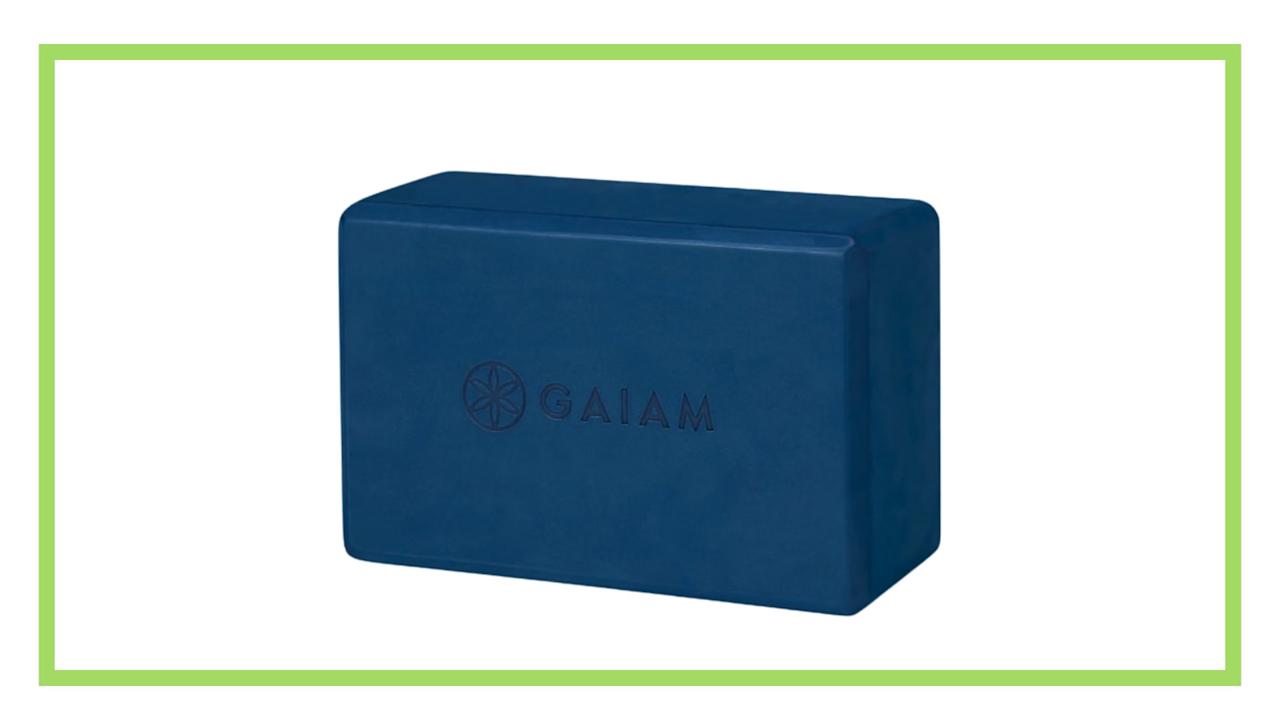
Gaiam
Sizing: Standard | Materials: EVA foam | Dimensions: 4 x 6 x 9 inches | Weight: 0.3 pounds
For a no-frills yoga block that won’t break the bank, it’s hard to compete with the Gaiam Yoga Block. The foam block is firm without being uncomfortable and weighs just 0.3 pounds, making it easy to maneuver or take on the go. It also offers beveled edges and a non-slip surface for a comfortable and supportive grip. Additional highlights include multiple color choices, an easy-clean surface and a 2-pack option for less than $20.
While the block doesn’t offer the same sturdiness as the JadeYoga or Manduka cork blocks, we found this Gaiam option stable and supportive enough for most basic yoga practices. However, this might not be the block for you if you plan on doing more advanced inversions and arm balances. Also, keep in mind that the block has a distinct chemical smell that takes a couple of weeks to dissipate.
- Budget-friendly
- Lightweight
- Beveled edges
- Comfortable, non-slip grip
- Available in multiple colors
- Also sold as a 2-pack ($17)
- Strong chemical smell
- Less sturdy than others
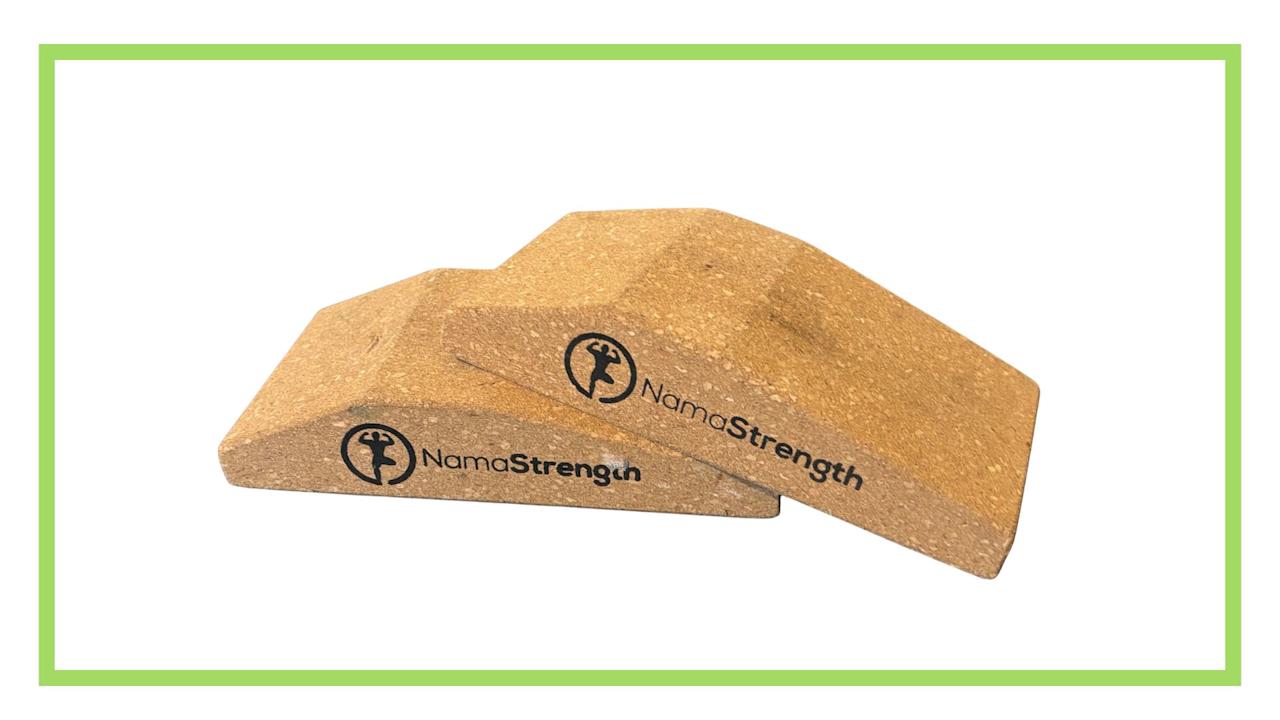
Laura Williams
Sizing: Wedge | Materials: Cork | Dimensions: 1.65″ H x 3.9″ W x 7.65″ L | Weight: 0.6 pounds
While not a yoga block in the traditional sense, if you’re working on arm balances or your wrists start to ache while doing planks, this set of NamaStrength blocks may be exactly what you need. The shape itself is a patent-pending design intended to prevent wrist overextension. You can also experiment with different hand positions until you find the balance that works for you.
When comparing this set of blocks to other curved options — the Lululemon Inner Flow Yoga Block and the Manduka unBlok — we found it was definitely better at reducing wrist strain thanks to the wedge shape and the ability to personalize your wrist angle. That said, you should see this block as an addition to your yoga practice, not a replacement for other blocks, especially if you need the added height of a standard block to safely perform certain poses like forward folds.
Because these are specialized wedges rather than traditional blocks, you can’t rotate them to adjust the height or prop yourself up. They won’t help you “add length” to your arms in a forward fold. During testing, we treated them as an add-on wrist support tool, keeping a set of standard blocks ready for the rest of our practice.
But it’s also worth noting that these blocks aren’t a one-hit wonder. Yes, they help protect your wrists during yoga, but they can also be used to stretch your calves or give your feet a light massage. Plus, their lightweight design makes them easy to throw in a bag and use whenever needed.
- Allow you to find a comfortable position for your wrists
- Can use them to help stretch ankles and calves
- Cork material is anti-slip and eco-friendly
- Can use them for non-yoga exercises like push-ups
- Lightweight and portable
- Minimal height limits versatility
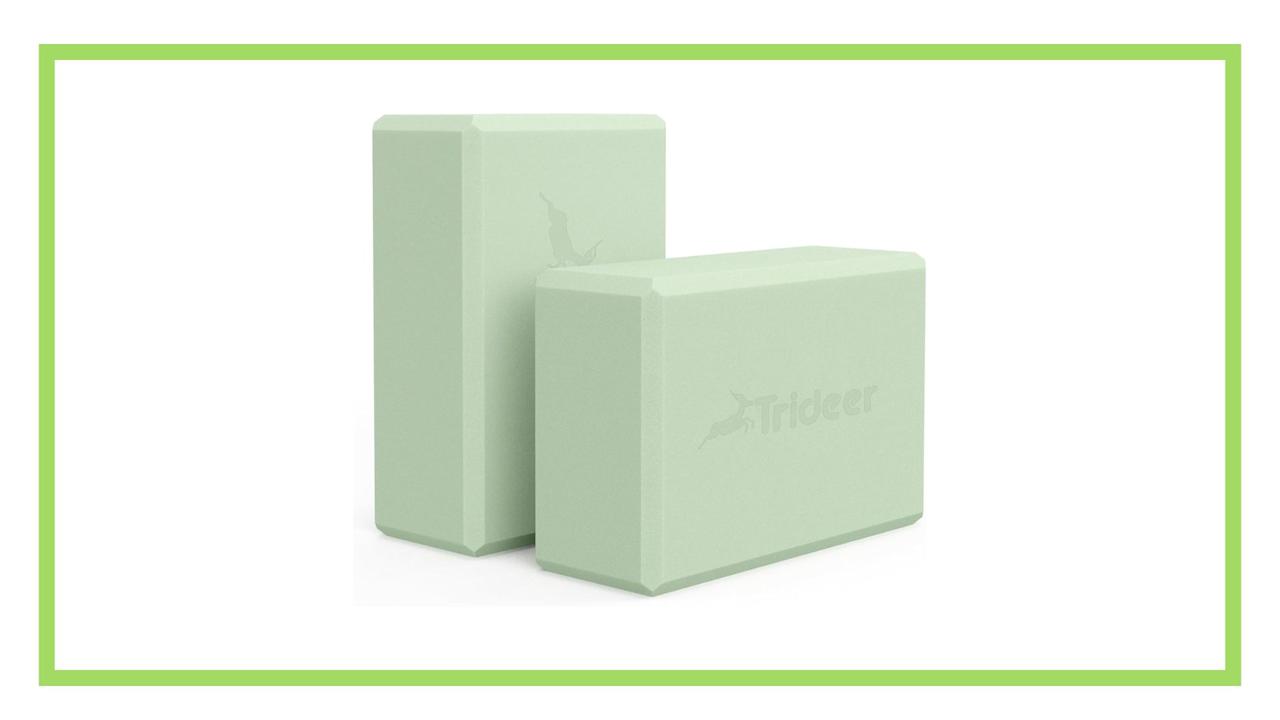
Trideer
Sizing: Wedge | Materials: EVA Foam | Dimensions: 3″ H x 6″ W x 9″ L | Weight: 0.3 pounds
The Trideer Yoga Block is a popular choice if you’re shopping on Amazon and want an affordable block that performs well during your yoga practice. While testing, we found it firm without being uncomfortable, with beveled edges that made it easy to grip and place under the hands or hips.
The block felt quite similar to the Gaiam Yoga Block, offering enough stability for standing poses and forward folds while remaining lightweight and easy to move during transitions. That said, it didn’t feel quite as durable or steady as our top foam pick. Still, for the price — and the convenience of ordering through Amazon — this block covers the essentials of what it means to be a yoga block.
It’s a good choice for beginner yogis with a casual home practice or anyone who wants a reliable spare set of yoga blocks without spending much.
- Affordable price point
- Lightweight and affordable
- Decent grip for most practices
- Doesn’t feel as durable for longterm usage
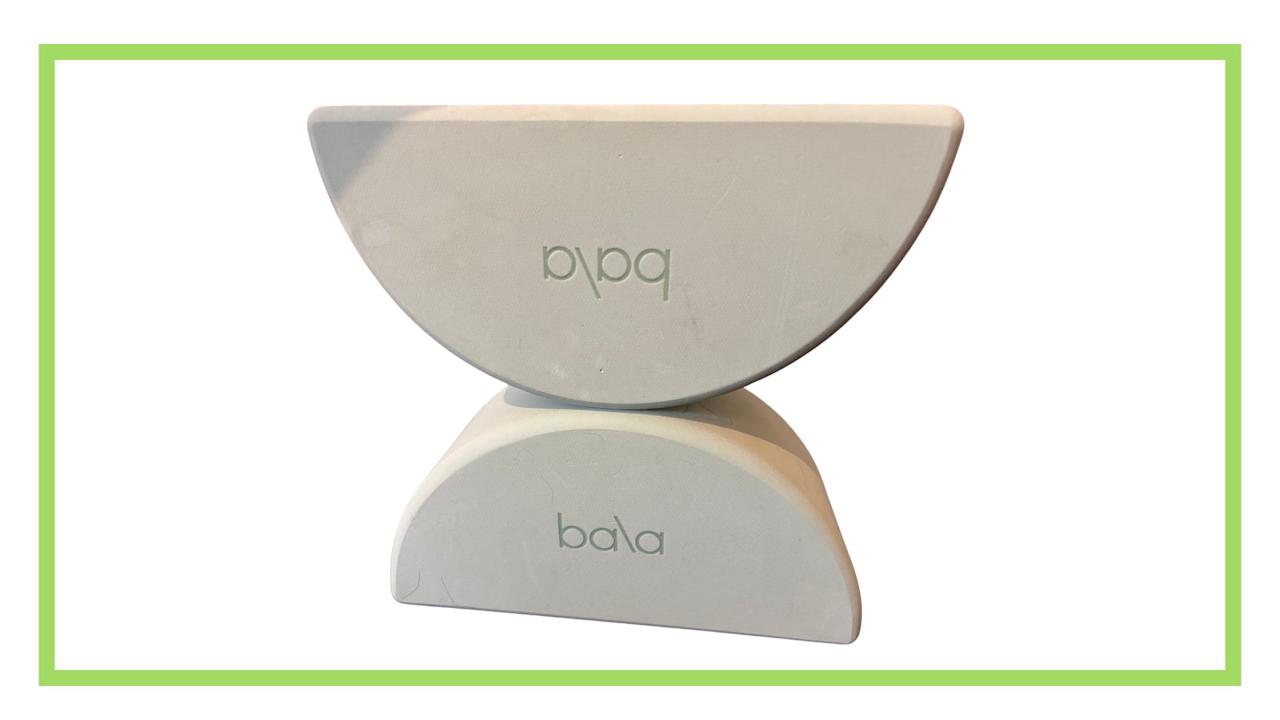
Laura Williams
Sizing: Half circle | Materials: EVA Foam | Dimensions: 11 ⅜” L x 4 ½ W x 6” H | Weight: 0.9 pounds
We tried a number of curved yoga blocks, but the Bala Balance Blocks stand out for their versatility across a range of exercises. They’re longer than a standard yoga block is tall, making it possible to balance a foot on the surface when the curved side is facing down. This means you can perform balance moves like balanced split squats, pushups or lunges — moves that would be less comfortable to perform on a standard-sized block.
And while these Balance Blocks aren’t as tall as a standard block, the 6-inch height still makes them functional for moving into yoga poses where you need an assist to touch the floor, like forward folds. The surface area is also large enough that it’s comfortable to use under your knees, hips or head, and the beveled edge is easy to grip. That said, they’re slightly wider than a standard block, so if you have smaller hands, they may not be the most comfortable to grab hold of.
The set of two blocks is more expensive than many of the options on our list, clocking in at $49, but if you’re looking for blocks you can use across workouts, from yoga to Pilates to strength training, these might just be worth the investment.
- Half-circle shape lends itself to a range of exercises
- Dimensions allow for added height and stability across exercises and poses
- Lightweight design makes them easy to travel with
- Width may be hard to grip for those with smaller hands
- 6-inch height is shorter than a standard block — may not be suitable for those who need more height
Yoga block materials
You’ll find blocks in various shapes and sizes, but the material is the most important factor to consider. Most options fall into three main categories, and each comes with its own specific trade-offs.
-
Cork: These eco-friendly blocks are a favorite for stability. Enright says, recommending them for more challenging poses, like arm balances, because they don’t slide around as much. However, they require more maintenance as Barsotti warns that cork blocks “absorb sweat and smells and are difficult to clean.”
-
Foam: This is likely the best starting point for most people. According to Enright, “foam blocks are my recommended all-around block to invest in.” They’re lightweight and comfortable enough for restorative poses, but the trade-off is that they’re not as eco-friendly as the natural options. They may also wear out faster.
-
Wood: If you want durability, wood is the answer because these blocks last forever. The downside is that they are heavy and hard, making them less comfortable for restorative yoga, according to Barsotti. They can also get slippery during more strenuous practices.
Factors to consider when purchasing yoga blocks
Yoga blocks are the single best investment you can make in your practice to instantly improve your alignment and flexibility. They’re particularly vital for a safe at-home yoga practice where you don’t have a teacher to adjust your alignment. But before you add one (or a set) to your cart, consider these four crucial details to get the best fit for your body.
Some factors to keep in mind include:
-
Material: The right choice depends on your practice style and how you plan to use the block. Consider what matters most to you, whether it’s durability, ease of cleaning, cost or environmental impact, to find the best option.
-
Size: Most blocks measure 9 x 6 x 4 inches. This standard size works for the vast majority of yogis, but if you have smaller hands, look for a “slim” 3-inch option to ensure a secure grip.
-
Shape: The classic rectangular brick offers the most stability for balancing poses. However, if you plan to use your blocks mainly for restorative backbends, consider a curved or egg-shaped block that contours to your spine for added comfort.
-
Quantity: Blocks are typically sold individually, so be careful not to buy just one by mistake. Since you’ll almost always need a pair for balanced practice, consider a bundled set or a lower-cost alternative to keep the total price within your budget.
How we chose
Finding the perfect yoga block took more than just a quick search. We consulted with four industry experts and scrutinized options from over 10 different brands before selecting 14 finalists for hands-on testing. We judged them on everything from how easy they were to clean to how solid they felt during rigorous 45-minute classes. We ultimately had them put to the test by two yoga instructors and an avid yoga practitioner with more than 15 years experience doing yoga. We evaluated these contenders on a tricky balance: Those sturdy enough to hold our weight in a lunge but forgiving enough to support our necks during restorative poses.
Other yoga blocks we tested
-
Vuori Yoga Block: We appreciated the block’s soft surface and beveled edges. However, it didn’t offer the same grip or stability as the Gaiam Yoga Block or the Alo Uplifting Yoga Block.
-
Wild Mingo Eco Yoga Block: We love the artwork featured on the Wild Mingo yoga blocks — it brings playfulness and joy to any yoga practice. We also like that these are constructed of eco-friendly, recycled EVA foam. When it comes to functionality, they check all the boxes too — they’re grippy, offer a beveled edge that’s comfortable to hold and provide a firm, stable surface to support you in even the most challenging balance poses. The only reason they didn’t make the list? The price. At $30 for one or $55 for two, they’re the most expensive block on this list. We just weren’t quite sure that, from a functionality standpoint (aesthetics aside), they outperformed the top picks on this list.
-
Manduka unBlok Recycled Foam Yoga Block: While we love the wrist-friendly curved design on both sides of this block, we ultimately preferred using the NamaStrength wedges for wrist support, then more traditional blocks for extension support to achieve deeper poses. Plus, at $26 per block, you have to spend more than $50 for bilateral support. This block is currently out of stock on the Manduka website, but the site indicates it will be back in stock again soon.
-
Manduka Lean Cork Yoga Block: If you’re looking for a high-quality, compact block, this one or the JadeYoga Small Yoga Block (which we picked above) is a good bet. This block is slightly shorter and narrower than the Jade version and costs a few bucks more when you buy the pair. Both are made from eco-friendly cork and weigh the same amount. The only reason the Jade came out on top was the (almost negligible) price difference.
-
Carolina Morning Buckwheat Yoga Block: This soft, fabric-covered block is filled with buckwheat hulls rather than foam or cork. It’s comfortable to use in restorative and gentle practices, especially under the lower back in bridge pose or between the knees during light core work, where a firmer block would feel uncomfortable. The removable, washable cover and small carry handle are thoughtful touches. That said, the block doesn’t offer the stability needed for standing poses, balance work or weight-bearing arm support, which kept it out of our top picks.
-
Manduka Cork Yoga Block: This dense cork block feels solid and stable, even in more challenging poses, and provides a good grip when hands get sweaty. The beveled edges also made it more comfortable to hold than some other cork blocks we tested. While I ultimately preferred the lighter weight and smoother feel of our top picks, the Manduka block held up well in both standing and restorative poses. However, it’s heavier and more expensive than many alternatives.
-
Lululemon Inner Flow Yoga Block: We loved the handy curved design of this yoga block, and it was previously listed as our “best curved” design. However, the brand has since discontinued the model and now only offers a more traditional yoga block.
FAQs
How do I use yoga blocks?
There are countless ways to use yoga blocks during your practice. Blocks can support your neck or lower back when seated or lying down. Yoga blocks can also be used during strength exercises and core work. For example, in anjaneyasana (low lunge), yoga blocks can be placed under one or both hands to lift the torso and reduce pressure on the hips and lower back. This is especially helpful if your hip flexors are tight or if balancing with fingertips on the mat feels unstable. In uttanasana (forward fold), placing yoga blocks under your hands brings the floor closer and reduces stress on your lower back. Instead of forcing your fingertips to the mat, the blocks allow you to hinge comfortably from the hips while keeping your spine nice and long.
See yoga blocks in action with these 5 yoga poses to do before bed and 5 yoga poses to help ease back pain.
What are the benefits of using yoga blocks?
According to yoga teacher and certified yoga therapist Ilene Cohen, “Yoga blocks are versatile props that offer numerous benefits to practitioners of all levels. They provide support, enhance alignment and deepen stretches, making them an invaluable addition to any yoga practice.”
What’s the difference between a rectangular and a curved yoga block?
Standard yoga blocks are shaped like rectangular bricks that can be used in various ways during your practice. Curved yoga blocks have either one rounded side or are fully egg-shaped and are designed to be more comfortable on your hands and neck.
How many blocks do I need?
Enright recommends purchasing two yoga blocks so you have one on each side of your mat. However, if cost is of concern, one block is still a great starting point.
Meet the experts
-
Marisa Barsotti, RD, LD, Ayurvedic health educator, 200-hour RYT and owner of Digest Peacefully
-
Ilene Cohen, MS, RDN, yoga teacher and certified yoga therapist
-
Mandy Enright, Food + Movement Dietitian, 500-hour RYT and author of 30-Minute Weight Loss Cookbook: 100+ Quick and Easy Recipes for Sustainable Weight Loss
-
Vania Garcia, 200-hour RYT and founder of Evani Yoga Studio
Update, Jan. 11, 2026: We checked all product prices and availability. Our No. 1 pick for best yoga block remains unchanged. We also completed additional testing and provided information on how to modify common poses.
Our health content is for informational purposes only and is not intended as professional medical advice. Consult a medical professional on questions about your health.