


When you buy through links on our articles, Future and its syndication partners may earn a commission.

Credit: Getty Images
There’s a sense that you have to pick a side when it comes to incline walking vs running. And while we don’t think it has to be an either-or approach, understanding the pros and cons of each can help you understand which might be better for your health goals.
On one side, there’s incline walking: a low-impact but highly effective workout that’s surged in popularity over the last few years, in part thanks to the viral 12-3-30 workout. Created by fitness influencer Lauren Giraldo, the method involves setting your incline on a treadmill (or walking pad) to 12% incline and walking at three miles an hour for 30 minutes. It took off in 2020 and remains popular to this day. And for good reason – it genuinely delivers results. Running comes with its own benefits, too, though. From boosting cardiovascular health to burning calories and busting stress, the list goes on.
Whether you decide on a blend of both workouts or want to know the best one to choose for targeted results, we break down the benefits (and disadvantages) of both incline walking and running.
Incline walking vs running
For cardiovascular health
Both incline walking and running can help improve cardiovascular health, as long as they sustain an elevated heart rate in the “moderate-to-vigorous” intensity zones for a meaningful duration, explains Dr Christopher Broyd, a consultant cardiologist at Nuffield Health Brighton Hospital. “Both are highly effective at reaching that threshold, though they create the demand in different ways.”
He continues, “Incline walking increases cardiovascular effort by adding resistance rather than speed. Walking uphill forces the heart and lungs to work harder to deliver oxygen to the muscles, often raising the heart rate to levels comparable to a light or moderate run.”
This makes incline walking a great option for anyone starting their fitness journey as it’s a low-impact way of exercise that’s easy on the joints – plus, it gets your heart rate up. Of course, the steeper the incline, the more your body has to work. “Incline walking is excellent for cardiovascular health because it raises your heart rate without requiring repeated high-impact foot strikes,” explains personal trainer Monty Simmons.
However, when it comes to boosting cardiovascular health, sprinting is hard to beat, and the benefits of running are endless. “From a cardiovascular standpoint, running provides a strong aerobic stimulus. Because most people aren’t used to running, it creates a significant training effect quite quickly,” explains Simmons.
“If you pace it properly, you can stay in an aerobic zone rather than tipping straight into anaerobic intensity, which can feel uncomfortable if you’re new. Over time, running improves VO₂ max, overall stamina, and heart and lung efficiency.”
“Running elevates the heart rate more quickly and intensely. It places greater demand on the cardiovascular system, making it easier to reach higher training zones in a shorter amount of time. This can lead to improvements in aerobic capacity and overall efficiency of the heart and lungs,” agrees Dr Broyd.
So overall, they’re both brilliant for improving cardiovascular health. However, if we had to pick…
Winner: Running
What to wear
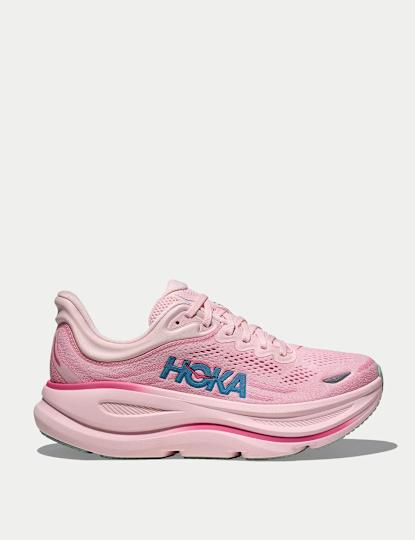
Bondi 9 – Rose Tea/petal
Whether you’re incline walking or running, comfort is key. A well-cushioned pair of trainers will suit both activities, and with 41.3mm of plushiness in the sole, the Hoka Bondi 9 are some of the best. Breathable and resilient, too, these will take you from treadmill workouts to hill climbs without an issue.
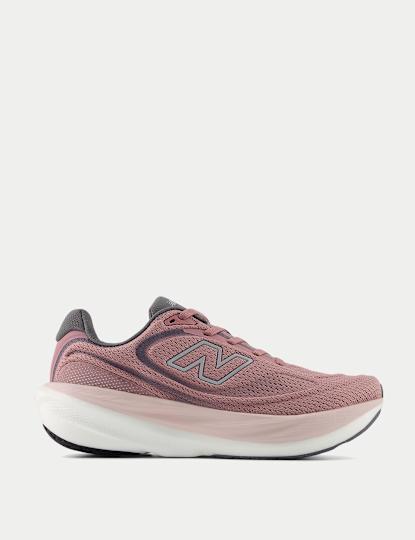
1080v15 – Rosewood
Equally comfortable are the latest everyday shoe from New Balance. These have a little less stack in the sole and a small rocker, making for an easier ride if you go for a run. Digital Health Editor Grace Walsh recommends these if you plan to do any running outside, thanks to the improved energy return.
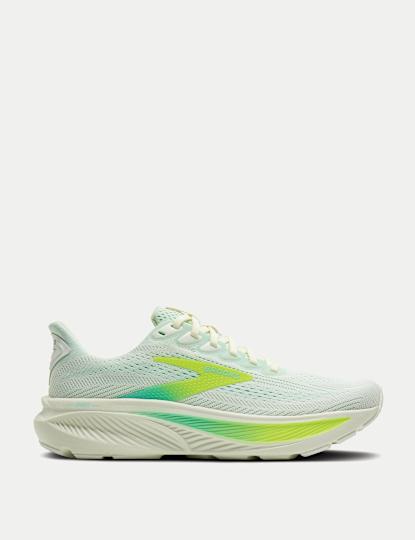
Ghost 17 – Bluewash/nightlife/yucca
The Brooks Ghost 17 are a running shoe by design. Yet, the supportive build and limited stack on the sole makes them a versatile option for treadmill and gym workouts, so you don’t have to swap shoes between your strength and uphill walking sessions.
Muscle building
Again, both incline walking and running are brilliant for strengthening muscles, but they work your muscles differently and target different areas. “Incline walking is excellent for building lower body strength and targets important muscle groups such as glutes, hamstrings, and calves effectively,” explains Dr Broyd.
“Incline walking builds leg and hip strength, which is important for supporting the lower back, particularly given how much time most people spend sitting. That posterior chain engagement is a big benefit,” says Simmons.
That’s not to say running doesn’t work your muscles either, though. “Running strengthens the calves, quads, glutes, adductors, and core. It supports spinal stability and whole-body coordination,” continues Simmons. “It also strengthens tendons and bones through repeated ground reaction forces, provided the load is increased gradually.”
If you’re combining workouts with additional weight training, incline walking can be a better choice, as it’s low-impact and easy on the joints, allowing for better muscle recovery. It’s also easier to incorporate additional resistance aids, like the best weighted vests or ankle weights, while incline walking.
“Running doesn’t always allow for the same sustained muscle tension,” agrees personal trainer Jade Imani. While neither is a true muscle-building exercise, incline walking may offer a slight advantage for lower-body muscular endurance and glute activations without excessive fatigue or joint stress.”
Winner: Incline walking
Credit: Getty Images
For weight loss
Both running and incline walking will burn calories and aid weight loss, so one isn’t necessarily better than the other. Running burns more calories per minute than incline walking, with a recent study by the International Journal of Exercise Science showing that, within their sample group, running burned approximately 13kcal per minute compared to 10kcal per minute doing the 12-3-30 workout. The same study also showed that participants burned the same amount of calories in a 23-minute run vs 30 minutes of incline walking.
“For weight loss, running burns more calories per minute because of the higher intensity. Faster, rhythmic movement requires more energy, so running is efficient if time is limited. A 20–30 minute run can deliver a strong training stimulus without needing long sessions,” explains Simmons.
However, that doesn’t show the whole picture, and some may find it easier to sustain long periods of incline walking than they would running.
“Incline walking can support fat loss with minimal joint stress. It’s low impact, and you can do it for a long duration, increasing total calories burned,” says Keiren Douglas, a personal trainer at Nuffield Health. “It doesn’t interfere with weight training, which is essential for health and maintenance of muscle when burning fat. You’re less likely to injure yourself, and you’ll find yourself less hungry than when running.
“Incline walking may be the best option for sustained fat loss for most beginners, especially paired with weight training and a healthy diet. If you have these other factors locked in, then it can prove a very effective method with minimal fatigue, injury risk, and high sustainability over time.”
Ultimately, every expert we consulted said the same thing: both are good for weight loss, but the best one for you will be the most sustainable one. “For weight loss, you’ll burn more calories simply because you’re doing more work. If you go straight home and sit on the sofa versus stopping at the gym and walking on an incline for an hour, you might burn an extra few hundred calories,” explains Simmons.
“That’s meaningful if you’re trying to lose weight without aggressively restricting your diet. It’s also good for joint and bone health. There is still impact, but it’s low-grade and repetitive, which helps stimulate bone tissue over time without excessive stress.”
Winner: It depends
Joint health
Both incline walking and running can improve joint health. However, they generally work different muscle groups, and running carries a greater risk of joint damage if you don’t train properly. Start slow, try running for beginners, and work your way up – otherwise, you’re more likely to damage than strengthen your joints. However, incline walking is undoubtedly lower impact.
“Both incline walking and running on a treadmill can support joint health when matched to the individual. Incline walking is lower impact and reduces stress through the knees, hips and ankles, while running can help maintain bone density and joint strength when performed with good technique and appropriate recovery,” explains Matt Gardner, a regional exercise experience manager at Virgin Active UK.
“The higher impact of running also increases stress on the joints and connective tissues, which can limit how frequently some people can train or increase the risk of overuse injuries. Similarly, muscle soreness and recovery can prevent frequent high-intensity training sessions,” explains Dr Broyd.
“For joint health, running can be beneficial when progressed gradually. The impact helps maintain bone density and tissue resilience, but recovery becomes more important. It’s not something most people should do every day, especially early on. It also improves tolerance to impact forces and builds mental resilience, because it’s physically and psychologically demanding,” says Simmons.
“Exercises like skipping or running involve much higher joint impact. Incline walking is significantly lower impact, which makes it a safer option for many people, particularly if bone density, joints, or recovery are a concern.”
Winner: Incline walking
For beginners
Incline walking is undoubtedly easier than running. You can start at a low incline and speed, and gradually work your way up.
“Incline walking on a treadmill is highly accessible, making it an ideal option during bad weather. It’s well-suited to beginners as the intensity is easy to control and requires lower perceived effort than running, while still delivering meaningful health benefits,” says Gardner.
“Because it feels manageable, incline walking can be sustained for longer periods, helping people build fitness gradually and maintain a consistent routine over time.”
Imani agrees, adding, “Incline walking is highly accessible as it is less technical, has a lower injury risk and feels more approachable for people who are new to exercise. Running can be time-efficient and mentally rewarding, but often requires more recovery and careful load management, especially on treadmills.”
That said, anyone can take up running, too! It just requires a little more research, a good pair of running shoes, and easing into it gradually. Start by ‘jeffing’ (a popular run/walk method) or by following a simple, beginner-friendly running plan, like Couch to 5k.
Many might find running indoors more accessible than hitting the streets, too. “Running indoors on a treadmill is a good way to practice consistent pacing as you don’t have to worry about stopping to cross roads or route planning, and avoid the Great British weather! Plus, you can use it for all types of runs, including hills with incline settings,” adds Peloton personal trainer Susie Chan.
Winner: Incline walking
For saving time
Running is a more efficient workout, though both incline walking and running can fit into your routine if you’re strapped for time.
“Because of its intensity, running is often more time-efficient, particularly in terms of calorie-burning rate, which appeals to individuals with busy schedules or performance-oriented goals,” agrees Dr Broyd.
“For beginners, older adults, or those managing joint pain or previous injuries, incline walking can be a sustainable way to achieve meaningful cardiovascular benefits. However, it can be more time-consuming and has a slight monotony that may make it best alternated with exercise regimens,” he says.
This advice was echoed by every expert we consulted. “Running will help develop your cardiovascular system, improving your heart, lung, and circulatory health. Because you’re working at a higher intensity, you can burn more calories in less time, although you will feel the effects of fatigue very quickly. This makes it very efficient if time is a factor,” agrees Douglas.
However, if you have a walking pad with an incline option at home, you can easily walk 10,000 steps without leaving your house. If you’re able to get your steps in while you work or watch TV, this might mean incline walking is a more time-efficient option for you.
Winner: Running
For mental health benefits
Running 20 minutes a day, three times a week, has proven mental health benefits, with a study from the University of Boston Medical School showing that running for 20 minutes three times a week was just as effective for participants with clinical depression as weekly therapy or a pared-back combination of both.
Of course, this won’t be the case for everyone, and if you are struggling with your mental health, it’s best to speak to a mental health professional. But it does prove the positive mental health benefits of running.
“One of the things I enjoy most about running is how it can help you feel, boosting your mood and having a positive impact on your mental health,” explains Chan. “I have a saying that you never regret a run, and if you focus on the movement, rather than getting too worried about how fast you are running, it is very accessible. It can also be a very social sport; there are lots of running clubs for all abilities, a local parkrun which is accessible for runners and walkers, or a community such as Peloton, which enables you to work out from the comfort of your own home.”
The higher intensity of running prompts “a strong endorphin response often described as a ‘runner’s high’ alongside dopamine release, which can boost motivation and mental clarity,” explains Gardner. “Running is also effective at relieving stress and anxiety by channelling nervous energy and providing a clear mental reset.”
That’s not to say incline walking doesn’t offer mental health benefits, and one of the main benefits of walking is that it’s a proven mood booster. ”The steady, moderate intensity of incline walking encourages the release of feel-good hormones such as endorphins and serotonin. The result is a workout that supports physical health while promoting a calm, focused mental state, making it particularly effective for stress relief,” says Gardner.
Winner: Running
How to choose between incline walking and running
-
Consider your fitness levels: “If you’re looking for high-intensity cardio, enjoy running and recover well, treadmill running is an option. If your priority is joint health, consistency, fat loss or building aerobic fitness without excessive fatigue, incline walking may be the better fit,” explains Imani.
-
…and your fitness goals: “Consider your goals. If you want to get a sweat on, improve circulation, and feel energised, incline walking does the job well. If you’re aiming for higher-level cardiovascular fitness or performance, running becomes more relevant,” explains Simmons.
-
Which fits in better with your lifestyle? “In the end, the better workout for cardiovascular health is the one that fits your body, your lifestyle, and your motivation. The best exercise is the one you enjoy and can stick with consistently,” explains Dr Broyd.
-
Which do you enjoy the most? “Both are great options, but finding the best one for you will depend on how much you enjoy either option. The best cardio is the one you don’t mind doing a lot of. All movement is good movement,” explains Douglas.
-
Consider doing a blend of both: Every expert we consulted advised doing a mixture of both and trying incline walking for longer, lower-impact sessions and running for short, high-intensity workouts. “This balanced approach improves heart health while reducing the risk of injury and burnout,” explains Dr Broyd. “This is something I do a lot now as a 50-year-old woman; making sure I mix in low-impact walking, mobility and some strength sessions, and now I am running less so that I can run feeling stronger,” agrees Chan.
-
Either way, start slow: “For both incline walking and running, it’s important to build up slowly. For example, with incline walking on the treadmill, don’t start at too high an incline and gradually build yourself up,” she says.
-
Prioritise consistency: “Consistency, whether you are running or incline walking, is the best way to build endurance. Finally, for those running, embrace the walking break – I’ve been running for years and still take walking breaks,” she says.