


Stars are beautiful, and they can be a camper’s best friend. If you’re lost in the woods you can use stars to navigate, but most people prefer to simply sit and watch them. Depending on where you live, stargazing could be as simple as lying down in your back yard or as complicated as a long hike to a remote camping spot. Luckily, there are some easy things you can do to make the most of the night sky.
The best time to go stargazing is winter. Not only is the air clearer and easier to see through, but the longer nights mean you can maximize your stargazing time. If you’re heading somewhere remote, be sure you have all the essential gear for winter camping. Even if you’re only stepping into your yard, you’ll still want to layer up and bring blankets to keep yourself warm. You might also want to pack binoculars or a telescope if you want a closer look at the stars, but you don’t need to. At the right location, there’s plenty to see with just your eyes.
For the clearest view with the most stars, choose a stargazing spot away from light pollution. You can use the Bortle scale to help you decide where to go. The Bortle scale assigns the night sky a numerical value from one to nine, where nine has the most light pollution and one has the least. Checking where an area falls on the Bortle scale will give you an idea of what to expect.
Read more: Take These Steps If You Get Lost In The Woods
The best places to go stargazing

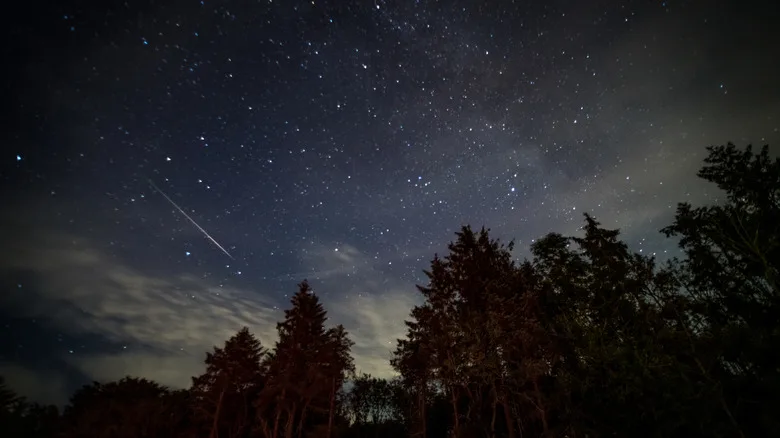
Meteor shower at Hawnby, North York Moors – Chris Mcloughlin/Getty Images
If you live in the suburbs or somewhere more rural, you may not need to go anywhere for a great view of the starry night sky. Reducing the light pollution from your home may be enough to let you enjoy the stars. Turn your outdoor lights off or switch white lights out for red ones. For a more striking view, you may need to travel. The organization DarkSky works to educate the public and preserve areas without light pollution, and they also provide a list of these places that you can visit. There are locations both abroad and in the U.S., so you can choose the one that best suits your travel preferences.
Not all of the locations are remote, either! While some, such as the Arkaroola Wilderness Sanctuary in Australia or the Bavarian Forest Star Park in Germany, are in wild spaces, others are cities that have dedicated resources to keeping their sky dark. Bee Cave, Texas, and Antelope, Oregon are two such communities, recognized by DarkSky for their lighting ordinances. The National Park Service also lists locations that make great stargazing destinations, some of which are also recognized by DarkSky. From Denali National Park in Alaska down to Big Cypress National Preserve in Florida, there are many fantastic places you can visit. Many national parks even have night sky events. It’s worth looking to see if there are any near you, or any that coincide with your trip!
Want more design inspiration? Join our free newsletter to get the best home and garden tips, design hacks, and DIY projects delivered right to your inbox. You can also add us as a preferred search source on Google.
Read the original article on Outdoor Guide.