When I opened the brown paper bag it smelled like popcorn. The freshly baked bread inside had a delicious aroma of oil, salt and just a hint of sweet. After taking a bite into the perfectly crisp crust and soft doughy middle, I understood why it was such a popular staple at the Swamp Rabbit Café & Grocery in Greenville, South Carolina. The success of this stecca bread, named after the Italian word for “stick”, is a story of serendipity. “We were just slow one day, and so I was like, ‘Oh, I’ll make my stecca bread,'” co-owner Mary Walsh told Southern Living. She gave some to one of their regulars, and he couldn’t stop raving about it. Now the company bakes stecca bread daily, often pumping out loafs until the early afternoon. Walsh said, “I think the freshness is what makes it extra special.”
So Fresh And So Clean
Freshness is a key ingredient of all that Walsh and her partner, Jac Oliver, deliver to customers at Swamp Rabbit. In fact, I almost missed the racks of stecca bread when I entered the grocery because my eyes were drawn to the overflowing baskets of ripe peaches and boxes of baked goods lining the aisles. The reason Swamp Rabbit’s goods are so fresh is because they are locally sourced. “Our mission is to support a just and sustainable food system that allows small local farmers and food makers to thrive,” explained Walsh. “Everything we do, every decision we make, we’re always trying to find a local person to replace this non-local thing.” And it’s not just produce and baked goods. Swamp Rabbit’s grocery is packed with everything from dairy and pasta to meats and cheeses. There’s also pet supplies, pantry items, and beauty products available. Once you’ve checked off your grocery list, you may choose to relax and refuel with a sandwich from the café or grab a bottle of wine and some gourmet snacks to enjoy on the outdoor patio.
Buying and stocking a store with local goods is an admirable goal, but one that is not always easy to obtain. “It’s one of our biggest challenges,” admitted Walsh. “If we were planning to get 300 pounds of tomatoes, but the deer got to their field and now they have nothing, we gotta pivot.” But despite the many hurdles, Swamp Rabbit has managed to stay true to its mission since opening its doors fifteen years ago. Walsh said they now source products from roughly 300 farmers and more than 300 food makers within their community. “That’s the tricky balance we do every day of making sure we’re proud of what we’re selling and also showing customers the value of choosing this one over one that was imported,” said Walsh. “Our hope is that they eat a sandwich and are like, ‘Why does this taste better than anything else?’ It’s because the lettuce was harvested yesterday.”
Built For Bikes
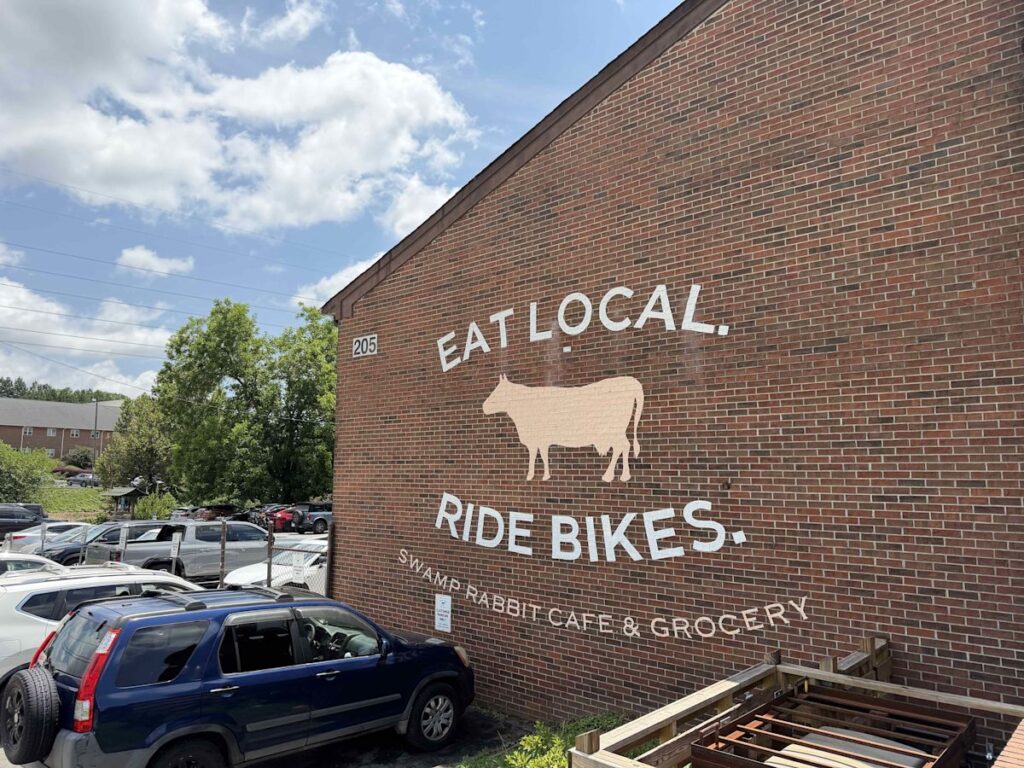
Thanks to the café and grocery’s convenient location right off the Swamp Rabbit Trail, I arrived via bicycle. It’s a beautiful 15-minute ride from downtown Greenville through picturesque parks and under the canopy of native trees. Turns out, it’s the favored method of transportation as noted by Swamp Rabbit’s enormous yellow bike on the rooftop and the words “Eat Local. Ride Bikes.” on the building’s walls. Even the fence surrounding the property is made with recycled bike wheels. “I grew up in a place where we didn’t need a car,” said Walsh, a New Jersey native. “And so, for me, I was really passionate about having a location that you could access safely, not just by car, but by walking or bicycle.”

A Risk Worth Taking
Swamp Rabbit co-owners Walsh and Oliver met while working at an environmental nonprofit in Greenville. The new friends discovered a shared passion for the local foods and produce but also a shared frustration that these items were only available on weekends at the farmers market. In 2011, the two entrepreneurs quit their jobs to pursue their dream of creating a company that offered straight-from-the-farm foods year round. “We didn’t have a lot of money. I think we each had about $30,000 in savings,” said Walsh. “And so, each of us basically emptied our bank accounts to invest in the business.” They had no bank loans, no big investors. But what they did have was a local businessman who had recently purchased an abandoned meat processing plant along the town’s newly-opened recreational pathway. Walsh and Oliver pitched him their idea and he jumped on board. Because they did not have the capital to purchase the property, he agreed to rent the building to them, helped them fix it up, and even provided valuable business advice to get them off the ground. Walsh said it didn’t take long for him to become their best customer. “Without him, we don’t know if we would exist.”
Advertisement
Advertisement
Despite the cloudy skies and light drizzle on the Saturday I visited, Swamp Rabbit was packed with kids, dogs, and plenty of people lined up to buy things. But Walsh said there are also days where they have more employees than customers. “I think those swings just can make running a small business really challenging,” she said. To stay afloat and maintain growth at Swamp Rabbit, Walsh and Oliver got creative and established a food hub in 2016. Since they were already doing the work of sourcing local foods from hundreds of farmers for their own use, Walsh said it made sense to offer those same fresh goods to area restaurants at wholesale. Now the food hub is not only a significant source of income for Swamp Rabbit, but it also makes life easier for the farmers they work with and the restaurants they serve. “One farmer was able to buy a new tractor because we more than doubled our orders from them,” said Walsh. “Our food hub now serves, on any given week, between 40 and 80 restaurants.”
A Place To Pause
Swamp Rabbit is not your typical grocery store where you want to just get in and get out. I saw plenty of patrons gathered at the communal picnic tables under canvas shade sails or relaxing in the green spaces out under the trees. Those with little ones in tow had let them loose in the fenced in Bunny Patch playground. Walsh said the play space grew out of necessity when she and Oliver were just starting out. “My partner and I both started having babies in the early days of the business,” she said. “We would have someone come to babysit the kids, and we needed a place for them to just be contained.” Now the so-called Swamp Kids entertain themselves with the many toys that have been donated by community members. “We didn’t have this in our minds when we opened, but it’s really become a community gathering place,” Walsh said. “I think having a place where you pause, take time, maybe you sit and let your kid play and you finish your coffee, I think just having those unplanned human interactions I think really makes the whole experience just that much better.”
Read the original article on Southern Living