

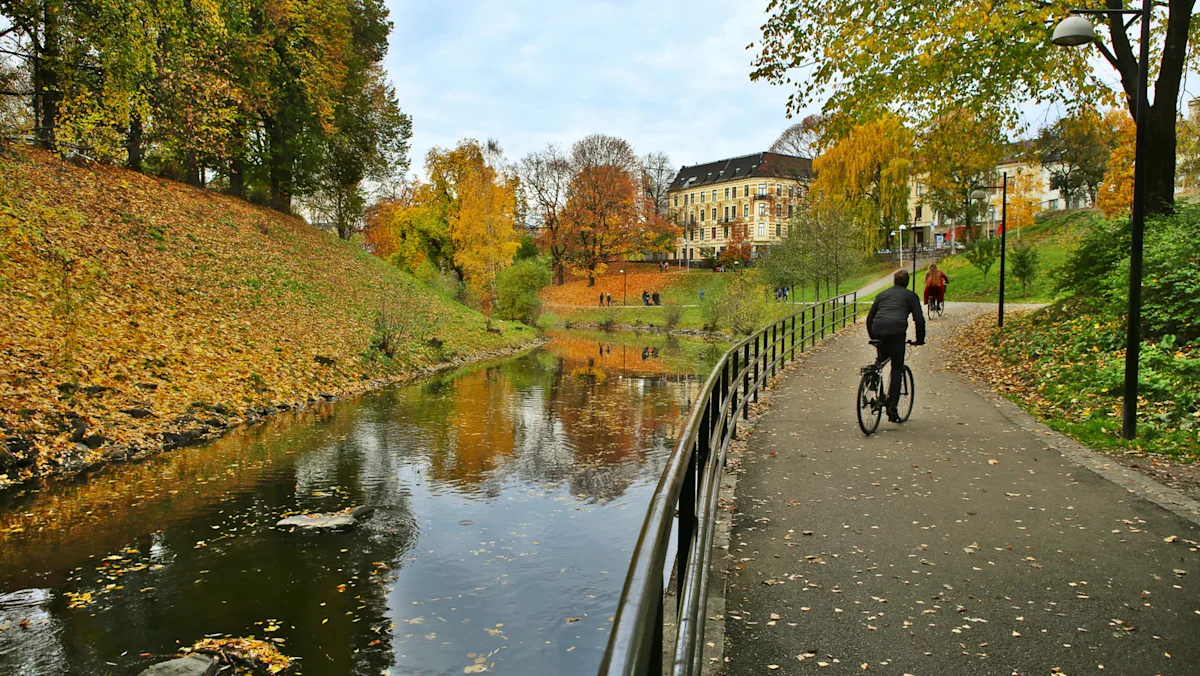
Fall is a season rife with opportunity. It is a custom-built walker’s paradise, an excuse for a perfect camping adventure, a time of leaf peeping filled with opportunities to dust off comfy sweaters and enjoy a good book by the fire. It is, surely, the mildest and least controversial of the four seasons.
Of course, not all autumns are born equal. A stroll through some of the most beautiful fall destinations is anything but a localized experience. You might find yourself camping in the Forest of Dean, exploring the Masurian Lakes of Poland, or perhaps even taking in the grape harvest in Armenia. Such places offer quintessential autumnal experiences: leaves, mild weather, harvest fruits, cozy picnics, and pumpkin spice delicacies are virtual guarantees.
Still, there are plenty of places in Europe where the autumn season brings some undeniably chilly barometer readings. The continent’s vast northern tundra, its eyebrow-raising microclimates, and changing terrain create something of a patchwork effect. Yes, there are plenty of places that are still positively toasty during the fall months; Cyprus remains a great Mediterranean island getaway year-round, for example. But there are also those locations where the fall weather brings with it the first brush of the biting cold, where winter sports start a shade earlier than most places, and where a sweater is more of a feature than a bug. Here are 10 such places. All of them are in my backyard, so to speak, and I’ve visited them in every season you might care to mention and would do so again without a moment’s hesitation.
Read more: Dangerous European Destinations To Skip On Your Next Trip
Prague, Czech Republic
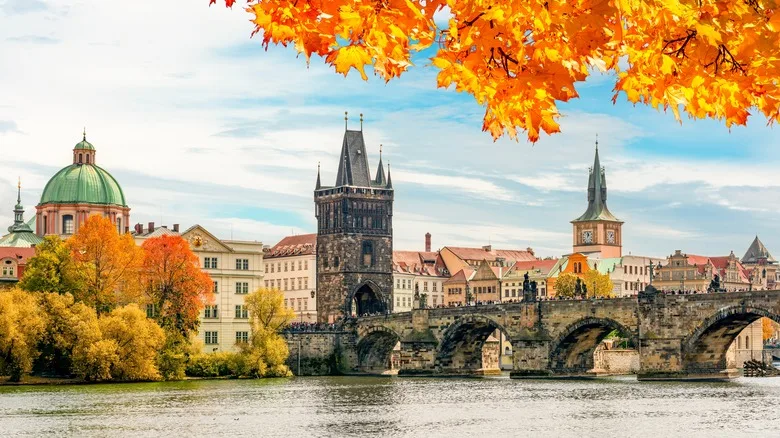
Prague cityscape with Charles bridge over Vltava river in autumn, Czech Republic – Mistervlad/Shutterstock
Prague is a city filled with so many tourist attractions that some of them feel less than real. During the summer, the city population swells as close to two million international visitors gather each month to take in all that the city has to offer. Prague Castle becomes an exercise in patience as queues line up around the block. A glimpse of the astronomical clock is reminiscent of a particularly contentious rugby scrum. Tourists shuffle across the historic Charles Bridge like a sea of warm molasses. The shoulder season is almost as busy. As for the festive period, Prague’s offering is one of the best Christmas markets in Europe; yuletide crowds are almost as overwhelming as the summer rush. Fall, however, represents something of a sweet spot for would-be travelers.
Temperature-wise, things are more than manageable. October brings the first sign of crowd relief as the temperature drops from the mid-60 degrees Fahrenheit of the shoulder season to the low 50s of the encroaching fall. By November, the mercury tends to drop close to the freezing point, bringing with it less precipitation, clear, crisp skies, and tourist numbers that are close to half that of the August peak. And still, there are plenty of things to do.
The magnificent 13th-century Basilica of Saint James remains open to visitors. You can shed mittens and explore the wonders of the city’s astronomical tower without having to wait in an endlessly shuffling line. The castle is denuded of waiting times, Letná Park is alive with autumnal shades, and at the U krále Brabantského — a genuine medieval tavern in the heart of the city — you might actually get served.
Warsaw, Poland
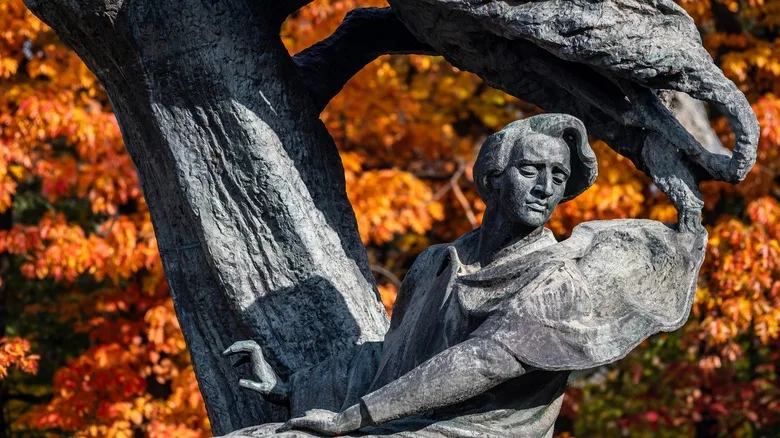
Fryderyk Chopin monument in Lazienki Park in Warsaw, Poland – Tomasz Warszewski/Shutterstock
Warsaw is one of those rare places in Europe where a capital city is somewhat eclipsed by surrounding attractions. Kraków’s Christmas Market is perhaps more beloved. The Masurian Lakes offer some of the best fall views you’ll find anywhere in the world. Lublin — one of Europe’s finest university towns — receives more visitors, sure. But none of that prevents Warsaw from being one of the top-ranked vacation spots in Europe.
In truth, there really isn’t a bad time to visit the Polish capital. The summer months are glorious — if crowded and prone to sudden showers. During winter, tourists vanish into the ether, offering a chance to explore the city’s cultural heritage at a much more amenable pace. During spring, the hustle picks up again; autumn exists slap bang in the middle of the Goldilocks zone. Temperatures in September remain pleasantly warm, but October brings mid-40 degrees Fahrenheit temperatures, even as November contemplates the low 30s.
Still, there are plenty of reasons to spend time indoors if the cold begins to bite. Warsaw hosts a must-see autumn film festival, café culture is robust, and Chopin concerts abound. For those willing to wrap up warm, however, autumn walks through Łazienki Park are a delight, and in November, the royal residencies open their doors to the public completely free of charge. Meanwhile, food becomes increasingly hearty as minds turn towards fried dumplings, warming broths, and duck blood soup. Those seeking less carnivorous fare will be well served here; Warsaw’s status as Europe’s capital of veganism is as surprising as it is welcome. Meanwhile, the Christmas market starts early here. The whole of Warsaw’s Old Town comes alive with decorations, and for a short time at least, you can get into the Christmas spirit while still brushing off the last vestiges of fall.
Vilnius, Lithuania
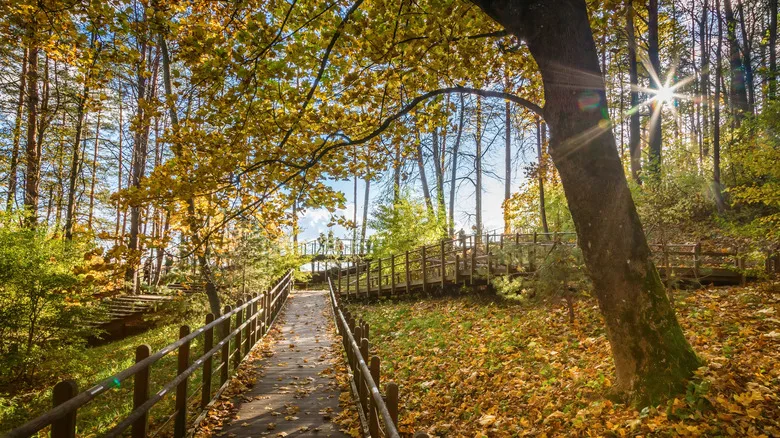
A cozy autumn view of a wooden boardwalk flanked by tall trees in Puckoriu atodanga in Pavilniai Regional Park’s in Vilnius, Lithuania – Anna Lurye/Shutterstock
Lithuania is the most southerly of the Baltic states, and its capital is the only one of the three not situated on the coast. Still, Vilnius lies in the heart of a much-underrated European country, and its capital offers city break experiences that few others can compete with. To begin with, it’s inexpensive; a weekend stay can be picked up for less than $340. During the fall, things tend to skew even cheaper.
Temperature-wise, you can expect a steep climb towards freezing as the autumn months progress; September brings nights that hover around the 50 degrees Fahrenheit mark. By November, a stroll through the city requires clothing better suited for mid-30s. October lies between these two extremes, but it tends to be wetter. Which is not to say that the weather is in and of itself an issue. Vilnius is, after all, a place of history, beauty, culture, and cuisine.
Foodies are well advised to head towards the Paupys Market, which, despite the name, is more of a restaurant hub than a market. An unashamed celebration of international cuisine, its soothing décor and focus on quality make it an excellent place to warm up before venturing outside to take in yet more culture. The Grand Duke’s Palace also comes highly recommended. Rebuilt from the ground up after its destruction during the early years of the 19th century, today, it serves as the nation’s national museum; tickets are inexpensive, and admission is free on the last Sunday of every month. Meanwhile, hikers can take in the fall foliage via a trip to the Hill of the Three Crosses, a prominent landmark located in the heart of the city. There are several loops to choose from, the shortest being just under eight miles and covering a total elevation of 525 feet.
Riga, Latvia
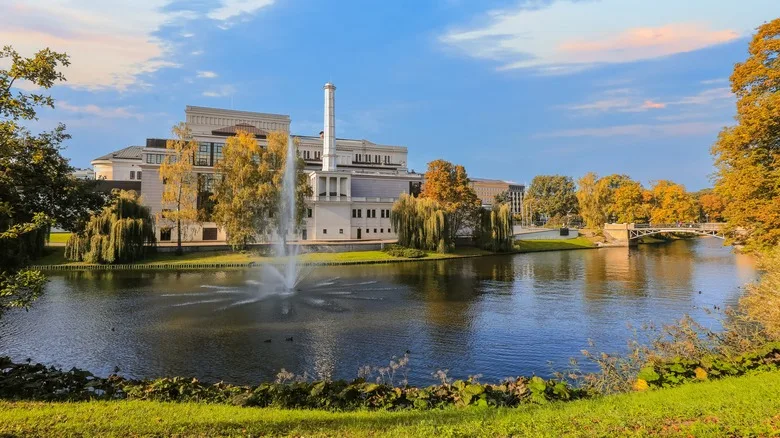
Autumn in Riga, view of the City Channel in the autumn colors and National Opera building reflected in the water – Jelena Safronova/Shutterstock
Some 184 miles north of Vilnius sits the Latvian capital of Riga. An important trading post from the 12th century onwards, its center was granted UNESCO World Heritage status in 1997 in recognition of its eclectic range of architectural marvels. As is the case with Vilnius, Riga is temptingly affordable, and despite its proximity to the Baltic Sea and more northerly location, it maintains temperature parity with its more southerly neighbor. It’s a familiar pattern: September brings evening temperatures in the low 50 degrees Fahrenheit, October is wet, and by November, you’re simply going to have to wrap up.
Thankfully, there are plenty of things to see and do. Latvia is an underrated country that serves as a great destination for art lovers. As you might expect, the capital is where you will find the greatest concentration of said treasures. There are the contemporary delights on display at the wonderfully named Zuzeum, and yet more modern offerings at the –punctuation intended — Kim? The National Museum is located close to the gorgeous-in-the-fall Esplanāde Park; it’s a great place to pop into to warm yourself back up while you peruse art from Latvia’s long and varied history. Meanwhile, no visit to Riga is complete without a visit to the city’s homage to Art Nouveau.
Meanwhile, although the beach might be best left for a summer visit, parks are plentiful. Vērmanes Garden Park is a highlight, and with its open-air stage and open spaces dotted with ancient elm trees, it really is at its best during the autumn. Mid-November sees a week-long celebration known as Staro Rīga or the Festival of Light; words cannot do it justice, and it is yet another reason to take a trip up north as the nights begin to close in.
Tallinn, Estonia
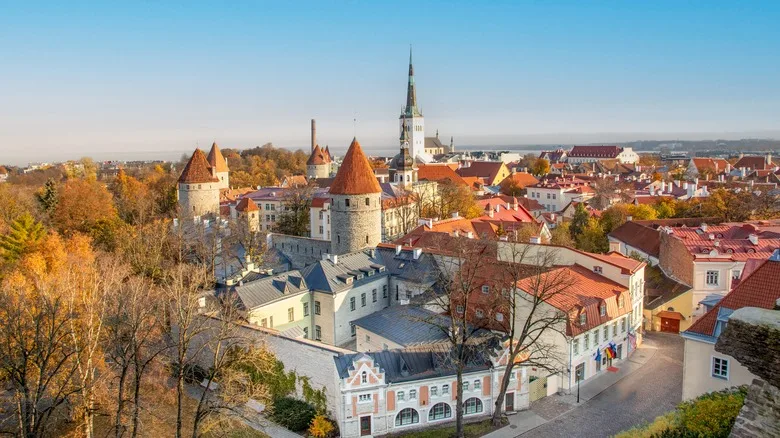
Scenic skyline of Tallinn seen from a nearby hill – travelview/Shutterstock
Estonia is the most northerly of the three Baltic states, and its capital, like Latvia’s, is pressed hard against the sea. September nights present a manageable 50 degrees Fahrenheit, but by November, things often drop below freezing. Such averages are deceptive; Estonian weather is famously mercurial, and cold snaps can occur with little warning. Weather that ventures into negative degrees Fahrenheit is unlikely, but not unheard of.
Still, there are several must-visit places in the Baltic, and Tallinn is certainly one of them. The city’s Old Town oozes charm. It is a place of cafés, broad plazas, and fantastic restaurants, and its medieval architecture is so well-preserved that the whole area was granted UNESCO World Heritage status in 1997.
Meanwhile, as is so often the case in the north of Europe, fall is a time of celebration. Winters are harsh and days are quite short, so making the most of the at least somewhat clement weather is something of a priority. Concerts featuring the very best of Estonian music are joined by museum tours in English and pop art exhibitions. November brings the appropriately named Black Nights Film Festival, and as the days creep ever closer towards late autumn, yuletide fever all but takes over the city. The people of Tallinn have been raising a tree in the town square for close to 600 years, and the Christmas market that grows up around it in late November is one of the oldest and best Europe has to offer.
Copenhagen, Denmark
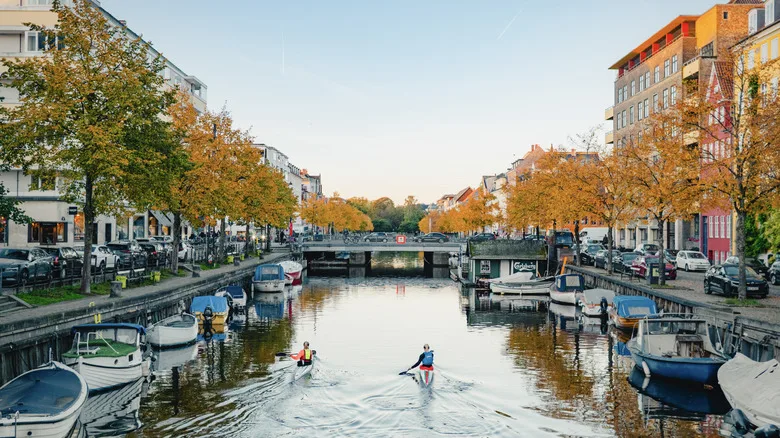
Boats moored along Christianshavns Kanal with colorful historic buildings and autumn foliage in the Christianshavn district. – Francis Crisostomo/Getty Images
Copenhagen is a much-loved city sitting on the fringes of northern Europe. Famed for its cuisine, cycling culture, and stunning architecture, it is a place where etiquette rules must be adhered to, and tourist traps are to be avoided at all costs. Most relevant to those planning a trip during the fall is the concept of hygge, that Danish propensity to lean into feelings of contentment that comes with the shortening of the days and the cooling of the nights.
The weather slides down from the high 50 degrees Fahrenheit in September down to the low 40s come November. It’s a brisk cold but a pleasant one, and indoors you’ll find warm hearths, real fires, and cups of steaming cocoa virtually on tap. The worst of the summer crowds fade away by the time autumn hits full swing, and not even the city’s most excellent Christmas markets bring in the full-bodied throngs of summer.
Indeed, fall is one of the best times to visit. The city is littered with parks, so leaf peepers are well catered to. With excellent shopping, world-class gastronomy, and literally dozens of museums, castles, and art galleries to explore, it’s legitimately hard to run out of things to do. The world’s oldest amusement park closes down at the end of summer, but the second oldest — Tivoli Gardens — is open year-round. By mid-November, it has transformed itself into a genuine homage to all things Christmas.
Stockholm, Sweden
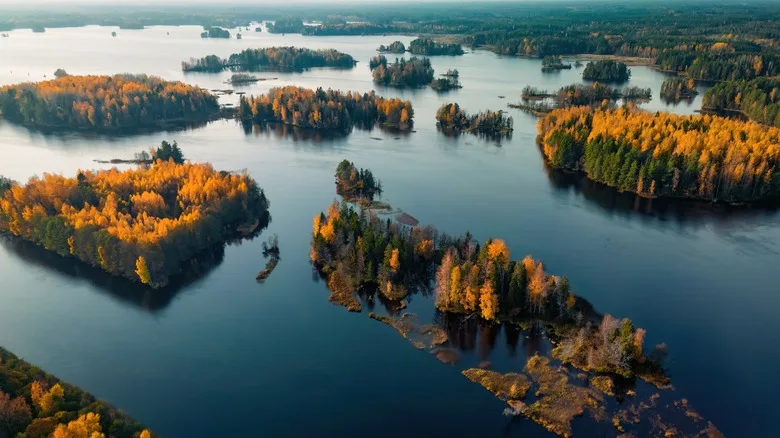
Spectacular drone view of the Swedish archipelago landscape, and islands, autumn, Stockholm, Sweden – valkird/Shutterstock
Stockholm, the capital of Sweden, is a city so at peace with itself that simply spending time there has been proven to reduce stress. The city itself is spread across 14 islands at a point where the freshwater Lake Mälaren meets the Baltic Sea. Still, although perhaps more sheltered than Copenhagen, Stockholm is also around 400 miles north of the Danish capital. All that additional latitude has an effect on the local climate. While you can expect temperatures in the mid-40 degrees Fahrenheit range in September, it tends to drop to the mid-30s in October and struggles to keep its head above the late 20s in November. By late fall, the sun goes down around 3 p.m. — as it does for much of the region — making Stockholm an excellent place to enjoy the odd nocturnal adventure or two. And there are plenty of them to enjoy.
The Swedish capital is a place of parks, open spaces, and delightful architecture. There are 26 city parks in total, including Kungsträdgården, which is known for its outdoor events and winter ice skating, the orchard-strewn Rosendal Garden, and Skansen, a park-cum-museum replete with a period-accurate village of 19th-century vintage. You’ll also find a thriving sauna culture to indulge in and have a chance to wander the magnificent Old Town without battling crowds.
Oslo, Norway
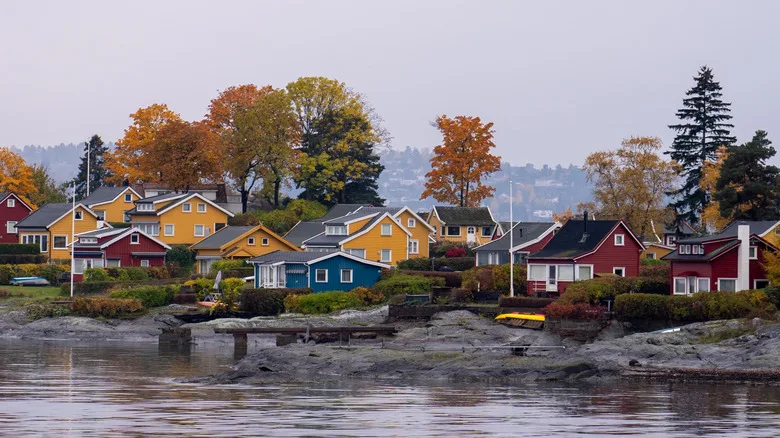
Oslofjord view of summer houses and cottages during the autumn months. – ShapikMedia/Shutterstock
Oslo is most definitely a coastal town, but its location at the far end of Oslo Fjord protects it from the worst of the autumn weather. Still, its relatively high altitude makes it a tad cooler than Stockholm, and it’s also a lot wetter. November brings the first flurries of snow, so be prepared for winter weather in late autumn — something that holds true throughout the northern region of Europe.
Not that any of that should dissuade anyone from visiting during the off-season. A walk through Frogner Park with its incredible sculpture gardens, 18th-century manor house, and eclectic range of botanical delights is bucket-list worthy. Throw in the usual mix of cozy restaurants — Oslo’s food scene is very, very, good — art galleries, museums, and sites of natural wonder, and Oslo starts to look like something of an all-rounder. Norway’s capital is, however, not a cheap place to visit. A city break here can set you back over $800, making it the most expensive such vacation in Europe. Choosing to visit in the fall helps take some of the sting out of the bill; flights are generally cheaper, and hotels often offer discounted rates.
Helsinki, Finland
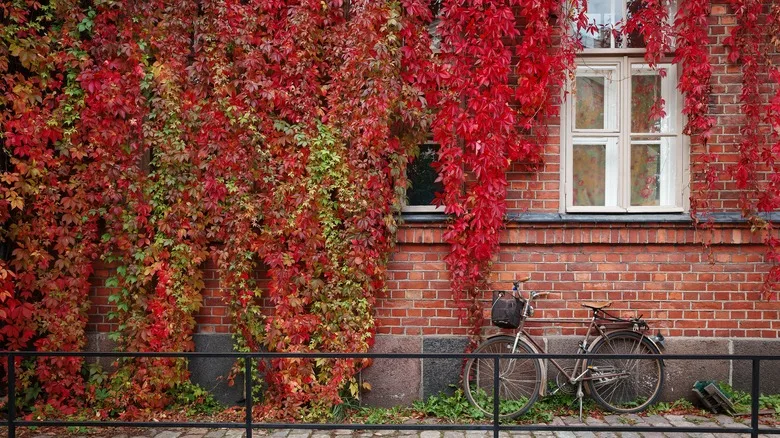
Helsinki, Finland: Bicycle parked leaning against a brick wall, highlighted by red autumn leaves in the background – Salvador Maniquiz/Shutterstock
East of both Oslo and Stockholm lies Helsinki, a sprightly capital city sitting hard against the Gulf of Finland. To the south, a mere 50 miles distant, you’ll find Tallinn; ferry services connect the two cities, making a city break in both places something of a temptation. You might not want to make the two-and-a-half-hour trek, though.
Finland is an underrated place for incredible outdoor views and activities. There’s a familiar Nordic slide towards the rather chilly on display here: September brings the low 50 degrees Fahrenheit, October takes it to the low 40s, and November drops things down another 10 degrees or so.
As the nights draw in, a trip up north to see the aurora on full display becomes ever more tempting; tour companies that specialize in such trips from Helsinki are easy to find. Those who prefer to stay closer to a nearby sauna — Finns are genuinely obsessed with saunas — will find that Helsinki has plenty of distractions on offer. There are concerts and exhibitions to attend, cathedrals to admire, incredible street food to sample, and, of course, the simple joy of walking around the city’s incredible waterfront as the leaves turn golden and the nights grow cloudy.
Reykjavík, Iceland
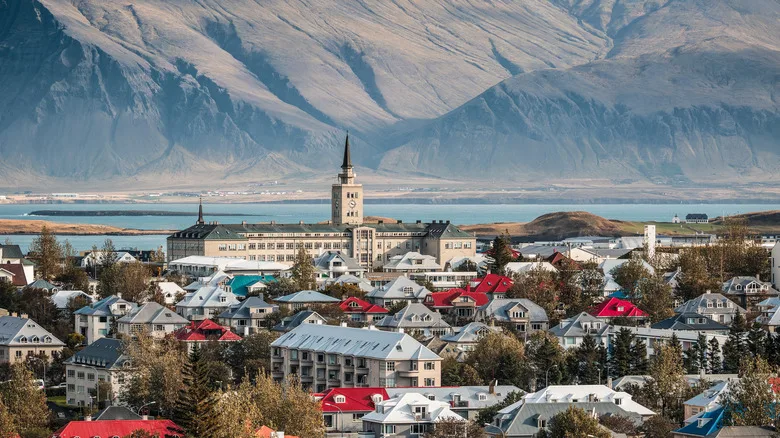
Cityscape of downtown Reykjavik in Iceland, featuring colourful houses, Tækniskólinn college and mountain Esjan in the background – Victorhuang/Getty Images
Iceland’s capital, Reykjavík, sits on the west side of the island close to the country’s southern coast. It’s not the coldest place you’ll find in Iceland, but it’s certainly cold enough. Temperatures below freezing don’t usually hit until November, but the chill definitely begins to set in from September onwards.
Still, crowds are smaller, seasonal gastronomic treats become ever more hearty, and the crisp, clear air makes walks through some of the city’s many parks and coastal excursions a delight. Hiking routes circle the city, delving into the dramatic landscape of the Mosfellsbær Valley just outside the city and beyond. Adventurous souls can trek up the nearby Mount Esja, where views of the aurora can be seen from late August onwards. As with Finland, tours further north can be arranged, and in many cases, if the lights are stubbornly shy, companies will offer a free trip another time.
Meanwhile, there is an international film festival to enjoy between the months of September and October, the rather excellent celebration of music that is Iceland Airwaves, and a visit to the nearby town of Hafnarfjörður, known for its genuine Viking feasts. Finishing off your trip to visit the Krýsuvík geothermal area, less than an hour from Reykjavík, is highly recommended. As the weather closes in on the steaming jets, bubbling pools feel ever more dramatic, and the sense of walking among a truly alien landscape is something you’ll likely never forget.
How we made this list

Halloween pumpkins growing on a farm in Germany – FamVeld/Shutterstock
All the climate data used here was sourced from official and well-respected sources and cross-referenced with multiple sites to ensure accuracy. Temperatures stated represent averages. I’ve also had the privilege of visiting each city during the autumn months at least once, and my personal experience matches the data well.
Ready to discover more hidden gems and expert travel tips? Subscribe to our free newsletter for access to the world’s best-kept travel secrets. You can also add us as a preferred search source on Google.
Read the original article on Explore.