

Know your numbers. That’s the simple piece of advice for anyone over 60, say researchers, who believe it’s crucial for staying healthier for longer; important guidance considering that, by 2035, 67 per cent of all over 65s in the UK are expected to be living with two or more chronic health conditions.
As Eric Verdin, President of the Buck Institute for Research on Aging puts it: “Health is a lifelong process, and when you reach 60 you’ve accumulated 40 years of either bad ageing or good ageing.”
The good news is that studies are increasingly showing that it’s never too late to intervene and make changes to significantly improve your health.
Verdin gives the example of an 85-year-old colleague who had spent his whole life eating a sugar-rich cereal for breakfast. However, after being convinced to start his day with a more savoury meal, his metabolic health dramatically improved.
“He was self-sabotaging by starting every morning on a sugar high,” says Verdin. “But just that single switch saw him lose five kgs in weight in a year without even trying. So you can definitely still make a difference even when you’re well into your 80s.”
Over the past decade, scientists have accumulated increasing amounts of information on what to monitor to get the best picture of how we’re ageing in later life.
Some of these seven metrics might be unexpected. For example you’ll notice that neither cholesterol nor bone density feature. However as Bradley Elliott – trustee for the British Society for Research in Ageing and a researcher at the University of Westminster – points out, there are other measures of ageing which capture not only cholesterol and bone health, but wider information about physiology too.
“Higher muscle mass, as measured by grip strength and functional fitness measures such as VO2max, are linked to healthy cholesterol profiles,” says Elliott. “So if these muscle function and fitness markers are rapidly declining, this can indicate there might be an issue with your cholesterol or bone density. But they also offer so much more information as well.
“These seven markers give information about lots of different systems. Ageing involves more than one system, so, to measure it, we need wide ranging measures,” he adds.
These metrics are so important that Elliott recommends assessing them annually. Here are the key numbers to know:
1. Blood pressure
What to aim for
Verdin says maintaining a blood pressure between 90/60mmHg and 110/75mmHg will help you live longer.
Why is it important?
Verdin describes blood pressure, literally the amount of force your blood uses to get through the arteries, as one of the strongest predictors of ill health for several reasons. Firstly, the number one cause of death globally is still cardiovascular diseases, whether that’s heart attacks or stroke, while damage to the fragile blood vessels leading to the brain are a significant contributor to many dementias.
According to the NHS, a normal blood pressure should lie between 90/60mmHg and 120/80mmHg, but Verdin feels that longevity research has shown that this upper range should be tighter, and certainly no more than 110/75mmHg. He says studies have shown that if your blood pressure doesn’t exceed 100/60mmHg, you will live longer.
“The higher the pressure, the easier it is to induce damage,” he says. “It’s clear that your blood pressure should be as low as possible without being symptomatic of low blood pressure.”
High blood pressure is common in older adults as our arteries get stiffer as we age. The British Heart Foundation says the ideal blood pressure for over-80s is under 150/90 mmHg.
The key advice to maintain a healthy blood pressure is to reduce your intake of added salt, your alcohol consumption, quit smoking and try to commit to regular exercise.
How to measure
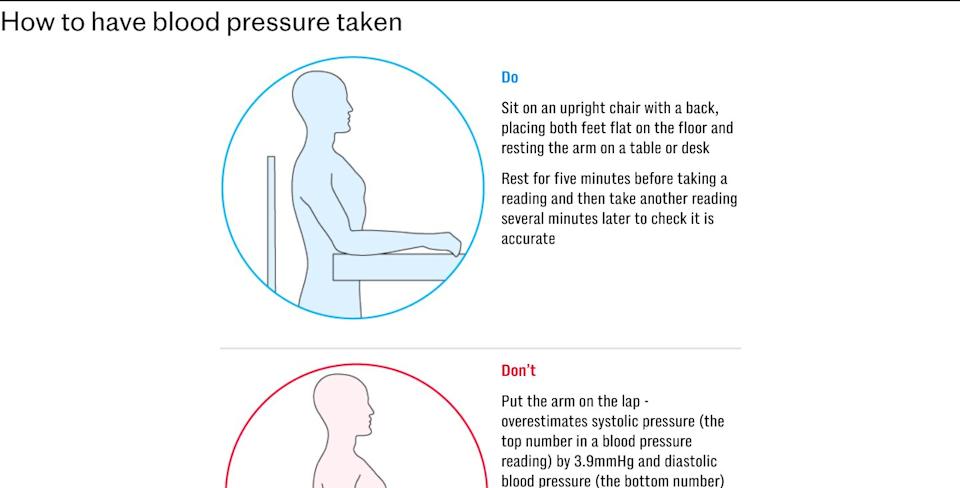
Automatic blood pressure monitors are widely available to buy online, while all NHS health checks will assess this metric.
b’
‘
2. Grip strength
What to aim for
Grip strength is measured in kgs of force you’re able to exert. It’s recommended that men over 60 should be able to maintain a grip strength of 30-45 kgs, and women over 60 should be between 18-26 kgs.
Why is it important?
Few people realise that their grip strength goes a long way to aiding their chances of reaching 100. In one study, where volunteers had their grip strengths assessed between the ages of 56 and 68, and their survival was tracked for the next 44 years, those with a grip strength in the highest third were 2.5 times more likely to become centenarians.
As Elliott points out, the main reason for this is that grip strength serves as an amazing proxy for how much muscle mass you’re carrying across your body, and your risk of frailty. “When you’re gripping tightly, that’s using the muscles in your forearm which you need for various aspects of your day-to-day independence, like opening doors or lifting shopping,” he says. “And that also parallels really well with overall muscle mass and function across your whole body.”
While we all lose muscle with age, keeping that to a minimum through strength training exercises is also important for metabolic health. Muscle acts as a glucose sink, absorbing a lot of the excess sugar in your blood, and limiting your risk of diabetes, while ageing researchers are also starting to uncover a key association between muscle mass and immune health.
But while some biohackers have begun specifically practising handgrip exercises, Verdin says that this completely misses the point. “It’s not just about honing your grip. It’s making sure you can still lift some weights, or are capable of doing push-ups and sit-ups as you get older, to maintain the overall muscle mass across your body,” he says.
How to measure
You can assess your own grip strength through a dynamometer, a device which you squeeze as hard as possible to measure the force generated by the muscles in your hand and forearm. They cost around £20 on Amazon.
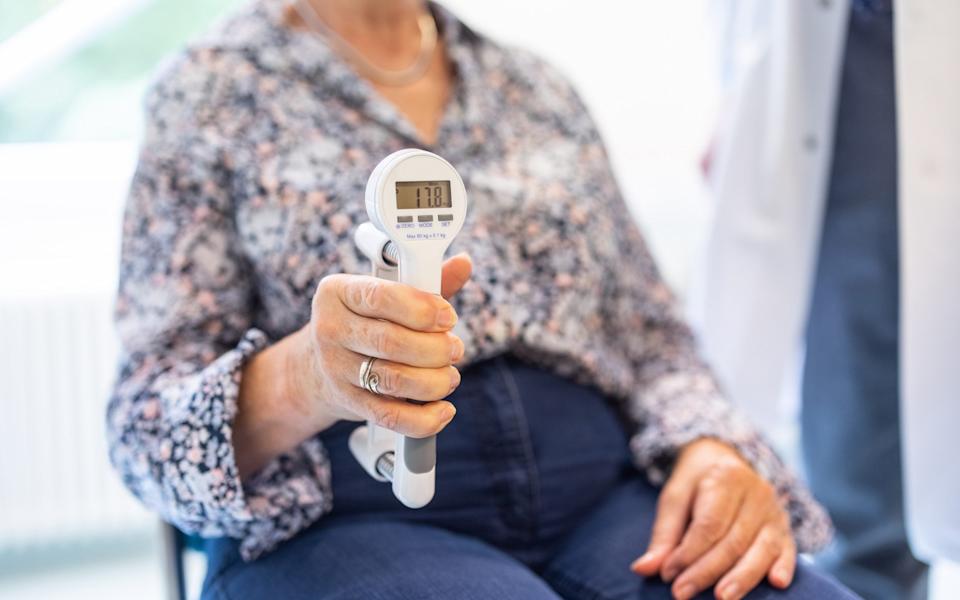
Dynamometers can be used to measure grip strength at home and are available to buy online – Luis Alvarez/Digital Vision
3. VO2 max
What to aim for
A good VO2 max – the maximum rate at which your body can use oxygen during intense exercise – is considered to be between 40-60 ml/kg/min. People over 60 who do regular aerobic exercise, for example keen swimmers or cyclists, have been shown to be able to maintain a VO2 max of over 40 ml/kg/min until at least age 75.
Why is it important?
At one point, VO2 max was solely of interest to cyclists or other endurance athletes, and measured in dedicated sports science labs. But more recently, it’s garnered a new life in the world of ageing research. Elliott explains that VO2 max provides an excellent reflection of your body’s resilience.
“It’s a really good way of assessing how well your body’s still working under the hood,” he says. “It reflects how much air you’re able to move in and out of the lungs; how much oxygen you’re pulling out of that air; how effective your heart and your blood vessels are at pushing that around the body to where it’s needed; how good your muscles are at taking up that oxygen; and even how well the mitochondria within those muscle cells are at turning oxygen into energy and utilising it.”
Lifespan studies have shown that VO2 max generally starts to decline after the age of 40, but if people remain physically active – completing at least 150 minutes of moderate-intensity sport or gym workouts per week – they can maintain their VO2 max at a reasonable level for a long time.
How to measure
Some private clinics, such as the My Vital Metrics health and human performance lab in London, offer VO2 max testing. More conveniently, Garmin’s latest range of smartwatches can also estimate your VO2 max with a relatively high degree of accuracy.
4. Fasting insulin
What to aim for
A blood test can measure the amount of insulin in your blood after you have not eaten for at least 8-12 hours. Less than 10 uIU/mL is often seen as optimal or ideal, while less than 20 uIU/mL is considered to be good.
Why is it important?
While people are increasingly familiar with the idea of keeping their blood glucose as stable as possible, Verdin says that your baseline levels of the hormone insulin represents an even more potent estimate of your short-term disease risk
Insulin is produced by the pancreas to keep glucose under control, but if your metabolic health is declining, this finely tuned system can go awry, leading to a condition known as insulin resistance which is linked to everything from Type 2 diabetes to cardiovascular diseases, certain cancers and even Alzheimer’s.
High fasting insulin levels can provide an early indication that you’re at risk of becoming insulin-resistant way before abnormalities are detected in your blood glucose levels. This is when you can take action and make lifestyle changes. Research has shown that cycling, swimming and even vigorous walking can all improve fasting insulin levels, as well as strength training, as this can increase your body’s insulin sensitivity and boost glucose uptake from the muscles.
How to measure
Various private health clinics around the UK offer a fasting insulin test for £79.
5. Gait speed
What to aim for
For most healthy adults, the average walking speed is about three miles per hour. Try to stay above this for as long as you can.
Why is it important?
Assessing your walking speed might seem overly simplistic, but as Elliott points out, walking is actually really complicated when you think about it. “It’s a lot of coordination and balance and lots of muscles moving in real time,” he says. “It also involves vision as well. And as people age, they walk slower. We’ve found that these walking speed changes are really useful to predict health.”
Studies have suggested that over 60s who maintain a higher gait, or walking speed, are likely to be biologically younger, and thus healthier. Elliott says that if friends or family are noticing that your walking speed is starting to noticeably slow, it could be an early sign that you’re on a path to frailty. To reverse this, it’s recommended that you do exercises to improve your muscle power and balance.
Suitable exercises include heel-to-toe walking, which involves walking in a straight line by placing the heel of one foot directly in front of the other’s toes, or calf raises – workouts that strengthen your lower leg muscles through lifting your heels off the ground to stand on your tiptoes.
How to measure
While we can all probably tell subjectively if we’re starting to move slower, a number of smartwatches measure gait speed, from Garmin watches to the Amazfit Active 2.
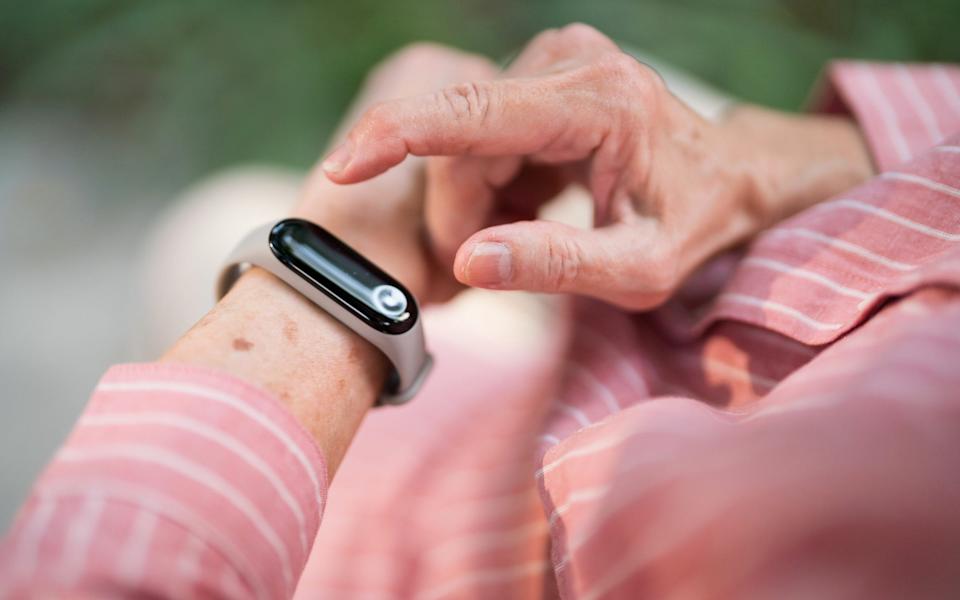
An easy way to assess your gait speed is with a smartwatch – Moment RF
6. Blood sugar control
What to aim for
The so-called HbA1c blood test provides an estimation of your average blood sugar levels over the past three months. A good HbA1c level is below 42 mmol/mol, which indicates normal blood sugar control.
Why is it important?
As anyone who’s ever worn a continuous glucose monitor will know, blood sugar levels can fluctuate significantly over time, depending on your diet, sleep habits, stress levels and other factors. Because of this, ageing researchers are most interested in how your blood sugar is behaving on average over time.
When sugar is present in the blood, it sticks to haemoglobin, a protein in red blood cells which helps transport oxygen around the body, creating a molecule called HbA1c. Verdin says that measuring this is a useful estimate of your blood sugar control over the past three months.
“As people get older, the risk of diabetes becomes more common and so HbA1c can be a good way of tracking that risk, as well as whether it’s going down in response to interventions such as exercise, dietary changes or medications,” says Elliott.
How to measure
HbA1c can be assessed during a NHS health check, particularly if the GP is concerned about your risk of diabetes. Superdrug also offers this test for £59.
7. Markers of inflammation
What to aim for
The levels of blood-based proteins called IL-6 and C reactive protein are useful markers of the amount of chronic inflammation in your body. Ageing scientists have found that healthy people over 60 can still maintain levels of IL-6, which are below 2 pg/ml, and C reactive protein levels of under 1.0 mg/dL.
Why is it important?
Inflammation can be a useful process in our body: it stimulates blood flow to injured areas and helps prevent the spread of pathogens. But, as we age, we become more prone to chronic low-level inflammation which damages cells and actually makes our bodies less adept at fighting off infections. “There’s this term we have in the field for this called inflammageing,” Elliott says.
The degree of inflammageing in your body is thought to be a good reflection of your short-term risk of numerous age-related diseases, such as various cancers, liver conditions and kidney disease. This can be assessed through the levels of C reactive protein and IL-6, which increase in abundance as our baseline levels of inflammation go up.
Key ways in which you can lower your levels of these inflammatory proteins include improving your sleep quality, getting 150 minutes of moderate exercise per week, and adopting an anti-inflammatory diet which prioritises whole foods like fruits, vegetables and fatty fish and reduce processed foods, sugar and saturated fat.
How to measure
The NHS doesn’t routinely test for C reactive protein or IL-6 as part of a standard health test, but private clinics are starting to offer specific blood tests for inflammation. For example, Selph now offers a CRP fingerprick blood test for £39.
Try full access to The Telegraph free today. Unlock their award-winning website and essential news app, plus useful tools and expert guides for your money, health and holidays.