


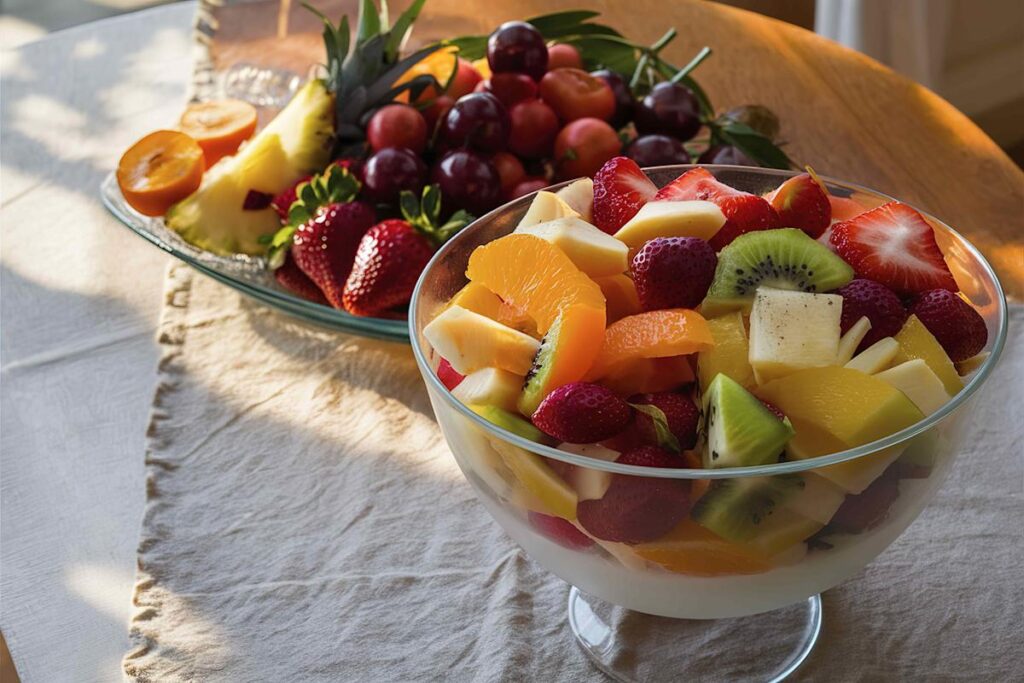
When it comes to the best fruits to eat for healthy aging, dieticians and longevity experts are clear: That’s not the right question to ask. Instead, consider what kind of eating pattern supports health over decades—and how fruit can fit into that picture.
Across our interviews with experts, one theme stands out: no single food determines how well we age. But, certain dietary principles consistently show up in the science—and fruit plays a meaningful role in that broader pattern. This is what they want you to know.
Meet Our Expert
-
Dawn Jackson Blatner, RDN, CSSD is a sports nutritionist and the author of The Superfood Swap
-
Luigi Fontana, MD, PhD, FRACP, is a physician scientist, professor at the University of Syndey, and the author of The Path to Longevity and Plant Power
-
Abby Langer, RD, is the author of Good Food, Bad Diet
Related: Martha’s 10 Best Tips for Healthy Aging
Start With the Pattern, Not the Pedestal
“The most important driver of healthy aging is the overall dietary and lifestyle pattern rather than any single ‘best’ food,” says Luigi Fontana, MD, PhD.
Dietary patterns linked to better metabolic health and lower chronic disease risk are built around minimally processed plant foods—vegetables, legumes, whole grains, nuts, seeds, and fruit. Within that framework, fruit isn’t a miracle food. It’s part of the architecture.
Fontana describes whole fruit as an excellent “functional” dessert: it delivers fiber, vitamins, minerals, and a wide range of bioactive phytochemicals—while helping displace more calorie-dense, ultra-processed sweets.
That displacement effect matters. Replacing refined desserts with whole fruit can support cardiometabolic health, especially when fruit is eaten in sensible portions and in whole form.
Fiber Is the Underrated Nutrient of Aging
If there’s one nutritional theme that keeps resurfacing, it’s fiber. “I think fiber is a forgotten nutrient and we are only beginning to discover the impact it can have on healthy aging,” says Abby Langer, RD.
Fruit contributes to fiber intake in a way that’s both practical and appealing. Fiber supports gut health, helps regulate blood sugar, and feeds beneficial gut bacteria—which in turn produce compounds involved in inflammation regulation and immune function.
That gut connection is also central to Fontana’s work. The fiber and polyphenols in fruit nourish the microbiome and support metabolites like short-chain fatty acids, which play roles in gut barrier integrity and systemic inflammation—processes relevant not only to cardiometabolic risk but to aging more broadly.
For people in midlife and beyond, choosing fruits that are naturally higher in fiber more often can be a smart strategy. Langer points to berries and pears as fiber-rich options worth rotating into your week. Dawn Jackson Blatner, RDN, suggests apples and pears for their soluble fiber (pectin), which supports gut and heart health and helps steady blood sugar.
Antioxidants Are Helpful, but Not a Halo
Berries, pomegranates, and citrus are often promoted for their antioxidants. But is the attention justified?
“They are important,” says Langer. Eating a lot of brightly colored fruits and vegetables can help promote healthy aging because they are full of antioxidants that protect your cells. “But you can’t just focus on that one thing,” Langer explains. “You have to take a global approach.” In other words, antioxidants matter—but only in the context of overall diet quality.
Blatner highlights berries for their anthocyanins and vitamin C, compounds associated with protecting brain cells, reducing inflammation, and supporting heart health. Citrus fruits provide vitamin C and flavonoids that help maintain collagen and protect against oxidative stress. Pomegranates are rich in polyphenols that support blood vessel health.
Rather than fixating on one “superfruit,” think in terms of color and variety. A mix of berries, citrus, apples, pears, kiwi, cherries, and papaya—rotated throughout the week—naturally diversifies your intake of plant compounds.
There’s not one that you should always eat, says Langer. Seasonal fruit—peaches, plums, nectarines, berries—all count.
The Truth About Sugar in Fruit
One of the most persistent misconceptions about fruit and aging is that it should be limited because it contains sugar. “It’s really the added sugar in foods that people should be worried about,” Langer says. “Don’t demonize naturally occurring sugars in dairy products and fruit. No one’s ever gotten sick from too much sugar in fruit.”
Whole fruit is fundamentally different from refined sugar or sugary beverages. It comes packaged with fiber, water, micronutrients, and phytochemicals that slow absorption and support metabolic health.
Choose Whole Fruit Over Juice
Still, context matters. Fontana recommends choosing whole fruit over juice, since juicing removes most of the fiber and increases the “sugar and fructose load” delivered quickly. He also advises being mindful of very large portions of high-fructose fruits or fruit juice, particularly for people with insulin resistance or fatty liver risk. Balance and variety, he emphasizes, are essential.
The takeaway isn’t to avoid fruit. It’s choose whole fruit, vary the types, and keep portions sensible—especially if you have underlying metabolic concerns.
How to Add Fruit to Your Meals
Healthy aging isn’t only about what you eat, but when and how you build meals. Fontana says that “Skipping breakfast is associated with elevated risk of developing type 2 diabetes.” A supportive breakfast is minimally processed, fiber-rich, and designed to avoid large spikes in blood glucose and insulin.
Adding fruit to a balanced breakfast—think oats with berries and nuts, whole-grain toast with nut butter and sliced fruit, or yogurt with kiwi and seeds—can help increase fiber and polyphenols while keeping your meals satisfying.
But don’t only eat fruit at breakfast. Blatner shares a simple rule of thumb: enjoy fruit twice a day. Attach it to habits you already have. Add berries to your oatmeal, toss citrus segments into salads, eat an apple or pear as a snack, or use fruit as the base for dessert. She loves having fruit after lunch when she craves something sweet.
That practical framing may be the most sustainable approach of all.
The Bottom Line on Fruit and Aging
Healthy aging is shaped by a constellation of factors—movement, sleep, stress, social connection, and overall diet quality among them. Fruit is not a magic bullet (and frankly, nothing is!).
But within a minimally processed, plant-forward eating pattern, whole fruit offers fiber, hydration, micronutrients, and diverse phytochemicals that support gut, metabolic, vascular, and possibly cognitive health.
So instead of seeking out the “best” fruit for longevity, our experts say keep these points in mind:
-
Choosing whole over juice.
-
Prioritize fiber-rich options more often.
-
Rotate colors and types across the week.
-
Pair fruit with protein and healthy fats for stable energy.
-
Keep portions sensible if you have metabolic risk factors.
Take the long view, Langer says. There are many things we can’t control about aging. The things we can control go beyond diet—and within diet, they go beyond any single food.
Fruit doesn’t need a pedestal. It just needs a place at the table.
Read the original article on Martha Stewart