



Although all compound lifts scratch this itch in some form, there’s something particularly cathartic about picking up and putting down heavy weight during a set of deadlifts. They’re an obvious classic for a reason, holding status as one of the most elite exercises for building strength through the entire posterior chain, from your back down to the hamstrings. But no matter how much sweet history you share with the compound lift, it may not always agree with your body as you age.
“Deadlifts are always going to be a very effective strength-building movement and [are] arguably one of the most ‘functional’ movements we do in our day-to-day lives,” says Casey Lee, trainer, strength and conditioning coach, and owner of Purposeful Strength. “But as we age, especially getting over the half-century mark, we need to consider the risk versus reward of doing certain movements in the gym. I’m by no means anti-deadlift, but I think there are variations more effective than the traditional deadlift.”
Fret not, you don’t have to kiss deadlifts goodbye forever. Speaking with Men’s Journal, Lee points to two deadlift variations that promote strength gains with less wear and tear. He also explains how to progress them, along with common resistance training mistakes men over 50 should avoid.
Deadlift Variations
How to Do Kettlebell Windmills

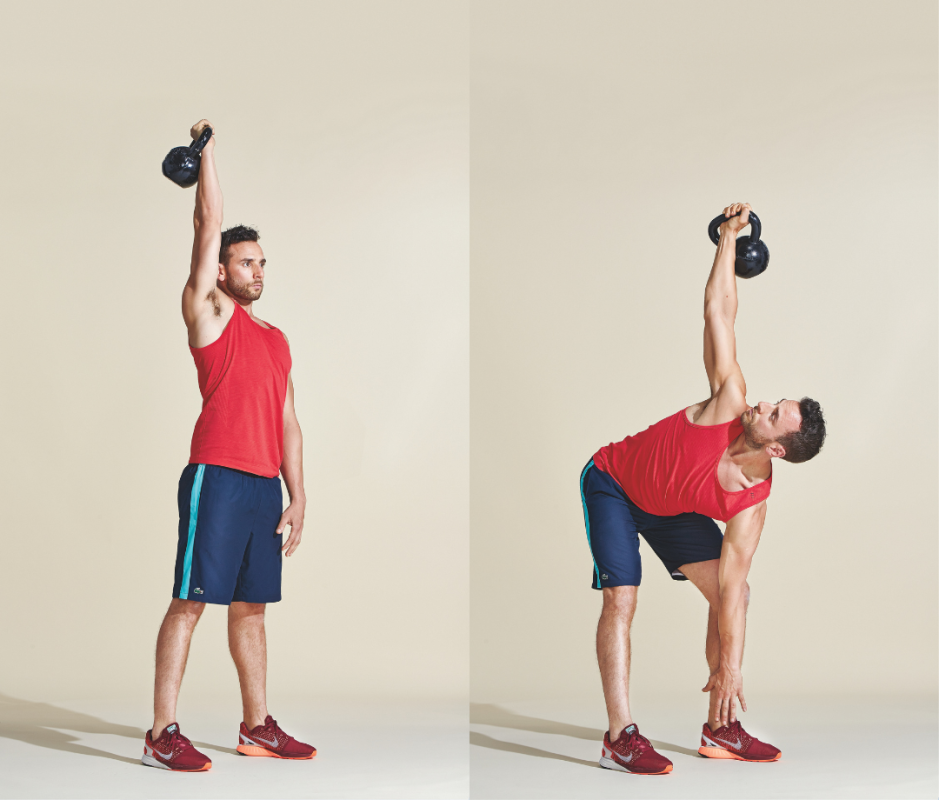
Kettlebell Windmills
“Kettlebell windmills allow you to achieve a hip hinge action with your lower body while also using your upper body to drive thoracic spine mobility, shoulder stability, and a ton of back strength, keeping your lats working overtime throughout the entire ‘windmill’ motion,” Lee explains.
-
Press a kettlebell overhead with one arm and set your feet slightly wider than shoulder-width.
-
Push your hips back and rotate your torso toward the grounded hand, sliding that hand down your front leg while keeping your eyes on the now-overhead kettlebell.
-
Lower as far as mobility allows while keeping the arm vertical and shoulder stable, then drive through your hips to return to standing.
How to Do RDLs
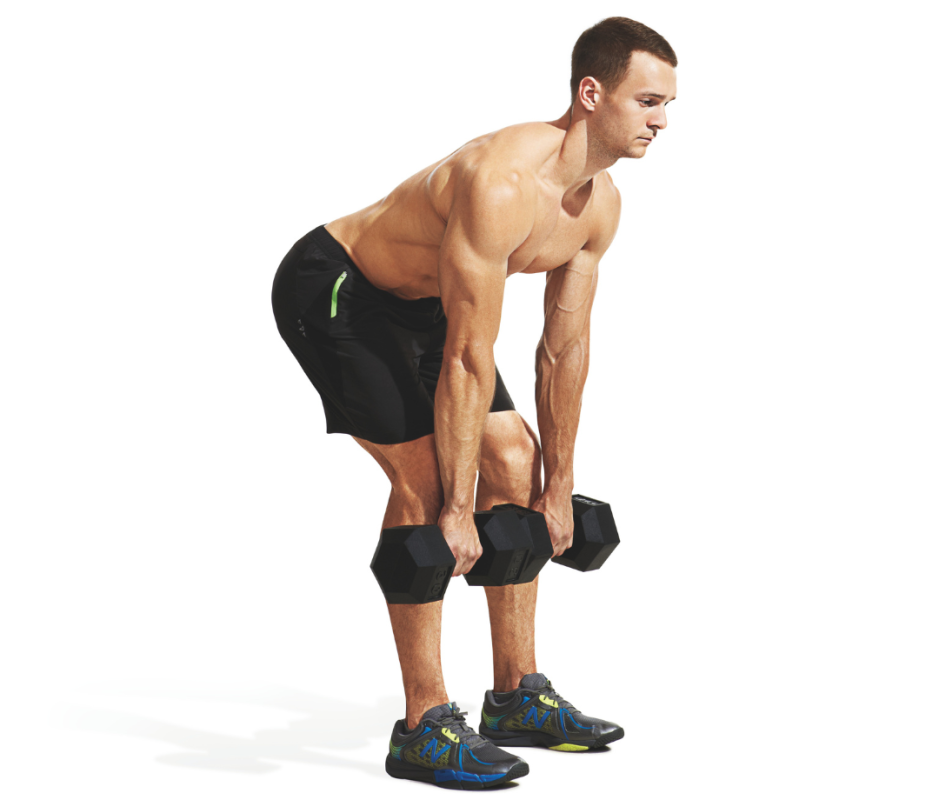
Dumbbell RDL
“By standing upright with the weight from the get-go, you’re able to brace your core with the hips already in a solid neutral and extended position,” he says. “This reversal makes RDLs much more user-friendly, but still allows you to get some serious weight in your hands to build strength.”
-
Stand tall holding a barbell or pair dumbbells at your thighs, shoulders down, and core braced.
-
Push your hips back while keeping a slight bend in your knees, lowering the weight along your legs until you feel a stretch in the hamstrings.
-
Drive your hips forward to return to standing.
Related: The 12 Best At-Home Kettlebell Workouts to Keep Men Over 50 Strong and Mobile
How to Build Muscle After 50
No matter your age, progressive overload reigns as the rule of muscle-building. Lee typically programs his own clients in the 4- to 6-rep range, emphasizing confident movement and clean form.
“Typically, as training progresses, you’ll increase total training volume first by adding reps, moving from 4 to 5, then to 6, and then adding in sets,” he says. “Throughout this set and rep progression, you may increase the weight, but it’s not a requirement. By progressively adding training volume, you’ll still achieve progressive overload and build muscle.”
Here’s an example of what that progression would look like over six weeks:
Continue building toward 5 sets of 5 to 6 reps before resetting and repeating the cycle.
Strength Building Mistakes for Men Over 50
Lifting Like a 20-Year-Old
Lee says the biggest mistake he sees is men over 50 attempting to train in the same ways they did back in their 20s.
“We need to consider the differences in our recovery needs as we age, because 50-year-olds have very different life stressors than the younger versions of themselves did,” Lee says. “These differences play a huge role in our ability to maintain and build muscle.”
What you do outside of the gym also matters: prioritizing quality protein, getting at least seven hours of sleep, minimizing alcohol intake, and maintaining boundaries from life stressors. These factors all impact our ability to build and maintain muscle as we age.
Training the Wrong Exercises Close to Failure
“Exercises like the RDL should be progressively added to over time, but doesn’t necessarily need to be drawn out to muscular failure,” Lee explains. “The risk vs reward is way too high.”
Rather than pushing every set to failure, build your big lifts up over time. Then add volume to those muscle groups with the help of accessory exercises, like seated hamstring curls or stability ball curls. This offers a safer way to drive strength and muscle growth.
Related: The Science-Backed Lower-Body Workout for Men Who Hate Training Legs, According to an Exercise Scientist
This story was originally published by Men’s Journal on Feb 11, 2026, where it first appeared in the Health & Fitness section. Add Men’s Journal as a Preferred Source by clicking here.