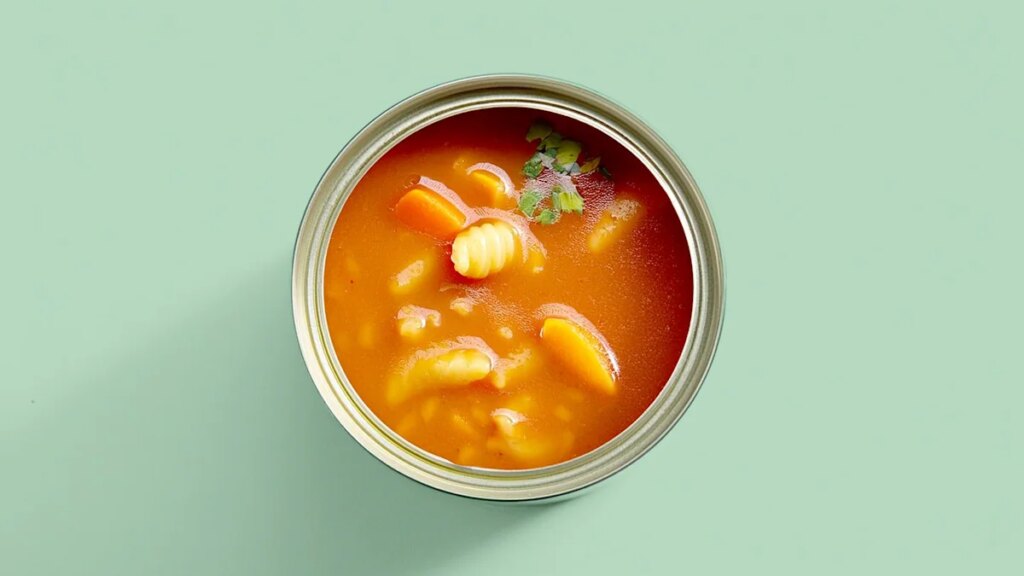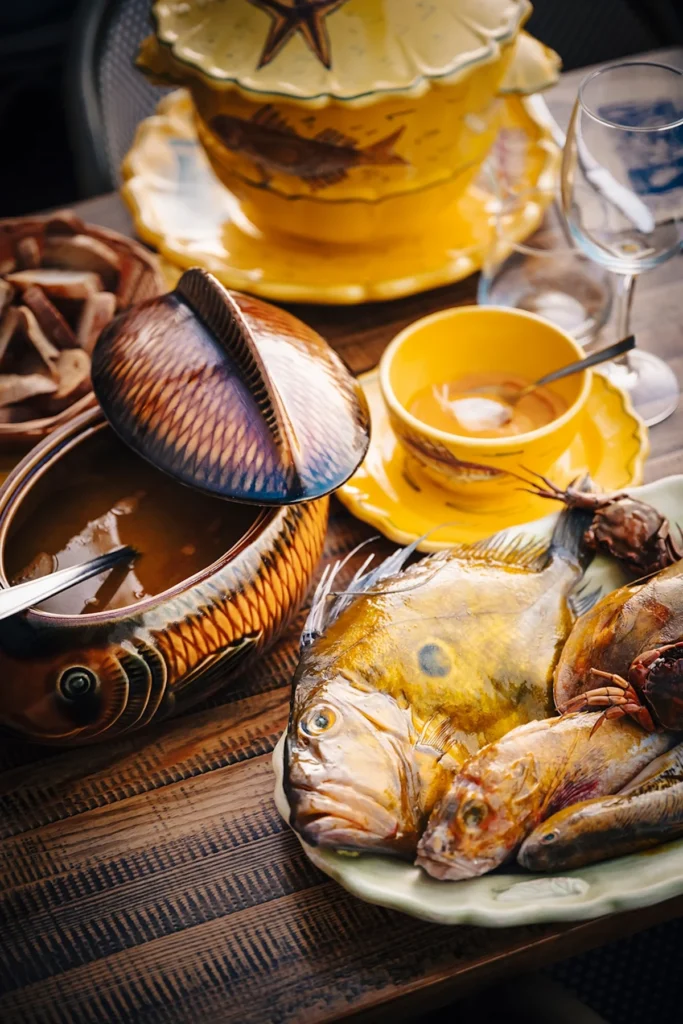
The bouillabaisse at Bar des Goudes was named as the world’s best in the Bouillabaisse World Championship. Jonathan Stokes
This article was produced by National Geographic Traveller (UK).
“People thought we were crazy when we first served this,” says Linda Vila Palleja, handing me what is effectively a soup sandwich from behind a counter. “But each bite delivers all flavours at once. You know you’re eating bouillabaisse.” She’s not wrong. The delicate, almost smoky softness of the broth-poached fish — today it’s red gurnard but Linda and her husband Hervé cook whatever’s fresh — is encased in a baguette, lightly toasted for a crouton-like crunch. I dress mine with scoops from pots of rust-coloured fish broth — rich with tomatoes and aromatic vegetables, saffron and Med’ herbs — and garlicky-piquant saffron rouille. It’s a perfect serving of France’s definitive fish soup, in sandwich form. “Now, people thank me,” says Linda, eyes sparkling under heavy-rimmed glasses. “They say we’re flying the flag for Marseille.”
Advertisement
Advertisement
This generously stacked sandwich is an irreverently unorthodox rendering of the ancient fish soup-stew, born in the Provençal port city as a medieval fisherman’s supper. Bouillabaisse is a dish whose ingredients and conventions have been dictated by a local charter since 1980, to include at least four types of Mediterranean fish. And it must be served in two stages — the fish broth, croutons and rouille first, followed by poached potatoes and fish, filleted tableside. But the stream of customers at Pain à l’ail — a little deli-style joint decked in cheery nautical blues, which opened a few streets back from the old harbour of the Vieux Port in 2020 — care not for convention. Each is greeted with endearments from Linda and her neatly stubbled husband — oui chéri and dites-moi ma belle — serving as a reminder that this gritty, graffiti-scrawled port city is defined by a Mediterranean warmth of hospitality.
(Bouillabaisse: deconstructing the pride of Marseille.)
I take my sandwich and join the bustle inside at Pain à l’ail’s bench seats, choosing air-con over the sun- and sea breeze-blasted tables outside. For soup in a sandwich, it’s not as messy as I’d expected. The bread, from nearby Boulangerie Aixoise, gives way under a gentle bite, so the filling isn’t ejected. But it’s a race against time as I add more broth and the sandwich’s structural integrity falters; a race worth winning. Elbows stained with saffron, I wonder if it’s the best sandwich I’ve ever eaten.
“It took me two months to perfect,” says Linda. “All the great chefs make bouillabaisse. It’s not a quick thing to learn. I adapted my mother’s and grandmother’s recipes and finally, my nephew said, ‘It’s a banger!'”
Advertisement
Advertisement
Pain à l’ail also slots other Provençal specialities into baguettes. There’s daube
(beef stew), and aïoli — a garlic mayo-laced cod sandwich with egg, potato and little bursts of steamed courgette, carrots and onion — with which the couple sends me on my way. “My mother says garlic is to health like rose is to perfume,” says Linda. “Bon appétit!“
Quayside Culture
The following morning, with the sun glinting off the vast sea of masts in the Vieux Port, I head to market. There’s just a handful of stalls along Quai des Belges today; it’s peak summer — holiday season. At most, the fish market hosts just 15-20 small-scale vendors, commercial operations having moved out of the city centre in the 1970s. But the shout-calls for custom ring over the medieval harbour walls as they have done for centuries. Marseille’s port — so a sea-spray-splattered plaque tells me — is the cradle of the city, founded 2,600 years ago by Greek sailors. Some say it was these mariners who introduced the humble fisherman’s stew from which bouillabaisse was born.
On ice-covered trestle tables, there’s all manner of bream — silvery ones, red pageot and gilt-head — along with chunky monkfish and sparkly sole. Some are strewn with the spring onion-like leaves of Neptune grass, a vital oxygenator that meadows Marseille’s seabeds. This and other marine facts I learn from Christian Qui, who can often be found here buying ingredients for his nearby hole-in-the-wall, Bouillabaisse Turfu. Its takeaway soups are favourite beach fodder, typically enjoyed with a bottle of Provençal rosé.
The chef exchanged Michelin-starred kitchens to set up a business that works with local marine scientists, champions sustainable fishing and aims to make bouillabaisse more affordable. “I studied with Japanese chefs,” he tells me, his silvery hair matching the shiny shell pendant at his neck. “There are fish here, like saupe [a type of bream] that are prized elsewhere but don’t really sell; they’re not local culinary culture.” Saupe often features in Christian’s bouillabaisse, a dish dressed with crisp aromatics — fennel flower, pink peppercorns and red onion — recalling the fresh soups of the chef’s Vietnamese heritage. “I’ve been working with the fishermen here for 15 years. Everything I’ve learned is from them.”
French Fancy
What does the world’s best bouillabaisse taste like? After a surf-soaked ferry ride south along the coast, where Marseille’s urban edges fray into the sea, I find out at Grand Bar des Goudes. In December 2025, its chef Benjamin Mathieu won the inaugural French Bouillabaisse Championship — and the World Championship a few months later. Founded in the 1920s in the former fishing village of Goudes, this harbourside restaurant has a Côte d’Azur-style gloss and a sun-slowed pace.
Advertisement
Advertisement
The vociferous dressing down the chef delivers to his lunchtime kitchen crew over some nebulous infraction feels somewhat vintage, too. Pressured is the life of the soup king, it seems. “Nothing has changed since the award,” says the chef, defiantly denim-clad in the midsummer heat. “Except we now get people arriving from America, Japan and all over. And they all want bouillabaisse.”
Before dining, I’m instructed in the nuances of non-negotiable ingredients: rockfish and concentrated stock. Then the soup arrives, perfumed with saffron and fennel, earthy red and rich, but not cloyingly so. It’s insanely moreish with garlic-clove-rubbed croutons, topped with rouille and grated gruyere cheese. “Don’t eat too many!” barks Benjamin. “You won’t enjoy the fish.”
This tough tutoring is welcome when the perfect platter of plump, broth-poached seafood arrives. The proverbial kid in a candy shop, I select prime pieces of black, red and white rockfish, crab and chunk-cut golden potatoes, adding them to the soup and marvelling at how something so simple can also be so very refined. This is an ancient fish dish, with an enduring vitality.
Published in the November 2026 issue by National Geographic Traveller (UK).
To subscribe to National Geographic Traveller (UK) magazine click here (available in select countries only).