As a food writer and recipe developer, I spend a fair amount of time scouring the internet for inspiration, ideas, and clever hacks. Some of the hacks I find are more useful than others — I’m talking about peeling a mango with the rim of a drinking glass and spraying a measuring spoon with cooking spray before measuring molasses or honey.
But occasionally, a hack that seems to be getting traction online is just simply a fail for me. That was my experience when it came to testing the “dump” method for making boxed mac and cheese.
What Is “Dump” Mac and Cheese?
The instructions for making boxed mac and cheese usually go something like this: Bring water to a boil, add the boxed macaroni, boil for seven minutes, drain, and then return the pasta to the pot with butter, milk, and the packet of cheese powder. I’ve made this thousands of times.
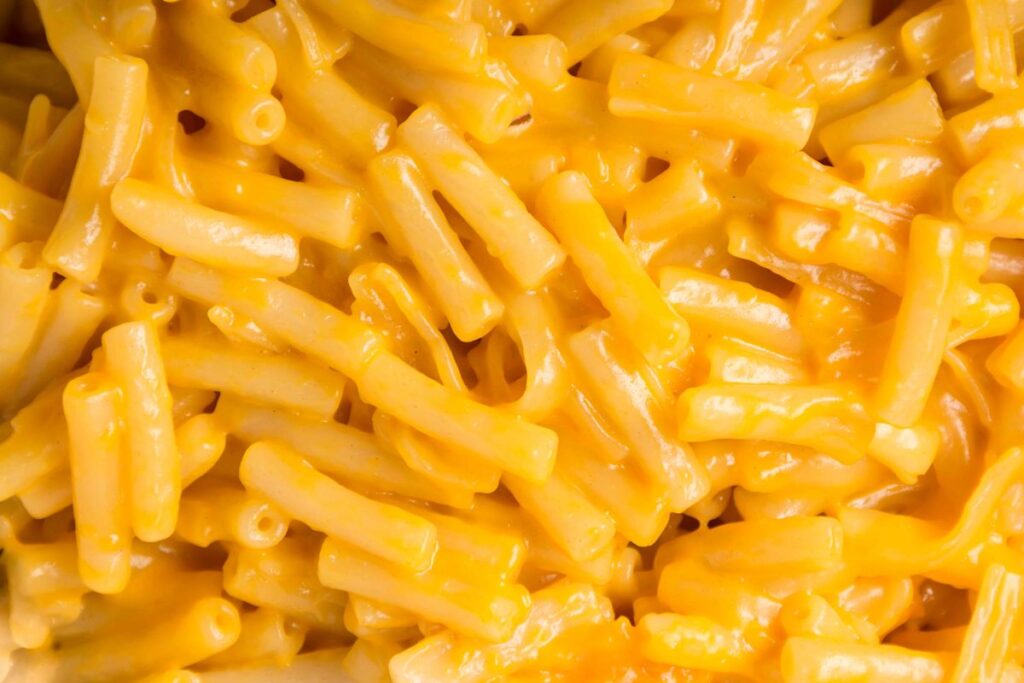
“Dump” mac and cheese simplifies things: Just put everything—noodles, enough water to cover them, butter, the cheese packet, and milk—in the pot and bring to a boil. Cook until the pasta is tender, and stir to create a rich and creamy sauce.
Any cooking technique that involves the word “dump” has an uphill battle—it’s hard to convince me of its merits. But I figured I would give this version a try, just in case it actually produces a better box of macaroni and cheese in less time.
Does “Dump” Mac and Cheese Actually Work?
Yes, you could make macaroni and cheese this way. It’s just not as good as the macaroni and cheese that results from following the printed directions. In fact, it’s noticeably inferior in two key ways.
First, because the sauce includes the water used to cook the pasta, it’s bland. The cheese flavor is diluted. When I tested this method, I found myself reaching for salt, something I’ve never felt a need to add to boxed macaroni and cheese before.
The second way this mac and cheese fails to live up to the original method is the most offensive: The pasta is mushy. You know how to make pasta! You boil water, add pasta, cook until al dente, and drain it. Starting with boiling water and stirring the pasta as you add it helps separate the pieces and prevent clumping.
The “dump” mac method draws on the idea that it’s possible to cook certain short pasta shapes in cold water, bringing the water to a boil with the pasta. This produces a starchier sauce—kind of like making risotto. This is what dump mac proponents mean when they say the final result is “creamier.” But that’s not quite the same thing as adding cream or making a traditional cheese sauce. The sauce is thicker and starchier because the pasta has released starch into the cooking liquid, which isn’t drained away.
Finally, one of the claims is that this method is quicker, but I found that this isn’t true. You still have to wait for the liquid to boil and the pasta to cook, and in my test, the overall cooking time was about the same as with either method. If anything, I noticed that I felt an urge to stir the macaroni more often than I would if I were following the written directions because I was worried that the milk would scald or the pasta would stick to the pan.
Should You Make “Dump” Mac and Cheese?
I served “dump” mac and cheese to my family, and they did not enjoy it. My eight-year-old asked me to never make it this way again. My husband didn’t eat his.
I rely on boxed mac and cheese from time to time to make my life easier. And while I understand the appeal of finding a shortcut on a busy night, I would say that, since it decreases the enjoyability of the final product, this shortcut isn’t worth it. I’ll stick to the classic back-of-the-box directions from now on.
Read the original article on Simply Recipes