“Hearst Magazines and Yahoo may earn commission or revenue on some items through these links.”
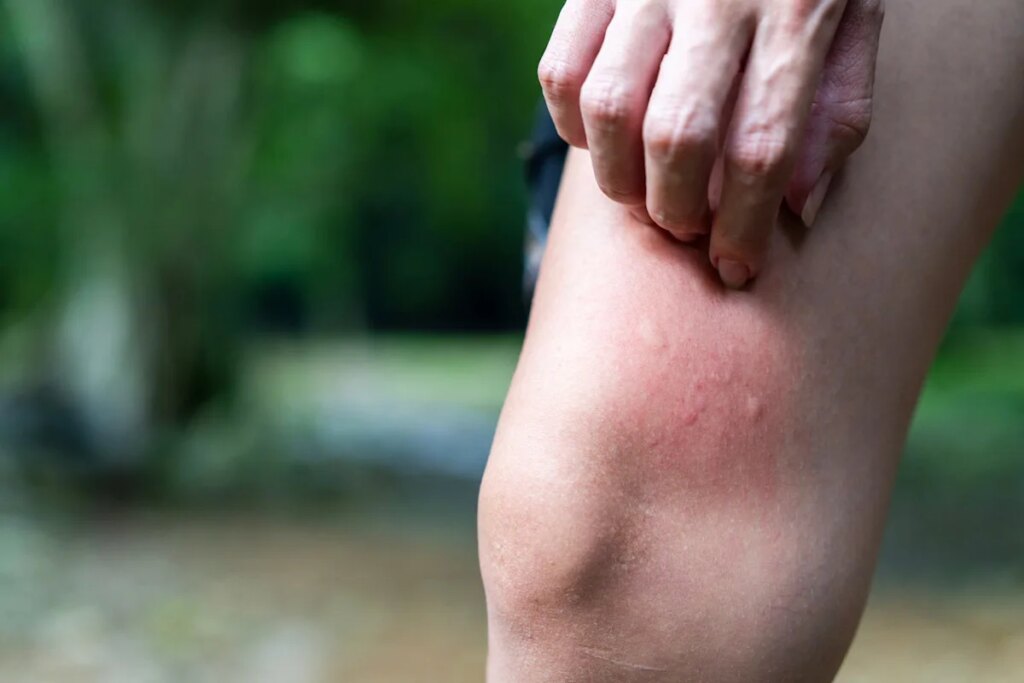
When you think of a flea bite, you may imagine the infestation of your furry friend—but the tiny winged parasites bite humans, too. What do flea bites look like on humans, you ask? Well, similar to those on animals, just…not covered in fur.
Even so, it can be difficult to decipher a flea bite from an expected cluster of mosquito welts after some time spent outside. So we asked bug experts for professional tips to aid in the investigation.
Advertisement
Advertisement
Meet the experts: Matt Frye, rodent and structural pest management coordinator at Cornell Integrated Pest Management; Jim Fredericks, Ph.D., a board-certified entomologist and senior vice president of public affairs at the National Pest Management Association; Cody James Pace, associate certified entomologist and market technical director for Terminix; et al.
Signs of flea bites
Everyone reacts to flea bites differently, which can cause some variation in how they appear (and feel) on the skin. Still, there are a few things they can have in common.
“Flea bites often result in small, red bumps, with a ‘halo’ around the bite center,” says Jim Fredericks, Ph.D., a board-certified entomologist and senior vice president of public affairs at the National Pest Management Association. “The bites stay small and usually appear in groups of three or four, or in a straight line.”
Fleas usually bite people on their lower halves, like on the ankles or legs, Fredericks says, but the bites can show up anywhere. And unfortunately they can be really uncomfortable. “The severity of the itch depends on the person being bitten, but most experience extreme itchiness,” says Cody James Pace, associate certified entomologist and market technical director for Terminix.
Health risks of flea bites
There are a few potential health risks of being bitten by a flea. One of the most likely is an allergic reaction to flea saliva, says Gary Goldenberg, M.D., assistant clinical professor of dermatology at Icahn School of Medicine at Mount Sinai Hospital. “This condition is known as flea allergic contact dermatitis,” he explains. “Scratching can cause secondary infections and, in some cases, even a staph infection.”
Advertisement
Advertisement
Though uncommon in the United States, fleas can also transmit serious illnesses, including typhus and the plague, says Ife J. Rodney, M.D., founding director of Eternal Dermatology + Aesthetics. They can also carry tapeworms and can transmit the bacteria that cause cat scratch disease to your furry feline, who can then pass it along to you.
How to treat flea bites on humans
If you suspect you have a flea bite, Dr. Rodney recommends cleaning it well with soap and water. “Don’t scratch the area, which is easier said than done,” she adds.
If you’re feeling itchy—and you likely are—Dr. Goldenberg recommends applying a topical steroid cream like hydrocortisone. If you suspect that a bite wound is infected, he recommends seeing a doctor, who may prescribe antibiotics.
“If a serious illness such as typhus is suspected, emergency medical care is needed right away,” Dr. Goldenberg says. “Patients with typhus usually have fever and chills, body aches, GI symptoms, and a rash that spreads throughout the body.”
How to get rid of fleas
It can be tricky, Frye says. You first have to identify them, and ideally, where they’re coming from.
Advertisement
Advertisement
If you have a pet, make sure that they get on some type of flea management medication recommended by your vet, Frye says. “These products will either kill fleas, or prevent them from reproducing further,” he explains.
From there, if you believe they’re coming from inside your home, you may need to call in a pest management service. “Fleas are difficult pests to eradicate without proper training and understanding of flea biology and behavior,” Fredericks says. “A pest pro will do a thorough inspection of your home to identify impacted areas and take steps to control all life stages of the pest. They’ll also provide advice on ways you can prevent them from coming back.”
After the professionals leave, you can continue proactive control by vacuuming daily or several times a day in the areas where you suspect flea activity, such as where your pet takes their daily naps. You’ll also want to vacuum carpets, furnishings, cracks in the floorboards, and upholstered furniture, Pace says. “Empty your vacuum cleaner carefully and away from the house, as the fleas may still be alive,” he adds.
It’s also important to treat your pet’s bedding, according to Frye. “Place it in a dryer on the hottest setting for 30 to 40 minutes,” he says. Don’t wash the bedding first—dry heat is what kills insects. “Items can be cleaned and washed regularly after an initial heat treatment,” Frye adds.
How to prevent flea bites
Fleas usually get to people through animals, notes Nancy Hinkle, Ph.D., professor in the Department of Entomology at the University of Georgia College of Agricultural and Environmental Sciences. “So discourage wildlife from visiting,” she says.
Advertisement
Advertisement
It’s also best to check indoor-outdoor pets regularly and use flea treatments as recommended by your vet. And if you have a regular problem, Hinkle recommends treating all carpeted areas with an insect growth regulator to prevent the fleas from setting up shop.
Frequently asked questions
What can be mistaken for flea bites?
“They look very much like mosquito bites,” says Lynn Kimsey, Ph.D., distinguished professor emerita in the Department of Entomology at UC Davis. And they can feel like them, too. “The more you scratch them, the bigger and itchier they get.” A big way to tell the two apart, though: Kimsey says you’re more likely to get flea bites indoors and underneath clothes than you would from mosquitoes.
Where do fleas like to hide?
It’s crucial to figure out the source of fleas, especially the larvae (a.k.a. the immature baby fleas). “Larval fleas feed on proteinaceous debris, like skin flakes and fallen hair in carpets and places like that,” Kimsey says. “Also, bird and rodent nests.” Birds nesting under the eaves of your home, rodents hanging out in wall voids, and feral cats being nearby “can be a big problem, too,” she says.
Can pest management companies treat pets for fleas, too?
Nope. Consult a veterinarian if you suspect that your pet has fleas. “Pest professionals cannot do anything to reduce flea problems on pets,” Frye says. “Only a veterinarian should prescribe treatments for dogs and cats.”
You Might Also Like