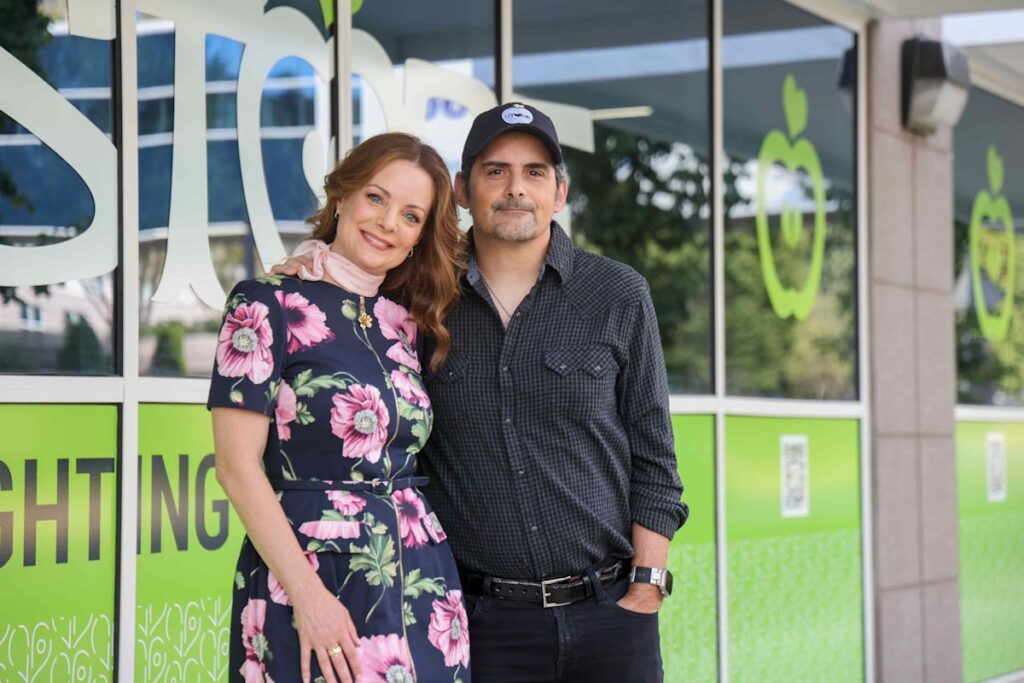


Your initial impression of The Store, founded by Brad Paisley and Kimberly Williams-Paisley, is that it resembles any other grocery store. Across from Tri-Star Centennial Medical Center in Nashville, the building sports a bright white and green logo and sign, large commercial glass windows, with a few cafe tables and chairs placed along its front.
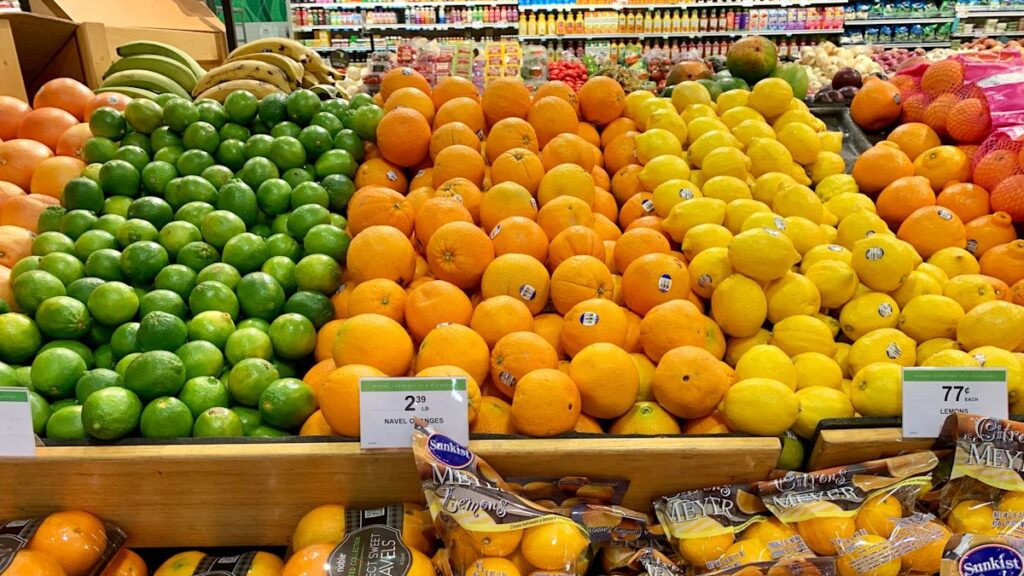
Inside, folks wheel their shopping carts up and down the aisles where shelves are lined with pantry basics and shelf- stable goods: canned vegetables, assorted beans, rice, pastas, masa, flours, sugars, spices, and condiments. Refrigerated cases display cow, almond and soy milks, eggs, margarine, and cheese. In the freezer section, there’s a selection of meats and poultry. A large area is devoted to fresh produce, stocked with a vibrant array of fruits and vegetables. Non-food items—diapers, soap, toothbrushes, even greeting cards and fresh flowers are available. Pet food, too. Clerks cheerfully scan the goods at checkout counters, while assistants bag them.
Inside The Store, which offers those struggling with food security access to groceries through a model that empowers choice.
Credit: The Store
Indeed, it all feels like your typical grocery shopping experience—except that it’s free. For people struggling with food insecurity, reported now at a 10-year high, The Store responds with a hopeful new model. “It’s a model of choice,” says CEO Collen Mayer. “And with choice, comes dignity.”
The Paisleys were moved to bring this concept to Nashville after an uplifting experience volunteering with their children at Unity Shoppe in Santa Barbara, California. They partnered with Brad’s alma mater, Belmont University, and worked for five years to bring it to fruition. They launched The Store at its first location on the university’s property on an inauspicious date: March 12, 2020. Nashville had been hit with destructive tornadoes ten days earlier, and the state-mandated pandemic shutdown followed on the 13th.
Kimberly recalls, “We had to immediately pivot to disaster relief after the tornadoes, and home delivery during the pandemic. And that had real impact. But when we could finally open the doors and have our customers shop the way we originally intended, we knew we were on the right track.”
The Store serves individuals, families, seniors, and veterans. Customers shop every other week, over a span averaging 18 months. When they arrive, they check in and are handed a guide which describes how many items they can get. To empower healthy choices, the guide does not include fresh produce in that tally. Mayer notes that 98% of shoppers pick fresh produce. “It points to a lack of access, not desire.”
Volunteers at The Store help stock shelves and bag groceries.
Credit: The Store
Volunteers are on site to assist the shoppers in making their selections, scan the items at checkout (which helps with inventory control), bag the groceries, and load them. Volunteers also help restock the shelves.
Originally designed to meet the needs of 100 families annually, The Store has grown that number to 7,000 people a year. And, there is a waiting list. The second location, opened in January 2026, is triple the size of the first. Through the collaboration of over 80 nonprofit partners, The Store gets its referrals.
“We don’t operate in a silo,” says Mayer. “We’re just a staff of 16. It takes a lot to power The Store. It really brings together the community: 3700 volunteers! And our choice-based model, combined with the caring of our volunteers, brings about positive outcomes.”
By the numbers, that comes to 92% reporting peace of mind, knowing they have access to good food. 96% have budget freed up for other essentials. 91% feel more hopeful about their lives and future.
“On the macro-level, we know the problem,” says Mayer. “One out of eight adults experiences food insecurity, and, more distressing, one out of five children. We don’t disparage the work of food pantries that provide boxes of non-perishable items. There’s tremendous outreach. But with our choice-based model, we find that people are better able to meet their dietary needs while limiting food waste.”
From fresh produce like bananas to pantry staples like flour, The Store has it all.
Credit: The Store
It’s valuable to look at it from the micro-level. People experiencing food insecurity also often feel stigmatized. Powerless. Lack of choice leads to lack of dignity, lack of healthy options, and lack of hope. However, customers at The Store feel seen. The staff and volunteers connect one-on-one with them. That makes a palpable difference. Kimberly values the connections she makes with The Store’s customers.
“I love hearing what they are making for dinner,” she says. “They’ve given me some great cooking tips, too.”
Kimberly has had many heart-opening interactions with customers that have stayed with her.
“One woman who had young children had to quit her job to be a full-time caregiver to her aging mother with dementia. Suddenly, she couldn’t make ends meet anymore,” she relates. “The Store helped her bridge the gap and get back on her feet again. She now works at Vanderbilt, and no longer needs The Store’s assistance.”
The Store purchases almost 85% of the products, and supplements through donations.They’ve been fortunate to get fresh produce, such as heirloom tomatoes, assorted squashes, and peppers from area farmers. Purity Dairies is selling them whole and low-fat milk at cost. In being a force for change, so much relies on the power and goodness of people.
Originally designed to meet the needs of 100 families annually, The Store has grown that number to 7,000 people a year.
Credit: The Store
The Paisleys would love to see their model for The Store replicated in every city. To that end, Mayer is in what he calls “Core Conversations” with nonprofits across the country and holds quarterly virtual workshops. The staff is also looking at potential sites for a third Nashville location. And, they are always in figuring out creative ways to generate funds for food. Recently, they sponsored “Nashville’s Got Talent” at the City Winery, where all proceeds go to supporting The Store. In 2027, Brad, who is quite the humorist, will be hosting “Groceries with Dignity, Comedy Without” at Zanies Comedy Club.
But Collen Mayer reminds us that, while all of these efforts are critical, none of it has the same power as the work of the volunteers. “The only way to grow is to keep showing up, and take care of our community.”
Read the original article on Southern Living
Source link