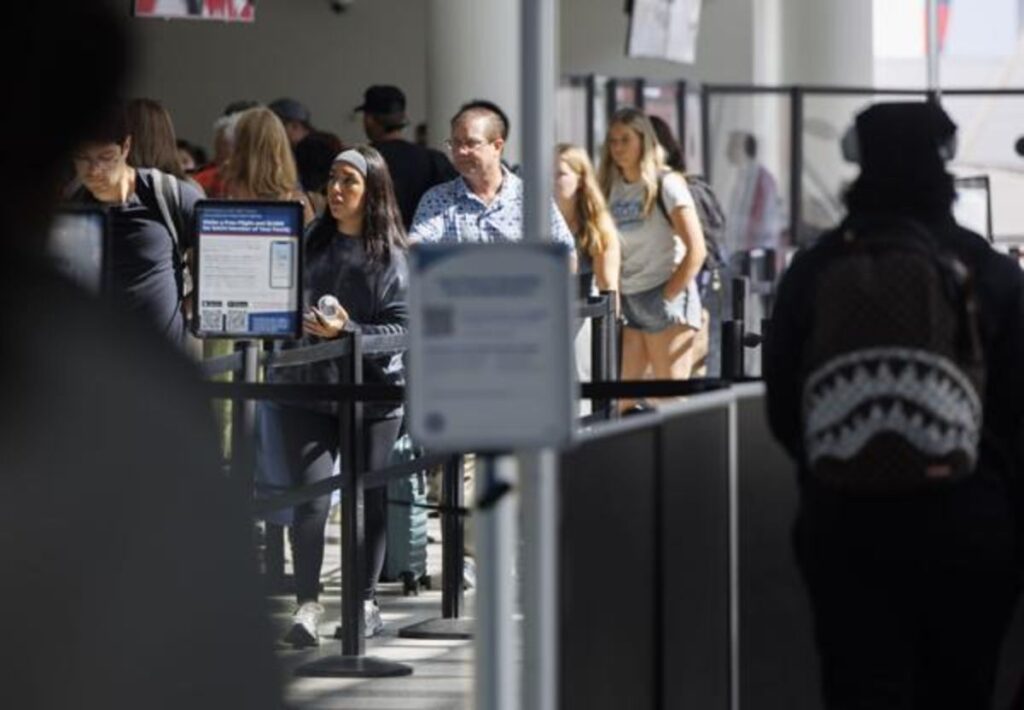
A child of the ’90s, I recall there being only one security line at the airport when I flew for the first time (to Disney World, naturally). Everyone formed a single line, presented their IDs to the TSA agent, then flowed through the scanning machines.
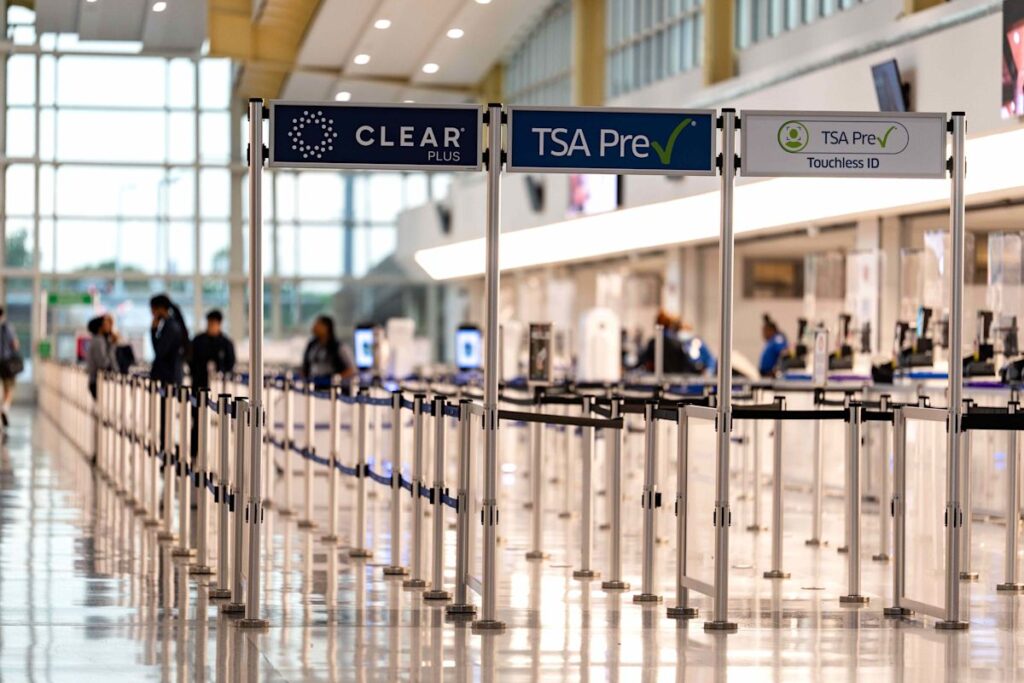
Over the past two decades, it seems a new airport screening option has popped up every few years. And as a travel writer who has taken more than 70 flights in 2026 alone, I find this fascinating. At last count, I spotted five separate aisles in which travelers could approach the TSA agents—and that’s not even counting Global Entry and its fast-pass line for those who have the Trusted Traveler app.
But is the extra cost actually worth it? Here’s the tea, straight from Southern travel advisors who fly often and coach clients about which security option makes the most sense for their lifestyle.
TSA PreCheck vs. Touchless ID
TSA PreCheck
TSA PreCheck debuted as a small pilot program in October 2011 and expanded nationwide in December 2013. Any American citizen is eligible, and a new five-year PreCheck membership costs between $77 and $85. Simply apply online, then book an in-person appointment for approval. Once you get approved, you will receive a Known Traveler Number (KTN) that you can add to airline tickets and loyalty programs.
Advertisement
Advertisement
If done correctly, all of your boarding passes moving forward should include a little “TSA PreCheck” badge. Just be sure to double-check that your KTN is filled out during the checkout process before booking each new flight.
“If you forget to enter your KTN, this won’t appear on your boarding pass,” Schroeder warns. “This can be a pain to fix, as you have to visit a help desk.”
According to Emma Major Schroeder, an Atlanta-based luxury travel advisor and owner of Major Traveler, “PreCheck is just that: a ‘pre-check’! Everyone in the PreCheck line has already been vetted. You can keep your light jacket on, and your laptop and liquids are usually A-OK to stay in your bag.”
At this point, the majority of people with PreCheck are frequent travelers, “so everyone in that line knows the drill,” Schroeder admits. “It sounds like a small thing, but a line full of people who know what they’re doing really does make the whole process smoother.”
Advertisement
Advertisement
The PreCheck line almost always moves faster than the standard security screening line—and yes, you can even keep your shoes on.
TSA PreCheck Touchless ID
TSA PreCheck Touchless ID, on the other hand, rolled out as a pilot in 15 U.S. airports in August 2025. As of spring 2026, it was available at 65 airports nationwide. Travel advisors say to think of Touchless ID like an upgrade within PreCheck.
“Normally, you hand a TSA agent your boarding pass and ID. With Touchless ID, you walk up to the agent, look into a camera, and it matches your face to your ID. You’re through in seconds, without having to fumble through your bag for your passport or driver’s license,” Schroeder explains. “It’s free for PreCheck members. You do have to opt in, though, since it involves biometrics.” (The TSA vows that these images are “encrypted, anonymized, and automatically deleted, typically within 24 hours to 180 days.”)
Once you move to luggage screening, the process is the same, notes Kimberly Denison, the Dallas, Texas-based travel advisor and founder of Denison Travel. Even though this seems like a tiny difference, Denison believes that “Touchless ID is definitely worth it for travelers who are comfortable with facial recognition. To date, these lines tend to be the quickest option for security by far.”
Advertisement
Advertisement
For now, Touchless ID remains fairly limited. Only six airlines offer it—Delta, United, American, Southwest, Alaska, and Hawaiian Air—and, as we mentioned, it’s an option at 65 airports from coast to coast. Anyone with a KTN and a passport on file can opt in, but they must do so on each airline app. Once it’s enabled, you should spot a green “Touchless” icon next to the standard PreCheck badge.
What About CLEAR And Global Entry?
In addition to the two PreCheck lanes, you’ll likely come across two more security options, depending on the airport and where you’re flying to or from.
CLEAR
The priciest of the bunch is CLEAR, originally known as Verified Identity Pass, which has been a membership-based program since 2012. A standard CLEAR airport membership costs $219 per year. You can add up to three adults—family or friends—to your primary account for $125 per person annually. Kids under 17 can join the CLEAR line with a membership holder for free.
Similar to Touchless ID, CLEAR uses biometric identity verification to help expedite your way through the security checkpoint, says Madeline Steuber Johnson, co-founder and co-CEO of Washington, D.C.-based Anthology Travel. Since it costs more than the aforementioned alternatives, the lines often move even more swiftly.
Global Entry
Global Entry launched nationwide in 2012, as a way to speed up reentry into America after international travel. Instead of waiting in line at passport control, you can jump into the quick-moving, biometric photo line to receive a receipt or card, which allows you to breeze right past the U.S. Customs and Border Protection desk. Global Entry costs $120 for a five-year membership (about $40 more than PreCheck). Apply for it and get approved, and you automatically qualify for PreCheck as well.
Advertisement
Advertisement
TSA PreCheck and Global Entry approvals last five years, but no need to fret—or find time for another in-person appointment. Most of the time you can renew online and receive an extension from the comfort of your own home, Schroeder verifies.
Are These Travel Services Worth It?
“When looking at TSA PreCheck, CLEAR, Global Entry, and all the other ways to fast track your airport experience, it really comes down to your home airport, how frequently you travel, and what you’re trying to accomplish,” Johnson says.
If you fly more than three times per year domestically, the experts believe that PreCheck or CLEAR is worth it. And if you jet abroad once every three years or more, they recommend going with Global Entry (and Touchless ID, if you like).
“These programs can be incredibly valuable, particularly if you have a busy travel schedule,” Johnson tells Southern Living. “We’ve seen convenience pay dividends for both ourselves and our clients.”
Advertisement
Advertisement
A couple caveats: If you’re traveling out of smaller airports or major government hubs where everyone seems to have TSA PreCheck, the time savings may not always be as significant. Still, I speak from experience when I say that it’s extremely rare for the standard security line to move at a quicker clip.
Before you pay for any of these programs, “check your credit card benefits,” Denison suggests. If you use a card like Chase Sapphire Reserve or Preferred, American Express Platinum, Capital One Venture X, Bank of America Premium Rewards, United Explorer Card, or Delta SkyMiles Gold Amex, you can receive a statement credit to reimburse a portion or all of the fee.
Read the original article on Southern Living