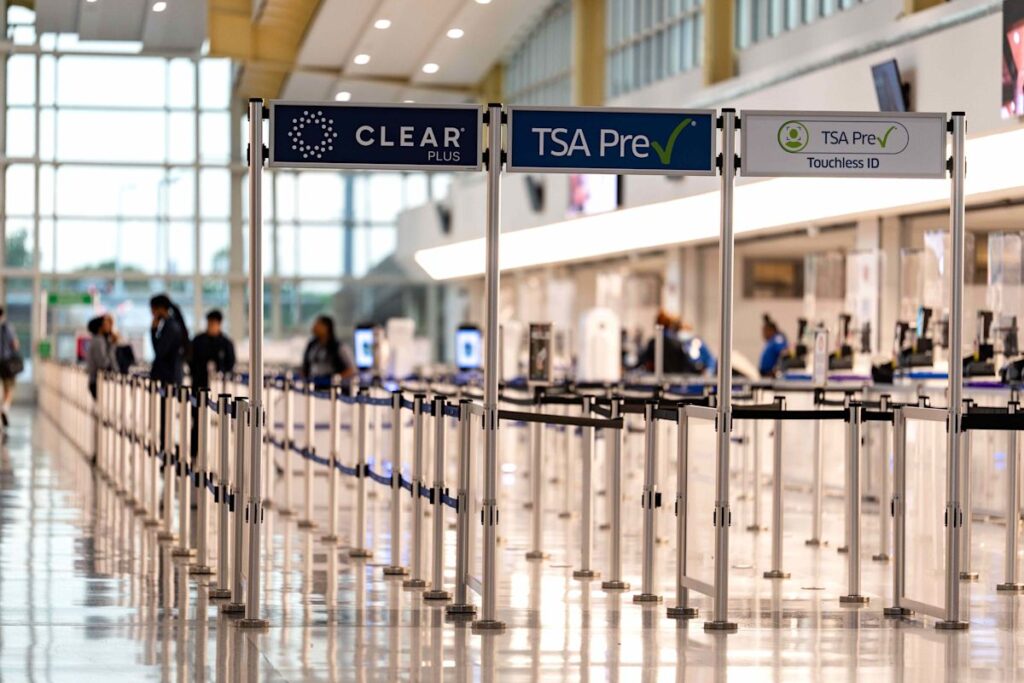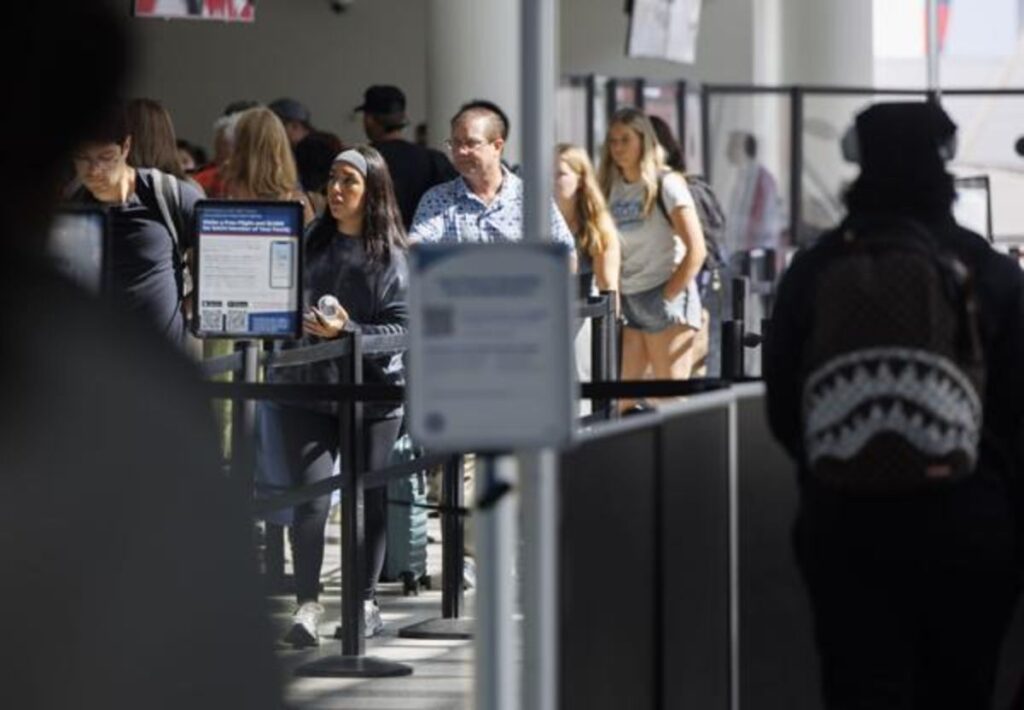

Travlers wait in line for TSA checkpoints at the Charleston International Airport in North Charleston. File/Grace Beahm Alford/Staff
CHARLESTON — After a weekend of flight cancellations and delays across South Carolina and the U.S., air travel is beginning to stabilize days before millions of Americans are expected to travel for Thanksgiving.
Charleston International reported a dozen delays on Nov. 16 — down from 110 during the late afternoon and early evening of Nov. 13.
U.S. air travel largely returned to normal Nov. 16 after more than 18,000 flight cancellations nationally over three days stemming from the longest ground stop in 25 years, Reuters reported. Disruptions mounted in South Carolina and other states as airlines worked to recover from the nearly five-hour nationwide ground stop and backlog that stranded hundreds of thousands of travelers over the weekend.
Advertisement
Advertisement
Transportation Secretary Sean Duffy said Thanksgiving travel should not be impacted.
AAA has projected 81.5 million Americans will travel at least 50 miles from home between Nov. 24-30 for the Thanksgiving holiday, which falls on Nov. 26. Roughly 6 million will be flying.
AAA prepared its forecast weeks before the travel disruption, but spokesperson Tiffany Wright did not anticipate the ground stop will affect Thanksgiving travel unless it happens again.
“Travelers are resilient, and from what AAA has seen in the past, it takes a lot to keep holiday travelers home,” Wright said. “Most people will keep their original Thanksgiving travel plans and only make changes if they’re forced to because of a significant delay or cancellation.”
Advertisement
Advertisement
Stacey Barber, vice president of AAA Travel, said that after three years of record-breaking travel trends, there will be a slowdown because of higher travel costs — ranging from the price of gas to airfare. According to AAA data, which is based on what travelers paid when they booked their Thanksgiving trips, round-trip domestic flights are 17 percent more expensive, averaging $800 per ticket.
“But travelers won’t notice much of a difference on the roads and at the airports, since projected volumes remain near record levels,” Barber said.
Thanksgiving is one of the busiest travel periods. Last year, Charleston International reported a 9 percent increase in Thanksgiving week travel, with upwards of 142,000 travelers passing through the terminal from the Tuesday before the holiday through Dec. 1.
Airport officials continue to urge travelers to check their flight status through the airline’s app ahead of their travel plans.
The latest updates
Speaking on CNBC, Duffy, the transportation secretary, estimated the economic impact of the disruptions — which also delayed nearly 28,000 flights — would be “billions of dollars.”
Advertisement
Advertisement
On Nov. 16, there were 300 flight cancellations and 1,500 delays, down from more than 2,300 canceled flights and 11,000 delays a day earlier, according to FlightAware, a flight tracking site.
The four largest U.S. airlines face an estimated $345 million earnings hit from the nationwide ground stop, according to brokerage Bernstein.
Duffy on Nov. 13 upped his request for funding for air traffic control and airports from $30 billion to $50 billion. The FAA uses aging equipment, including Compaq computers, floppy disks and paper strips to track airplanes. Duffy has continued to post on X calling for Congress to “act and deliver” the request to modernize and overhaul the FAA’s system.
The problem was traced to FAA contractor L3Harris’ installation of at least one new router at a remote facility. Duffy said the trouble began on the afternoon of Nov. 13, when air traffic control centers experienced instability in radar and communications systems. The router issue led to data overloading other communications centers, officials said.
Advertisement
Advertisement
On Nov. 16, Duffy shared on X that the FAA is on site at the L3Harris lab in Florida “analyzing the router that was the likely cause of Friday’s nationwide ground stop.”
Duffy and Republicans want quick action on the additional funding in the final weeks before the current Congress goes home and Democrats take over in January.
Reuters contributed to this report.