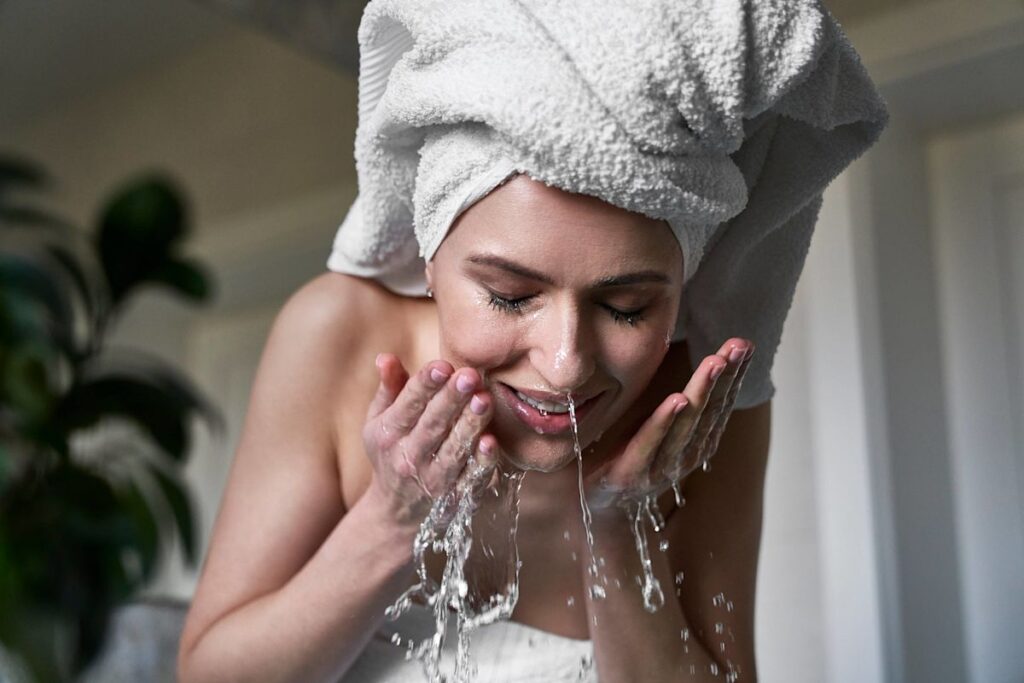
There’s something satisfying about exfoliating. A swipe of an acid pad or a few passes with a gritty scrub, and skin feels smoother almost instantly. So when dull skin starts showing up in the mirror, exfoliating more often can seem like the obvious fix.
There’s a reason dullness becomes more noticeable with age. Skin cell turnover slows down over time, so dead cells linger on the surface longer than they used to. Clearing them away helps, up to a point.
The trouble starts when once a week turns into every other day, or a scrub gets stacked with a glycolic toner and a nightly retinol. Exfoliating ingredients also show up in plenty of products that don’t call themselves exfoliants, including some cleansers, toners and serums, so it’s easy to double up without realizing it.
Advertisement
Advertisement
That top layer of dead cells isn’t just debris. Mixed with fats and water, it forms the skin barrier, which keeps moisture in and irritants out. Strip away too much of it and the results can look nothing like what you were going for.
This is an easy trap to fall into after 50, especially. The skin barrier thins with age, so mature skin is often more delicate than it was a decade or two ago—right when dullness makes stronger exfoliation more tempting.
We gathered advice from five dermatologists to explain how over-exfoliating works against you, the signs you’ve gone too far and how to get your skin back on track.
Related: Dermatologists Settle the Debate: How Often Should You Really Exfoliate Mature Skin?
Why Over-Exfoliating Can Leave Skin Looking Dull
Dr. Susan Massick, an associate professor of dermatology at the Ohio State University College of Medicine, sees this pattern regularly in her practice. “Women over 50 often counteract what they’re trying to achieve by overusing product—either too many or too frequently,” she told Parade. “A common mistake is over-exfoliating, which leads to dry, irritated and dull-appearing skin. Back off or do it less frequently.”
The problem goes beyond how skin looks.
“Over-exfoliating can really harm your skin barrier,” dermatologist Dr. Michelle Henry said in another Parade story. “It can make your skin rough and sensitive, and in some cases, hyper-reactive.”
Related: Dermatologists Reveal 18 Ways To Get Glowing Skin Without Makeup
Signs You’ve Gone Too Far
“Many people believe that scrubbing until the skin looks red means it’s ‘clean,'” Dr. Michael Lin, a board-certified dermatologist and founder of the Advanced Dermatology and Skin Cancer Institute at Unified Health, told Parade. “In reality, that redness is a sign that the skin barrier has been damaged.”
Advertisement
Advertisement
That irritation also leaves skin more sensitive and more prone to inflammation or infection, he explained. Other red flags include skin that “becomes dry, tight and sometimes even cracked,” Dr. Lin added. “It may sting when exposed to warm water, and the surface can appear red or pink.”
Related: Is ‘Skin Flooding’ Legit? A Board-Certified Dermatologist Weighs In
Why Harsh Scrubs and Stacked Products Make It Worse
Gritty scrubs and harsh soaps are a big part of the problem.
“These types of soaps and scrubs can be hard and abrasive, leading to microtears and disruption of your skin barrier, which can lead to skin sensitivity,” dermatologist Dr. Marisa Garshick previously warned Parade. “Instead, you should get in the habit of using gentle cleansers and exfoliants that are effective, but won’t irritate your skin.”
Advertisement
Advertisement
Dr. Lin went a step further. “Skip physical scrubs altogether—your skin doesn’t need to be scrubbed to be clean,” he said. If you do want to exfoliate, he recommended “gentle chemical exfoliants such as salicylic acid, glycolic acid, lactic acid and urea,” which he called “safer and more effective options.”
Piling on products adds up, too.
Dr. Alexandra Bowles, a board-certified dermatologist at MONA Dermatology, told Parade that using too many exfoliating products can overwhelm skin and lead to irritation and inflammation. Technique matters as much as quantity. “Scrubbing too often or too hard can damage your skin barrier and leave you with redness or breakouts,” Dr. Bowles said.
How Often You Should Exfoliate

There’s no single right number, but daily is almost always too much. Dr. Massick suggested alpha or beta hydroxy acids when exfoliation is needed. “You do not need to use an exfoliant daily,” she said. “Consider weekly or bimonthly according to your skin tone and texture.”
Advertisement
Advertisement
Dr. Henry recommended one to three times a week at most. If your skin starts to feel tight or sting, that’s a sign to scale back further.
Related: 25 Best Facial Exfoliators for Mature Skin, According to Celebrity Estheticians
How To Repair Over-Exfoliated Skin
The fix is mostly about stepping back. “The best thing you can do is stop exfoliating and focus on restoring moisture,” Dr. Lin said.
He recommended using a thick, protective ointment like Vaseline or Aquaphor “because they lock in moisture and protect the skin barrier.” Jarred creams “are the next best option,” while pump-bottle lotions “are the lightest and least protective, so they’re better suited for maintenance once the skin has healed,” he explained.
Advertisement
Advertisement
Water temperature matters while your skin recovers. “Avoid hot water and harsh soaps, as they strip away natural oils,” Dr. Lin said.
Most people can expect a damaged barrier to heal in one to two weeks “as long as the skin is left alone and well-moisturized,” he said. “The more you support the skin barrier, the faster it can recover.”
If things aren’t improving, don’t wait it out. “If redness or irritation lasts beyond a couple of weeks, or if the skin begins to ooze, feel warm, or develop pus, it could be a sign of infection,” Dr. Lin said. “In those cases, it’s important to see a doctor right away.”
How To Get Your Glow Back
Once your skin has calmed down, a simple, consistent routine does more than a shelf full of actives. For evenings, Dr. Massick recommended a short lineup. “Remove makeup, use a gentle cleanser then an over-the-counter retinol or prescription-strength retinoid,” she said. “You don’t have to use retinol nightly if it’s too drying. Follow with a moisturizer with ceramides and hyaluronic acid.”
Advertisement
Advertisement
Exfoliating still has a place, as long as it stays gentle. “Gentle, regular exfoliation combined with good hydration and sun protection will keep your skin balanced and healthy without irritating,” Dr. Bowles said.
The biggest shift may be in how you think about clean skin. “Over-exfoliation often comes from the misconception that ‘deeper cleaning’ leads to healthier skin,” Dr. Lin explained. “In truth, healthy skin thrives on balance. Be gentle, protect your skin barrier and let your skin naturally renew itself—you’ll get a healthier, longer-lasting glow that way.”
Adapted from Parade’s “I’m a 53-Year-Old Dermatologist—These Are the 5 Mistakes Women Over 50 Make With Their Skin” by Sheila Baylis; ‘The Daily Habit Dermatologists Are Begging Women To Stop ASAP” by Morgan McMurrin; The Weird Sign You Might Actually Be Over-Exfoliating Your Skin, a Celebrity Dermatologist Warns” by Martha Sorren; “This Popular Shower Trend Might Be Making Your Skin Worse, Not Better” by Emily Laurence Sardinha; “What Is the Skin Barrier and How Does It Change Over 50?” by Sheila Baylis
Up Next:
Related: We Asked 3 Dermatologists Which Viral Skincare Trend Isn’t Worth the Hype, and They All Said the Same Thing
Sources:
-
Dr. Susan Massick, associate professor of dermatology at the Ohio State University College of Medicine
-
Dr. Michael Lin, California-licensed physician, board-certified dermatologist and founder of the Advanced Dermatology and Skin Cancer Institute at Unified Health
-
Dr. Marisa Garshick, board-certified dermatologist and assistant clinical professor at Cornell University

This story was originally published by Parade on Nov 11, 2026, where it first appeared in the Beauty section. Add Parade as a Preferred Source by clicking here.