Key Points
-
When it’s hot and humid outside, the best wines to reach for are crisp, refreshing, and easy to drink. Look for bottles with bright acidity or minerality, and steer clear of reds with heavy tannins.
-
You don’t have to stick to Provence rosé, either. Chillable reds, dry Riesling, and skin-contact whites are all great ways to switch up your usual warm-weather wine lineup.
-
If you’re settling in for a long afternoon on the porch, consider wines under 12% ABV or simple cocktails like vermouth and tonic. Just be sure to keep your bottles cold, using a bucket filled with equal parts ice and water for quick chilling.
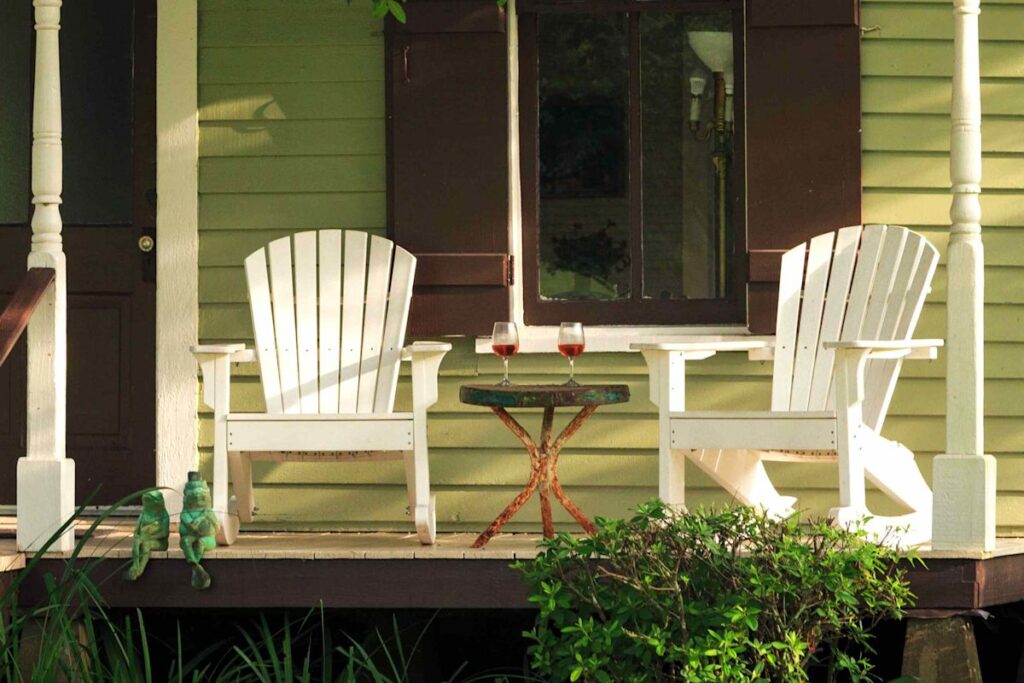
It can be magical to spend a long, lazy afternoon on a Southern porch. But when the temperature climbs to a sweltering 85 degrees and the humidity wraps around you like a wet blanket, curating the right beverage lineup is key.
For years, home entertainers have defaulted to filling an ice bucket with standard Provence rosé. While there’s absolutely a time and place for that classic pink pour, relying on it exclusively might mean missing out on a world of chillable reds, textural whites, and low-ABV options that are practically built for humidity.
We tapped four top beverage professionals — ahead of their “At Your Leisure: Porch-Perfect Wines and Cocktails” panel at the Food & Wine Classic in Charleston — to share their rules for drinking well outdoors. Here is how the experts build the ultimate porch-ready cooler, featuring wines that stay vibrant and easy cocktails that help you pace yourself.
Seek out “chillability” and bright acidity
In heat and humidity, a wine’s structure determines whether it survives the afternoon. For Lucy Simon, special projects editor at Food & Wine, the primary requirement is “chillability.” That means finding a bottle with enough concentration “to still be flavorful when chilled way down, but without too much structure (tannins) to turn into chilly liquid sandpaper,” she says.
Marie Stitt, co-owner of Charleston’s all-day cafe Babas on Cannon (which has expanded to two other locations in town), agrees that acidity is the best defense against the weather. “You want something cold, of course, but also crisp, zippy, and bright,” she says. “You definitely don’t want something that feels flabby or heavy in the humidity.”
If you prefer to avoid aggressive acidity, you can still find freshness. “Honestly, I live for high-acid wines, but sometimes it’s better to lean on minerality, texture, or savory qualities,” says Matthew Conway, owner and sommelier of The Tippling House in Charleston. He points to Rhône whites like Dard & Ribo, where a “tingly mineral component feels fresh without the acidity,” or to a sparkling wine made from Pinot Noir, like Tissot, which offers “zip and is very playful without needing a Zantac to finish the bottle.”
Ditch the heavy tannins
Big, bold red wines and humid afternoons are a notoriously disastrous pairing. “I simply avoid wines with too much tannin structure altogether,” says Conway, recalling a time he brought a magnum of 1997 Jamet Côte-Rôtie to the Bahamas, only to find that “the heat and humidity ruined what should have been an epic bottle.”
Related: The No. 1 Pro Tip for Chilling Your Wine Bottle — Fast
While chillable reds are a current trend for outdoor gatherings, you have to be careful. “Not all red wine can be thrown in the fridge and served cold,” says Bethany Heinze, co-owner and beverage director of Vern’s in Charleston. “When a full-flavored wine is served cold, it almost locks up and mutes the flavors, sometimes adding a little bitterness.” Her solution is to seek out low-tannin bottles with a translucent hue, such as coastal wines with high minerality, like the Antonio Lopes Ribeiro ‘Maresia’ red blend from Portugal and Mortellito’s ‘Cala Niuru’ Frappato from Sicily.
Lower the ABV for the long haul
A daytime gathering requires marathon-level pacing. “For pacing, I look for wines under 12% ABV,” says Stitt, pointing to Vinho Verde, Txakoli, or Muscadet.
For hosts looking to mix up their beverage offerings without playing bartender all day, she suggests easy options. “We have been loving having a sweet Spanish vermouth over ice with a splash of tonic or soda and lemon twist,” she says. “It takes no time or effort to make these, and you feel instantly refreshed and sophisticated.” Another go-to is the Americano, which adds complexity to a basic vermouth and soda by introducing the bitterness of Campari or Cappelletti, a fortified wine infused with bitter Alpine herbs, for a “negroni-lite.”
Control the temperature (and the ice)
Even the perfect wine will fail if it isn’t served properly. The biggest mistake home entertainers make is letting bottles “bake in the sun,” says Simon. For a quick fix, she suggests repurposing “a Dutch oven or soup pot” as an impromptu wine cooler, combining “half ice and half water for fast chilling.”
Related: Yes, You Should Absolutely Chill Your Red Wine — Here’s Why
Conway keeps a Yeti cooler handy to store ice and advises hosts to invest in large two-inch cube trays that dilute slowly. “Bring just enough out as needed so it’s not all melted on the service bucket,” he says. He keeps it on hand for anyone who wants it — including in their (gasp!) wine.
Explore beyond Provence rosé
“There’s always a time and place for Provencal rosé, but there’s so much more to explore,” says Simon.
To ease guests into the world of orange wine, Heinze suggests a “very user-friendly” bottle like Clos Roussely’s Sauvignon Blanc. “It’s a light-skin-contact white wine that has just enough extraction to provide pigment and introduce a new flavor beyond its white-wine variation,” she says. “It’s a grape everyone is familiar with, but it has a beautiful stone fruit tone to take them in a new direction.”
Stitt loves guiding her guests toward a dry Riesling. “Most of my non-industry friends still think all Riesling is sweet,” she says. “It’s so fun to turn them on to a dry Austrian or German Riesling and to blow their minds with how stunning that style can be — crisp, mineral, beautifully aromatic.”
For guests who want to stay in their comfort zone, Simon advises sticking to France but swapping the color. “You can’t go wrong with Sancerre,” she says, calling it “an easy, safe-space crowd pleaser that will have a bit more personality and zing than some Provençal rosé, but deliver on the bone dry, refreshing qualities they’re looking for.”
As for what you’ll be drinking on the porch next year? Simon already has a prediction. “If 2025 was the year of Orange wine and 2026 is all about chilled reds, I am hoping for Chenin Blanc 2027,” she says, adding that the grape is thriving globally and “yielding some of the most exciting wines out there.”
What to ask for at the wine shop
No need to arrive with a grape variety or producer memorized. Tell the staff you’re looking for a wine to serve cold on a hot, humid afternoon, then give them a little direction:
-
For something crisp: Ask for a dry white with bright acidity, such as Sancerre or a dry Austrian or German Riesling.
-
For a red that takes a chill: Ask for a lighter-bodied, low-tannin bottle. The experts’ picks include Mortellito’s Cala Niuru Frappato and Antonio Lopes Ribeiro’s Maresia red blend.
-
For a first taste of orange wine: Ask for a lightly skin-contact white made from a familiar grape, like Sauvignon Blanc. Bethany Heinze recommends Clos Roussely’s version.
-
For a lower-alcohol option: Ask for bottles under 12% ABV. Marie Stitt suggests looking among Vinho Verde, Txakoli, and Muscadet; check the label, since alcohol levels vary by bottle.
Mention your budget and a bottle you already enjoy, too. That gives the staff a useful starting point.
Read the original article on Food & Wine