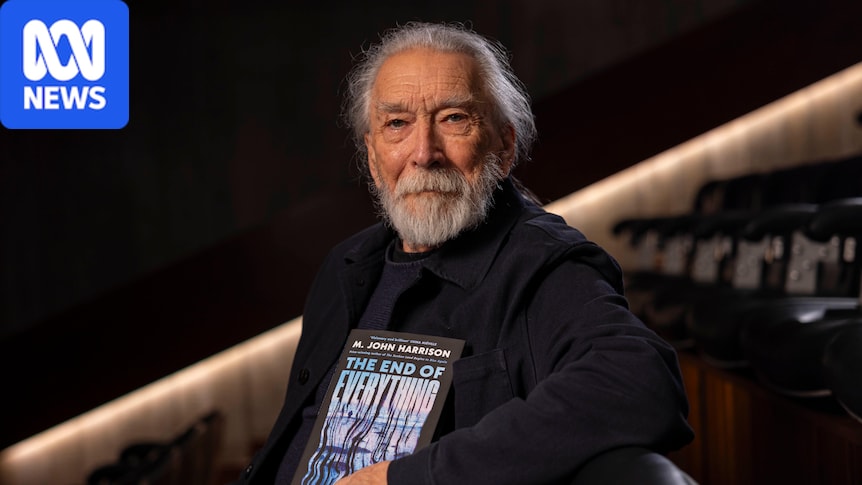
At 81, M John Harrison has become the oldest winner of the Booker Prize, worth 50,000 British pounds ($95,000).
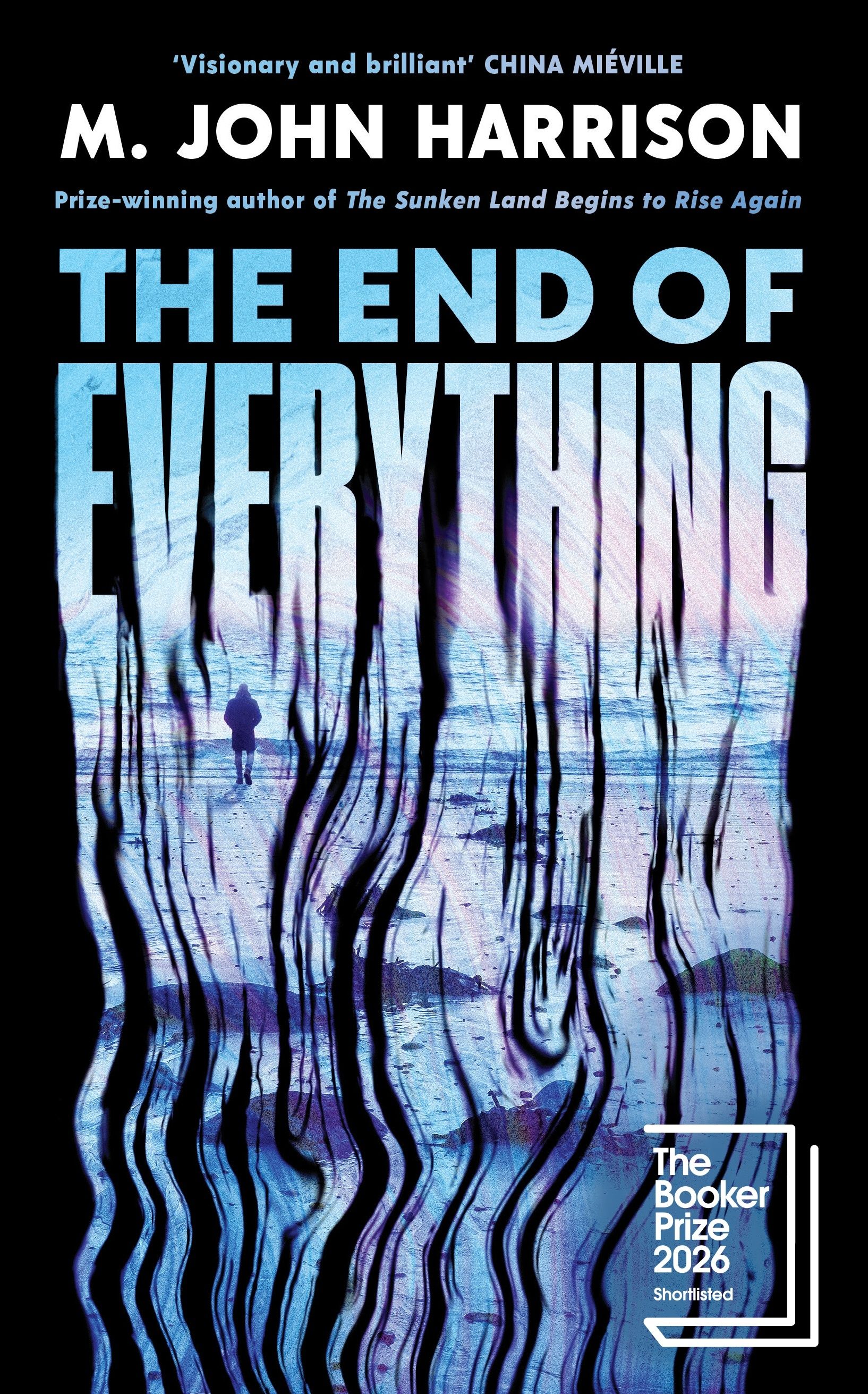
The English author, known for his sci-fi and fantasy books, won the award for his dystopian novel The End of Everything, about a man and his aunt living in the south of England in the decades after a mysterious invasion has led to society’s collapse.
The novel opens as scavenger Phillip Tennent finds a bundle on the beach. He takes the “artefact” — a “biological gadget” discarded by the invading iGhetti — to the home of his artist aunt Marnie, whose memory is failing.
But Marnie is immediately wary of the bundle, which, to her, seems to be growing in size as they speak.
First inspired to write The End of Everything by the 2008 global financial crisis, Harrison told the Booker Prize the book’s themes and satire sprang from current affairs.
“What happens when all of our expectations and explanations of the world become an ongoing disaster, but we still have to make a life?” he said.
Accepting the award at a ceremony in London on Monday night, UK time, Harrison said the Booker was important in a “landscape of industrialised fiction”.
“I really didn’t expect to be up here this evening,” he said. “I honestly didn’t, here at the end of everything.”
“You talk glibly about your life being changed but it’s weird when it happens. I feel like a proper writer at last, totally lacking in confidence.”
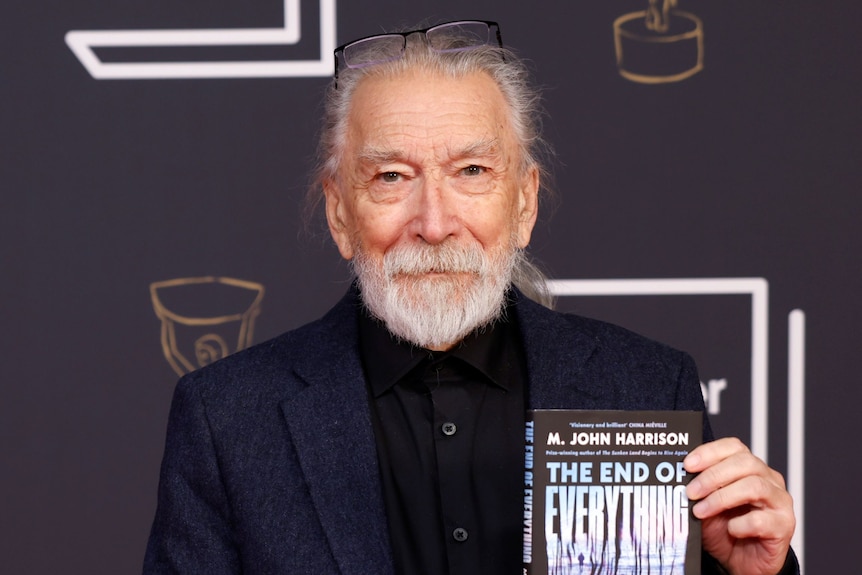
M John Harrison’s The End of Everything was chosen as the winner of the Booker Prize from 163 entries. (Supplied: Booker Prize Foundation)
He went on to thank his publisher Serpent’s Tail and partner Casper for being patient with him, a self-described “complete lunatic”.
“No-one writes a novel alone,” he said. “I’ve had so much support across the last 40 or 50 years that at this point my input seems to be the least of it.”
Asked on stage what kind of message he hopes readers take from The End of Everything, Harrison was frank.
“It’s a grim world and it will keep on being grim,” he said. “And it’s weird; there’s something distinctly weird about it.
“But at the end of things there may be some kind of, I wouldn’t say hope or closure, but there might be some kind of relief.“
Chair of the Booker judges, classicist Mary Beard, described The End of Everything as “the politics of now seen through the lens of the future”.
“One main point of the book is that if, or when, such an apocalypse comes it will be incomprehensible. And the old rules won’t matter either,” she said.
“[The End of Everything is] a book that turns you upside down, raises a wry smile — and surprisingly, given the subject matter, leaves you with a twinge of optimism.“
Beard added the book was unanimously chosen by the judges — among them Booker-shortlisted writer Patricia Lockwood and Pulp frontman Jarvis Cocker — as the winner.
It bested the latest books from two previous Booker winners, Douglas Stuart and frontrunner Marlon James; twice-shortlisted Elizabeth Strout, and two other English authors who are also poets, Luke Kennard and Rebecca Perry.

Mary Beard hopes the Booker shortlist will “make you laugh, scream and change the way you see the world”. (Supplied: Booker Prize Foundation/Yuki Sugiura)
While Harrison has never been shortlisted for the Booker Prize before, he was a judge in 2022, the year Shehan Karunatilaka won for his political satire The Seven Moons of Maali Almeida.
In his speech he acknowledged the judges’ efforts: “I know from my own experience in 2022 that judging is as tiring as it is fun. Indeed, sometimes more timing than it is fun.”
Genre fiction in the mainstream
The win for Harrison, who is known for his 2006 novel Nova Swing, which won both the Arthur C Clarke and Philip K Dick Awards for science fiction, demonstrates how the Booker Prize has expanded to be more inclusive of genre fiction over its 60-year history.
M John Harrison has been writing for 60 years, with his first short story published in 1966. (Supplied: Allen & Unwin)
Yet Harrison didn’t set out to write a “typical science fiction novel” with The End of Everything.
At a Booker shortlist event in London ahead of the announcement, he explained: “Every time I was tempted to make a rationale [for the dystopian setting], I would say to myself, ‘If you put an explanation here, you will be writing science fiction’, and that’s the last thing I wanted to do.”
Still, the Booker is important recognition for Harrison, who told the BBC last month he has spent his career trying to “shift the balance” between genre and literary fiction.
“Why shouldn’t a well-written [work of] SF [science fiction] be considered to be literary fiction?” he said.
Beard told ABC Arts the Booker judges did not deliberately set out to acknowledge speculative fiction as “this kind of literature to be rewarded where it hasn’t generally in mainstream literary prizes before”.
Instead, she said: “It’s a recognition of what some people would see as the blindingly obvious: you find great books in every genre.”
Gaby Wood, who has been chief executive of the Booker Prize Foundation since 2015, described Harrison as “the first Booker winner to have emerged from the bona fide SF world”.
She told ABC Arts: “It’s interesting to think about whether [the book is] science fiction or whether [Harrison] is a thinker who has come through the world of science fiction and created something that doesn’t have to be categorised.”
Source: https://www.abc.net.au/news/2026-11-10/booker-prize-2026-m-john-harrison-the-end-of-everything/107342508