In a Nutshell
Peeling carrots is largely a matter of aesthetics, possibly rooted in classical French culinary traditions that prioritize uniformity and refinement. For home cooks, skipping the peeler can save time and still deliver visually appealing results, especially in rustic dishes like roasted carrots.
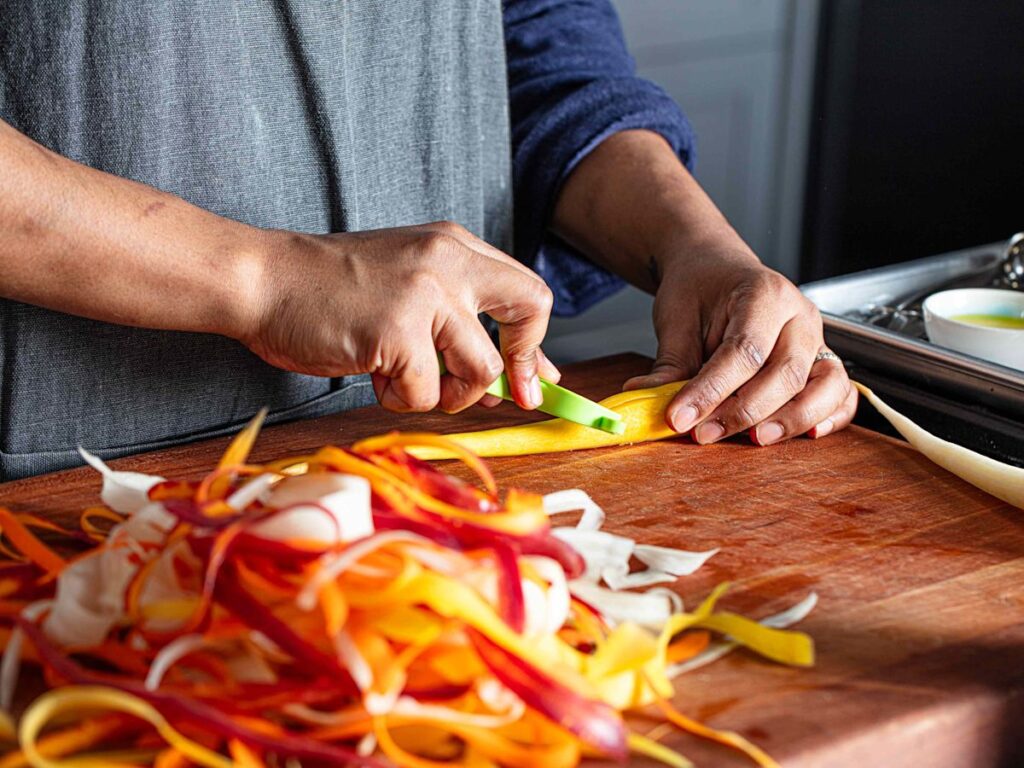
When chef Ilson Gonçalves first opened Samba, his Brazilian restaurant in Montclair, New Jersey, he was shocked when a plate of rainbow carrots—grown on a nearby Pennsylvania farm and roasted with rosemary and garlic—was sent back to the kitchen. He hadn’t peeled the carrots, and the guest was upset that she had been served them that way.
“I wish I could use the whole carrot the way it is,” says Gonçalves. He grew up in Brazil, where it’s common to eat potatoes and carrots without peeling them. “I peel the carrots because that’s the customer’s [preference here in the US].”
Peeling carrots is practically automatic for Western home cooks. Whether a recipe calls for roasting carrots whole, blitzing them into a dip, or baking them into a cake, the instructions almost always call for peeling them before slicing or dicing. But does peeling a carrot actually improve a dish—or make it safer or cleaner to eat? I spoke with chefs, farmers, and nutrition experts to find out.
Why We Started Peeling Carrots in the First Place
It’s possible that peeling vegetables became the norm in Western culinary tradition through classical French cooking, where visual uniformity is paramount. In professional kitchens shaped by Auguste Escoffier—a prominent French chef during the late 1800s and early 20th century who developed the brigade system still used in many fine-dining kitchens—vegetables were, and often still are, trimmed and peeled to ensure consistent shapes, clean lines, and pristine presentation.
That emphasis remains evident in restaurants today. Chef Miguel Guerra of the one-Michelin-starred MITA, a Latin American, plant-based restaurant in Washington, D.C., says peeling is typically about aesthetics for him. “It’s about how we want the dish to look—whether we want it rustic or more refined,” he says. He usually leaves the skin on whole roasted carrots but peels them for more delicate uses, like puréed soups or desserts.
There’s also the issue of dirt. Carrots grow in the ground and come into direct contact with millions of organisms present in the soil. Removing the outer layer is an efficient method for cleaning a carrot. Peeling carrots was likely more necessary before home cooks had easy access to running water, says Patrick Martin, owner and grower at Frantoio Grove, a regenerative, organic-certified farm in San Martin, California. Before taking over his family farm in 2020, Martin also worked as a chef and food-safety manager in restaurants.
Food-safety risks for carrots are generally low when the vegetable is handled properly, he explains. For organic farmers like himself, USDA regulations require waiting at least 120 days between applying manure or compost and harvesting crops that grow in direct contact with the soil, such as carrots. That waiting period—combined with drying, sunlight, and microbial competition—makes long-term survival of pathogens like E. coli less likely. While washing a carrot doesn’t guarantee removal of all pathogens, in most cases, a good scrub with water is enough to remove dirt and reduce surface microbes.
Peeling may have more relevance for conventionally grown carrots treated with pesticides or other agricultural chemicals. “In this case, peeling carrots may be an easy way to reduce the presence of farm chemicals on our food,” Martin says, “but in reality, these show up in very low quantities.” That said, peeling won’t remove pesticides or other chemicals that have been absorbed by the plant itself, he notes.
What’s Actually in a Carrot’s Skin?
Carrots are rich in beta-carotene, an orange pigment and carotenoid that acts as an antioxidant, supports eye health, and contributes to vitamin A intake. The peel contains a higher concentration of beta-carotene, so discarding it does result in some nutritional loss, says Delma Yorimoto, a nutrition educator with Rutgers Cooperative Extension in New Jersey. “There is still a lot of nutrition inside the carrot,” she says, “but there is more around the peel.”
A carrot’s skin also contains more fiber and phenolic compounds, which contribute to its aroma and flavor. The inner flesh holds more moisture and sugar, so leaving a carrot unpeeled can lead to slightly more bitterness and a marginally tougher texture, Guerra explains. The effect is subtle, though—so subtle that he says he rarely peels carrots when cooking at home.
When You Can Skip Peeling (and What to Do Instead)
If you’re making a long-cooked dish such as a soup, stew, or braise, most of the bitterness and toughness associated with the peel will mellow out and break down during cooking. It’s also generally unnecessary to peel carrots before roasting, especially if you prefer a more rustic look.
“One, carrots aren’t typically that bitter; two, bitterness from phenolic compounds and other antioxidants can actually add complexity if it’s balanced; and three, carrots are generally sweet, which usually offsets any bitterness,” Martin says. If bitterness is a concern, he recommends choosing young carrots, which tend to be sweeter and have thinner, more delicate skins than large, older ones.
Guerra also notes that peeling younger carrots—or thinner supermarket varieties—can result in a surprising amount of waste. Instead, he recommends scrubbing carrots thoroughly with a vegetable brush to remove dirt. If the dirt is stubborn, Yorimoto suggests briefly soaking carrots in cold water with a small amount of vinegar. “You’ll see the dirt fall off,” she says.
When Peeling Does Make Sense
For most home-cooking applications, the experts agree that peeling isn’t nearly as necessary as many Western cooks assume. “I’d really only recommend it in a few cases,” Martin says: in fine-dining contexts where texture and appearance are paramount; when using conventionally grown carrots and there’s a concern about pesticide exposure; or when serving large, older carrots raw, where peeling can reduce bitterness modestly.
Dishes that highlight the vegetable’s sweetness, such as carrot cake or other desserts, are also best made with peeled carrots, Guerra says. He likewise recommends peeling when aiming for an ultra-smooth purée, since the peel can make achieving that texture more difficult.
Ultimately, peeling carrots is optional. With modern carrots bred for sweetness and tenderness, and with proper washing, a good scrub often does the same job as a peeler—without sending half the carrot to the compost bin. And if you do peel your carrots? You can cut down on waste by following the example of Guerra and Gonçalves, who both save carrot peels from their restaurant for stock.
Read the original article on Serious Eats