Most home cooks dread searing whole fish fillets. The skin sticks. The flesh curls. Before you know it, an expensive piece of seafood turns into shredded scrap in a smoking skillet.
I see this mistake constantly. Cooking whole trout at home feels intimidating because the margins are thin. Delicate freshwater fish lacks the dense fat cap of a salmon steak, which means high heat can ruin the texture in seconds. The secret to mastering a classic Trout Amandine comes down to patience, pan contact, and learning how to control heat with butter.
The Prep: Clean Cuts and Cold Water
Good fish cookery begins before the burner turns on. I butterfly the trout, run my knife flat along the spine, and snip away the pin bones with kitchen shears.
Clean lines. Zero resistance. Taking the time to properly debone the fish ensures every single bite remains tender without unwanted surprises.
For the green beans, precision matters just as much. I drop the trimmed beans into heavily salted, boiling water for ninety seconds, then plunge them straight into an ice bath.
The color? Bright emerald. The crunch? Intact. Shocking the beans halts the cooking instantly, locking in the snap so they never turn soggy when finished later.
The Sear: Contact Over Agitation
I place a stainless steel pan over medium heat with a splash of high smoke point oil and a cold knob of butter.
The trout hits the fat skin-side down. A gentle sizzle follows. The pan heat transfers directly into the skin, rendering fat and crisping the exterior while shielding the tender flesh from scorching.
Do not touch it. Do not flip it.
I let the ambient heat gently cook the fish through from the bottom up until the top turns pale and opaque. In a separate skillet, I toss the chilled beans with a splash of water, butter, and cracked pepper, swirling until a silky glaze clings to every pod.
The Finish: Brown Butter and Acid
Once the fish rests on the warm serving plate, the remaining pan drippings become the sauce. I drop sliced almonds into foaming butter, letting the milk solids toast into a rich, nutty brown.
The aroma shifts. The butter deepens. Fresh chopped parsley and a squeeze of raw lemon juice cut through the richness with immediate brightness, stopping the butter from burning.
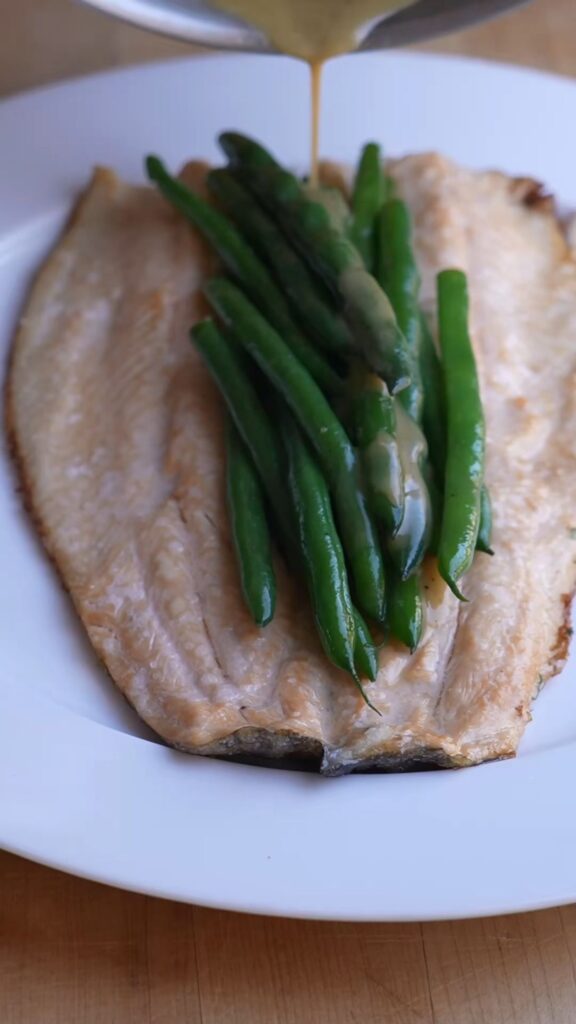
I stack the glazed beans directly across the center of the crisp fillet. Then, I spoon the warm almond brown butter over the top, letting the toasted nuts cascade down the sides.
The flake pulls away effortlessly under a fork. You get the crisp skin underneath, the snap of fresh beans, and the crunch of toasted nuts coated in velvety butter. Elegant bistro cooking does not require complex tricks. It simply demands respect for heat and timing. Bring your skillet to temperature, trust the technique, and let the pan do the work.