


Jacob Lund/Adobe Stock
Exercise, in general, is one of the best things you can do for your health: It strengthens your heart and lungs, boosts mood and cognition, and lowers your risk of a bunch of diseases, including type 2 diabetes, coronary artery disease, and some cancers.
And while most any form of movement is beneficial, there’s one underrated type that doesn’t involve busting your ass on a stationary bike, holding complicated yoga poses, or heaving dumbbells around. You probably did it a bunch as a kid, though maybe it’s been a few years (or decades) since it’s been a staple in your routine. And that’s a shame because it can really do a lot to improve your overall health—and longevity. We’re talking about jumping.
Jumping exercises—which are pretty much exactly what they sound like: moves that involve jumping, hopping, skipping, leaping, or bounding—aren’t just for kids. They offer key bone health benefits for adults that you won’t get from other forms of exercise. And they can do a lot to bolster your balance, agility, and reaction time as you age. Best part is, you don’t have to do tons of jumping to access these gains.
“You can see benefit from doing 30 jumps a few days a week,” Jocelyn Wittstein, MD, an orthopedic surgeon and sports medicine specialist, and an associate professor of orthopedic surgery at Duke University Medical Center, tells SELF.
We tapped Dr. Wittstein and three other experts to learn why jumping can be so helpful if you want to live a long life, the best way to maximize the benefits of jump exercises, and important safety caveats before giving them a whirl. We also rounded up five awesome jump exercises you can try at home. Let’s hop to it!
Jumping is good for longevity—in more ways than one.
The biggest benefit of jumping boils down to bone health. “Jumping is a type of exercise that creates impact on our lower extremities,” Dr. Wittstein says. And when your bones experience impact, a process called mechanotransduction takes place, which sends messages throughout your cells to stimulate bone formation, she explains. In other words, your bones grow stronger.
That’s important since starting at around age 30, we naturally lose bone density year after year, Natasha Desai, MD, the co-director of the Center for Women’s Sports Medicine at NYU Langone Orthopedics, tells SELF. For women, this decline accelerates around the age of 45 to 50 and continues into menopause, Dr. Wittstein says. Bone density loss can lead to osteopenia (low bone density) or osteoporosis (weak, brittle bones), both of which increase your risk of breaking bones.
So by placing more load on your bones through jumping exercises, you can slow down this natural loss, potentially halt it altogether, or even regain some of the density you’ve already lost, Dr. Desai says. As Dr. Wittstein puts it: “Basically, if you’re not losing bone, you’re winning.”
Jump training specifically increases bone density in the hip region, Dr. Wittstein says. Indeed, a 2015 study of premenopausal women, published in the American Journal of Health Promotion, found that doing 10 to 20 jumps twice per day for 16 weeks significantly improved hip bone density compared to controls. And, a 2023 meta-analysis of 19 studies, published in the Journal of Sports Sciences, found that jump training boosted bone mineral density at the femoral neck (an area of the hip) by about 1.5%. That might sound like a miniscule gain, but “in the world of bone density, 1% is a really big deal,” Dr. Wittstein says.
Increasing bone density in your hips is important since that area is a common place for osteoporosis-related fractures. And “hip fractures do have considerable morbidity associated with them,” Dr. Wittstein says. For many years, statistics have shown that up to a third of women die within a year of breaking their hip, though more recent research has suggested that it’s come down a bit in the U.S., to around 20%—which is still a lot. “So anything you can do to improve your bone density in the hip region is good to help reduce your risk in the future.”
Jumping also enhances balance, coordination, and power—all of which are predictors of longevity and independence later in life, Gabrielle Lyon, DO, a board-certified physician and the author of Forever Strong and The Forever Strong PLAYBOOK, tells SELF. She points to research showing that people who maintain explosive leg strength and balance have significantly lower risks of falls, fractures, and early death.
To boot, jumping is good for your muscles. It specifically trains your fast-twitch fibers, which tend to atrophy first with age, Dr. Lyon says. Strengthening these fibers through jumping exercises helps preserve your reaction time and agility. This in turn can reduce your risk of falling, Belinda Beck, MS, PhD, founder of The Bone Clinic in Brisbane, Australia, and a professor in the School of Allied Health, Sport and Social Work at Griffith University, tells SELF.
Lastly, jumping is an intense form of movement that can really challenge your heart. “If you do enough of it, it’s good cardio,” Dr. Beck says.
Here’s how to weave jump exercises into your routine for maximum results.
Some jumping exercises are more beneficial than others for improving bone health. In particular, jumps that create a ground reaction force of at least three times your bodyweight seem to be the most effective for increasing bone density, Dr. Wittstein says. Contrary to what you might think, jumping rope is actually not one of the best options here, since you’re likely jumping lightly on the balls of your feet.
Jumping exercises that do fit this criteria include dropping from a height of 8 inches and then immediately doing a rebound jump (an explosive jump upwards, performed right after the first jump), as well as doing a squat jump followed by a rebound jump, Dr. Wittstein says. Tuck jumps and broad jumps likely also fit the bill, she adds. Even exercises that technically don’t involve jumping, like heel drops (basically, going onto your tip toes then dropping down on your heels) and stomping at a moderate intensity, can create the force needed to boost bone density. Generally speaking, jumping down onto a surface is going to be more beneficial than jumping up, like you would with a box jump.
This isn’t to say that exercises that don’t load your bones with at least three times your bodyweight are useless, Dr. Wittstein caveats. That’s because “load bearing activity of any type is still good,” she says. In fact, if you’re new to jumping exercises, it’s wise to start with lower-impact versions to reduce your chances of injury. For example, modify jumps into “mini hops,” Dr. Lyon says. Over time, you can gradually progress to higher-impact versions.
Whichever jumping exercises you choose, make sure to properly warm up first to reduce your chances of injury, Dr. Desai says. Then, perform them at a high intensity and aim for about 10 to 50 reps per session, resting about 15 seconds between each jump, Dr. Wittstein says. Repeat this about three days a week, Dr. Wittstein says. Cap your efforts there, as doing more than that can increase your chances of injury, Dr. Beck warns. If you’re new to jumping, start on the lower end of that range (10 reps), she adds.
Alongside jump training, make sure to also regularly strength train. Strength training delivers important bone health benefits as well, while providing a slew of other health benefits, too. “Alternating between them is probably the best,” Dr. Desai says. If you don’t already have a strength training routine in place, focus on that first before taking up jump exercises. You need a baseline level of strength in order to perform jump exercises properly; otherwise, you up your chances of injury.
Before you start, consider these safety caveats.
Yes, jumping can be amazing for your longevity and overall health, but it comes with a big asterisk: It’s not safe for everyone.
People with certain conditions—including osteoporosis, osteopenia, and knee arthritis—should check with a doctor before trying jump exercises. Same goes for folks who struggle with balance, are new to exercise, or have pain with movement. And, if you have pelvic floor issues (like urinary leakage, incontinence, or prolapse), know that jumping can exacerbate your symptoms. That’s why Dr. Wittstein recommends seeing a pelvic floor physical therapist before starting a jump exercise program. “They can improve your pelvic floor tone and reduce your symptoms quite a lot, and that may then enable you to participate more in some of these exercises,” she explains.
Jumping Exercises for Better Longevity
Ready to bolster your bones and boost your longevity? Here are 5 jumping exercises, approved by Dr. Wittstein, you can do at home with just your bodyweight.
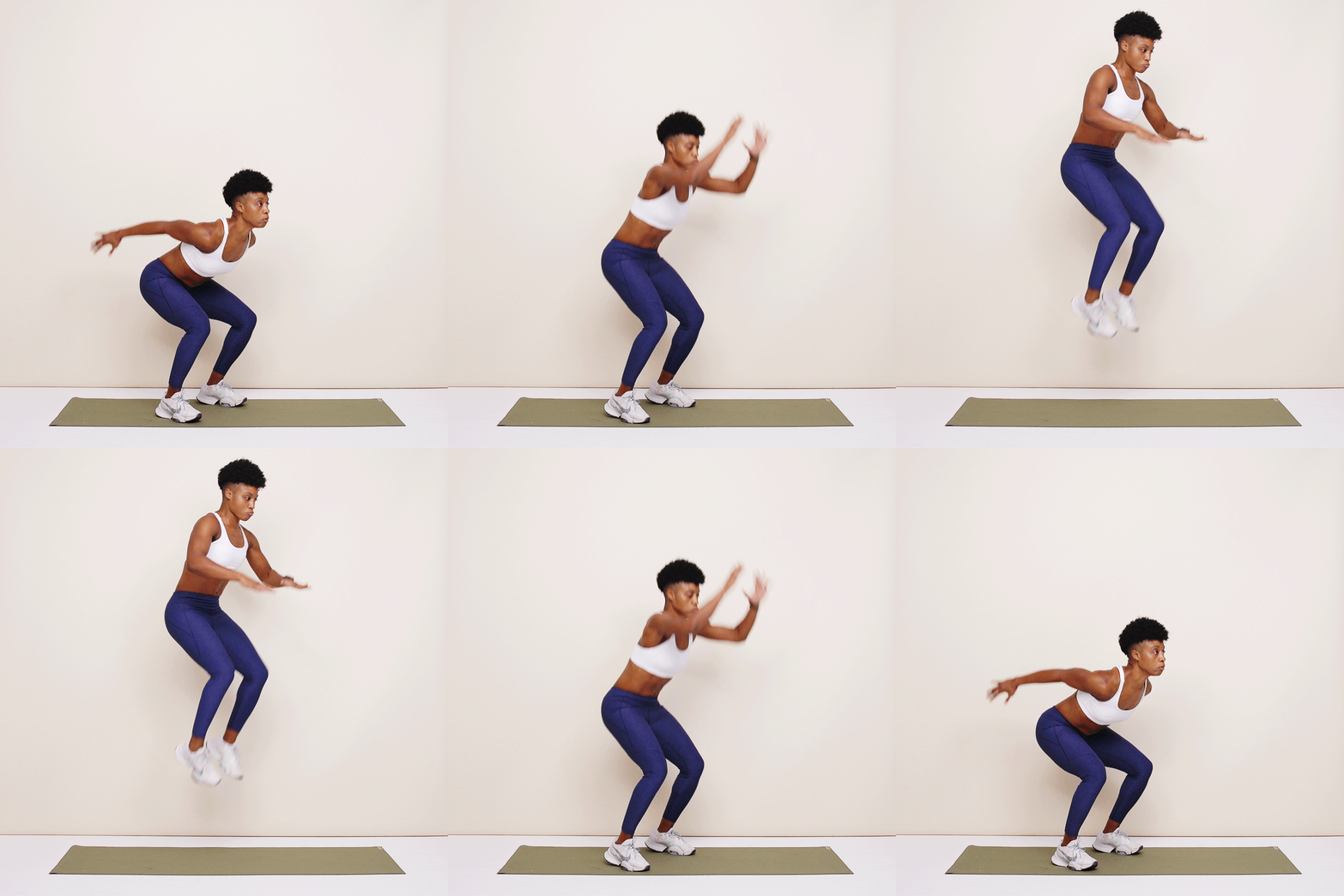
1. Tuck Jump
Katie Thompson
-
Stand with your feet about hip-width apart. With your arms at your sides close to your body, bend your elbows so that your forearms are pointed straight out.
-
Bend your knees and push your butt back into a squat, shifting your weight back as you do so. Don’t let your hips sink below your knees.
-
Jump as high as you can. As you jump, engage your abs and drive the top of your knees toward your forearms. Keep your back upright; try not to lean forward.
-
Land with your feet hip-width apart, with soft knees, and then immediately sink back down into the squat.
A classic jump exercise, this move will likely create a ground reaction force of at least three times your bodyweight, helping to improve bone density. Make sure your knees don’t cave in when you squat or jump.
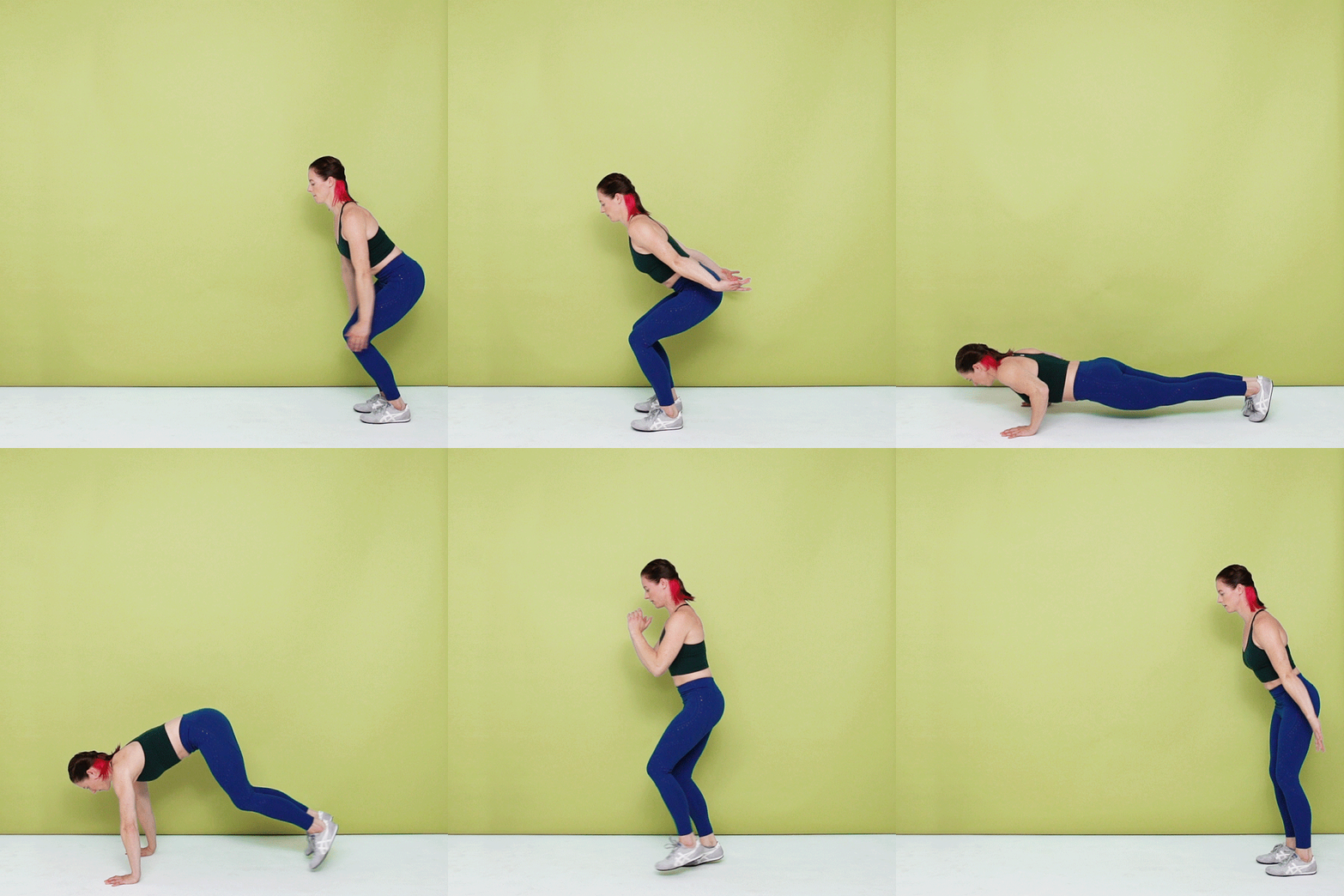
2. Broad Jump to Burpee
Katie Thompson
-
Stand with your feet shoulder-width apart and arms by your sides.
-
Bend your knees into a squat and jump forward about a foot, landing in a squat.
-
Reach forward to place your hands on the floor, shoulder-width apart.
-
Kick your legs straight out behind you into a high plank with your hands stacked underneath your shoulders.
-
Bend your elbows to lower your chest to the floor.
-
Push your body back up to a high plank and jump your feet toward your hands so your lower body is in a squat. Backpedal to the starting position.
The broad jump is another exercise that will likely meet that criteria of creating a ground reaction force of at least three times your bodyweight. As a bonus, burpees provide load bearing and impact to your arms, “which is good for bone density in the forearm and wrist, a common site of fracture in women over 50,” Dr. Wittstein says.
3. Double-Leg Pogo Hop

Katie Thompson
-
Stand with your feet close together, elbows at your sides and thumbs pointing at the ceiling.
-
Jump straight up, focusing on getting as high off the ground as you can.
-
Land on the balls of your feet, then jump up again as quickly as possible. (Picture a pogo stick.) This is 1 rep.
Compared to the first two exercises, this is a more mild jumping move that may be more appropriate for people just getting into jumping. You can make it more challenging by hopping on one foot at a time.
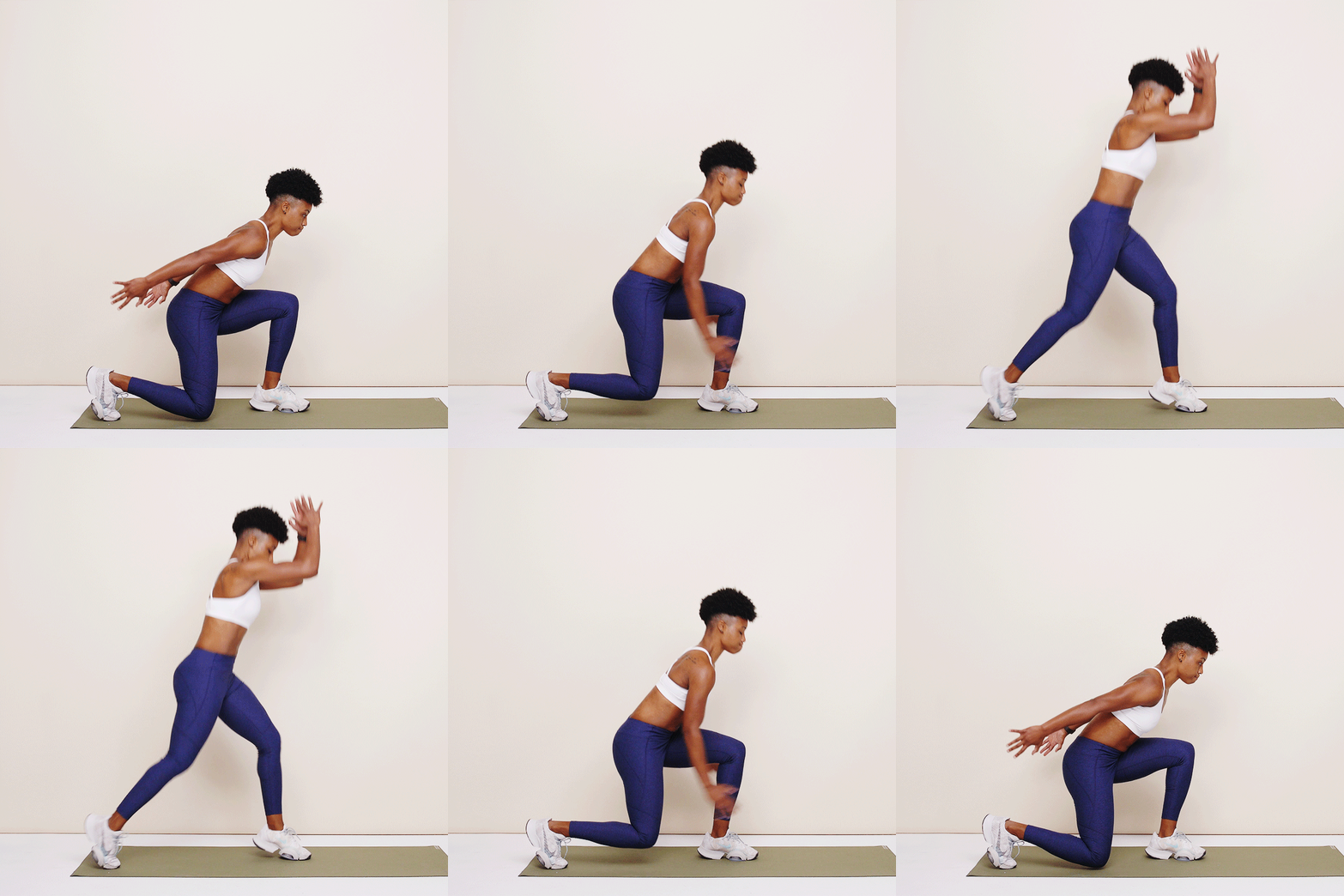
4. Split Squat Jump
Katie Thompson
-
With your feet underneath your shoulders and hands at your sides, step your left foot forward as if you were doing a forward lunge; keep your left heel firmly planted.
-
Bend both knees to create 90-degree angles with your legs. Your chest should be upright and your torso should be slightly forward so that your back is flat and not arched or rounded forward. Your left quad should be parallel to the floor and your left knee should be above your right foot. Your butt and core should be engaged. This is the split squat position.
-
Push through your left foot to jump as high in the air as possible, straightening both legs and bringing your arms together in front of your chest. Land softly and immediately sink back into the split squat position. That’s 1 rep.
-
Complete all your reps on one side. Then switch sides and repeat.
This is an advanced jumping move that requires stellar balance and core control. Make sure you’re solid in your form for stationary split squats (the same move minus the jumping part) before trying this.
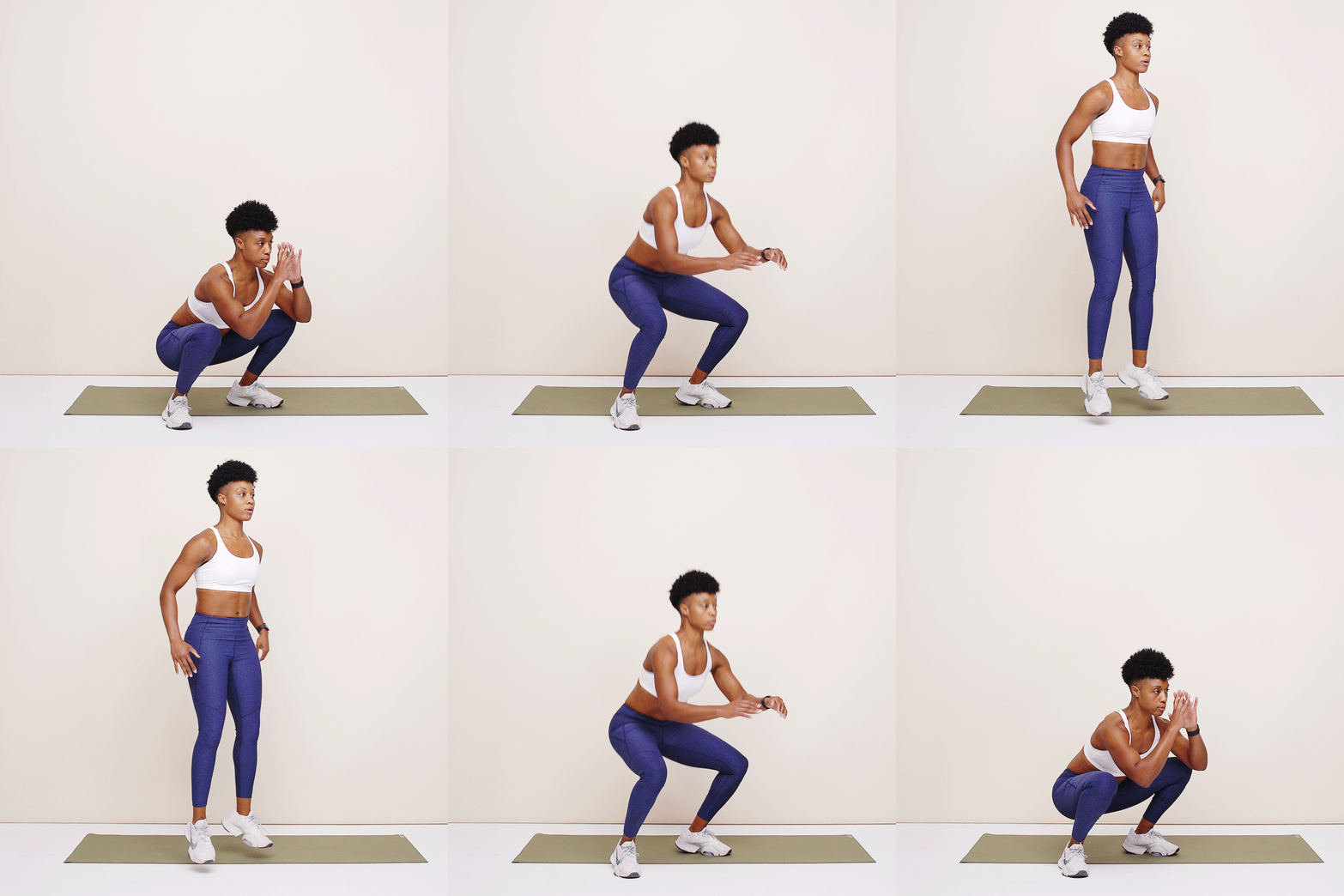
5. Pop Squat
Katie Thompson
-
Start with your feet wider than hip-width and do a squat by sending your hips back, bending both knees, and bringing your palms together in front of your chest. Keep your core engaged and push through your glutes to stand.
-
As you stand, let your arms fall by your sides and jump to bring both feet together, taking a hop in place.
-
Immediately jump feet apart and sink into a squat again. That’s 1 rep. Continue performing reps, hopping once in place between each squat.
This exercise, as is, is great for bone health, but if you want to up the ante, make these tweaks: Do a big squat jump and then immediately follow it with a rebound jump. That should create a ground reaction force of at least three times your bodyweight.
Related:
Get more of SELF’s great service journalism delivered right to your inbox.
Originally Appeared on Self