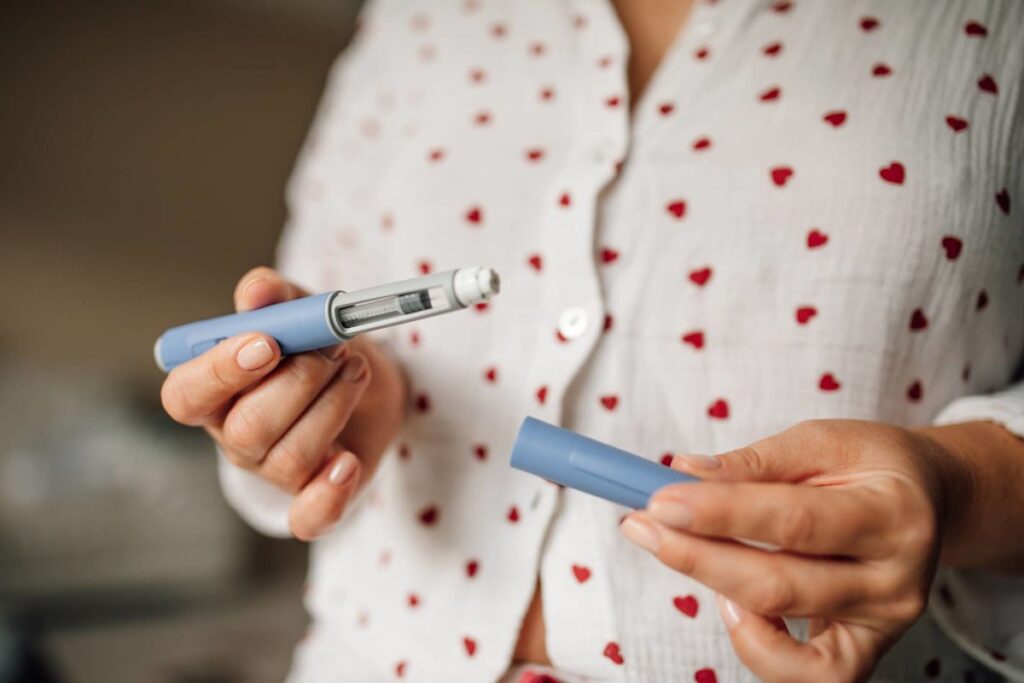
Has anything dominated modern medicine more than GLP-1s? The prescription drugs (used to help manage type 2 diabetes and obesity) have become more accessible in the past couple of years, and now, more people are taking them than ever before. The percentage of US adults currently taking a GLP-1 for weight loss has risen 11% in 2026, up significantly from 3% in 2024, according to Gallup.
Certainly, there are controversies surrounding GLP-1s. It’s too early to know the full effect of taking them long-term, and there are concerns that some people who don’t truly need them are taking them, as two examples. But there are also ways the medications are improving health beyond weight loss. For example, GLP-1s are associated with reduced risk of cardiovascular disease, metabolic dysfunction-associated liver disease (MASLD) and arthritis.
Related: We Asked 3 Metabolism Experts What People on GLP-1s Should Never Skip—They All Agreed
Recently, Lilly (the pharmaceutical company that makes Mounjaro and Zepbound) announced phase 3 clinical trial results centering on a new weight loss drug they are developing, retatrutide. Retatrutide is not a GLP-1. It’s being called a “GLP-3” because it activates three hormone receptors: GLP-1, GIP and glucagon.
Advertisement
Advertisement
Lilly’s recent trial on retatrutide found that people lost significantly more weight on this new drug than on Ozempic, priming it to soon be the most powerful weight loss drug on the market. The trial found that retatrutide led to more than double the weight loss of Ozempic’s highest approved dose.
What do obesity medicine doctors unaffiliated with the pharmaceutical company think about retatrutide? Here’s everything you need to know, including how it’s different from GLP-1s and who it could be a fit for.
🩺SIGN UP for tips to stay healthy & fit with the top moves, clean eats, health trends & more delivered right to your inbox twice a week💊
How Is Retatrutide Different From Current Weight Loss Medications?
Unlike medications like Ozempic and Wegovy, retatrutide is not a GLP-1. “Retatrutide is different from current GLP-1s because it targets three hormone receptors: glucagon, GIP and GLP-1. This is compared to tirzepatide that targets two hormone receptors—GIP and GLP-1—and semaglutide that targets one hormone receptor, GLP-1,” explains Dr. Nneoma Oparaji, MD, DipABLM, DABOM, an obesity medicine and internal medicine doctor based in Houston, Texas.
Advertisement
Advertisement
Dr. Mert Erogul, MD, a medical bariatrician at Maimonides Medical Center, adds to this, explaining that the glucagon receptor is thought to work by increasing fat burning and energy expenditure, independent of appetite restriction.
Related: A Dietitian Is Begging GLP-1 Users to Add This to Breakfast
This, Dr. Erogul says, is likely why retatrutide has led to more weight loss than both semaglutide and tirzepatide in clinical trials. While existing weight loss drugs work by suppressing appetite, retatrutide suppresses appetite and increases fat burning. Like Dr. Erogul, Dr. Oparaji also says this combination is likely why retatrutide led to greater weight loss than Ozempic in the clinical trial.
Other Potential Benefits of Retatrutide
Lilly also claims that, once approved for prescription, retatrutide could be used to help treat back pain as well as obstructive sleep apnea. Considering that approximately 39% of US adults experience chronic back pain at any given time (roughly 100 million people) and 32% of US adults have obstructive sleep apnea (roughly 83.7 million people), that’s quite a hefty promise.
Advertisement
Advertisement
Both Dr. Oparaji and Dr. Erogul say that it’s possible that retatrutide could help with these conditions because they’re often both connected to obesity. “A mechanism through which retatrutide could treat back pain is by decreasing excess body weight, which then decreases the mechanical stress on the spine and surrounding muscles,” Dr. Oparaji says.
As a caveat, she emphasizes that while there is ongoing research evaluating the efficacy of retatrutide in relieving chronic low back pain in those who are overweight or affected by obesity, there is no published research demonstrating that retatrutide could be used to treat it.
Related: Pharmacists Warn GLP-1 Users To Watch Their Timing With This Other Common Medication
“Obesity is a known risk factor for back pain and when you lose a lot of weight, there is less mechanical load on the spine and less inflammation,” Dr. Erogul says. But he adds that, so far, there is weak evidence that losing weight actually helps improve back pain. What it likely can help with, he says, is osteoarthritis of the knees. “With weight loss, your body has less fat mass and therefore less inflammation, so arthritis symptoms improve,” Dr. Erogul says.
Advertisement
Advertisement
In terms of obstructive sleep apnea, both doctors explain that weight loss decreases the amount of abdominal fat, fat around the neck and in the upper airway, all of which can affect breathing. Dr. Erogul points out that this is why Zepbound (tirzepatide) is already connected with improving obstructive sleep apnea among people with obesity; it’s not a result specific to retatrutide.
Who Could Retatrutide Be a Good Fit For?
It’s important to know that retatrutide has not been approved by the Food and Drug Administration yet. It’s still undergoing testing, currently in phase 3 clinical trials.
If the FDA does approve it, Dr. Oparaji says that it could be a good fit for those with obesity or related complications, such as type 2 diabetes or obstructive sleep apnea. Dr. Erogul says that people with type 2 diabetes may especially benefit from it. He says that people with diabetes tend to lose less weight on GLP-1s than those taking it specifically for weight loss.
For example, a 2021 scientific study taking into account 1,961 adults with obesity, but not diabetes, had an average weight loss of 14.9%. This is more than the weight loss achieved by people with obesity and type 2 diabetes in another scientific study from the same year; their average weight loss was 9.6%. Dr. Erogul points out that in the clinical trials for retatrutide, people with diabetes lost almost 19% of their weight.
Advertisement
Advertisement
Dr. Erogul adds that some people simply don’t tolerate GLP-1s well; the side effects are too disruptive for them to continue taking them. For these individuals, he says retatrutide may be worth considering, once it becomes FDA-approved and widely available.
Remember, the trials for retatrutide are still ongoing. Even after the trials end, Dr. Erogul says that this doesn’t mean taking it is risk-free. “It’s not uncommon for side effects and toxicities to become clear even after approval,” he says, adding that he doesn’t recommend taking it until it’s fully vetted and the studies show clear benefits.
It’s certainly exciting to see how the science around weight loss medications continues to improve, but it’s also important not to jump the gun too quickly. No promise of weight loss is worth risking your health. But if retatrutide does prove to deliver on its promises, it could be a game-changer.
Up Next:
Related: Dermatologists Say This Is the Biggest Mistake People Make When Trying To Fix ‘Ozempic Face’
Sources

This story was originally published by Parade on Nov 11, 2026, where it first appeared in the Health & Wellness section. Add Parade as a Preferred Source by clicking here.