


It was with my body curled into a bed of river sand, a malleable mattress carved by an ephemeral river, that I fell in love with Africa.
Under a velvet black sky, I watched a boy wrapped in a blue blanket feed a fire – I was still young enough to worry more about whether the boy would ever kiss me (he never did), than the whooping of nearby hyena.
But the magic of that unfiltered experience – waking to the plangent call of a grey-hooded bush shrike; the rhythmic bass hoot of a southern ground hornbill – would become a taproot, anchoring me to this continent.
More than three decades on, wilderness areas where experiences like this were once impossible, are now largely annexed by luxury camps. Their guests are paying a premium for the privilege of being served iced mojitos and medium-rare kudu in the riverbed in front of their private pool deck. But, for a more grounded safari experience – literally – one country still holds its own.
It is a short one-hour hop from Lusaka to Mfuwe, and from here the journey is properly transportive. Rattling along a single-lane road you pass through a string of rustic villages, each settlement surrounded by fecund leafiness. People on bicycles or foot, braiding hair and drinking beer under hand-painted store signs with names like “Only God Knows” and “Never Give Up”.
Authentic Africa, vibrant and alive, the gaps between ever wilder, until finally you trundle over the Luangwa river, and into the dense green of the Zambia’s most popular national park.
South Luangwa is home to one of the highest leopard population densities in Africa, and guides at Time + Tide’s Kakuli bushcamp have an excellent track record in finding these elusive cats. You can opt for a standard safari schedule – spending a cumulative six to eight hours in an open game vehicle – but South Luangwa is known for its walking safaris, pioneered here in the 1950s by Norman Carr.

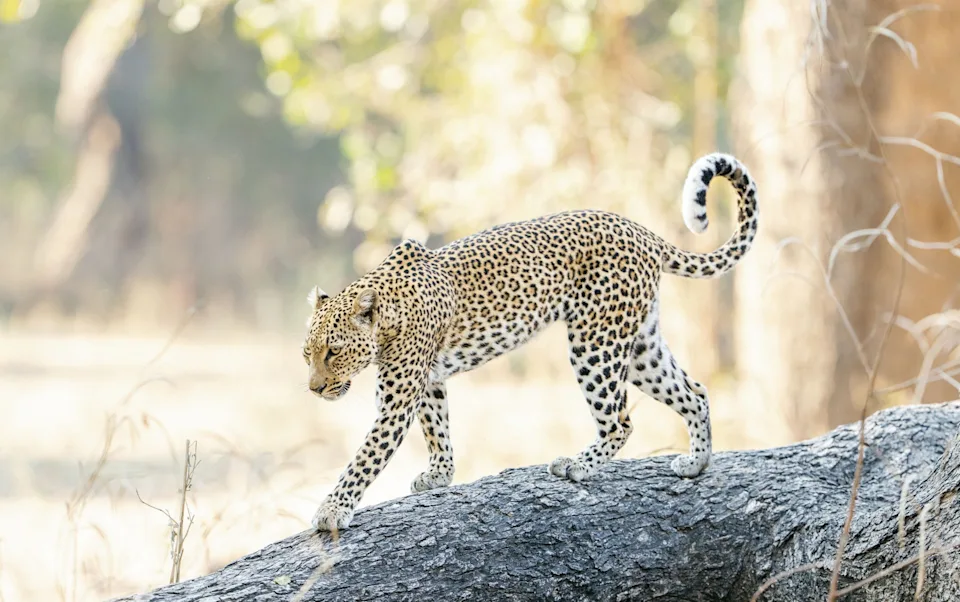
South Luangwa, found in the east of Zambia, is home to one of the highest leopard population densities in Africa – Oliver Fly Photography
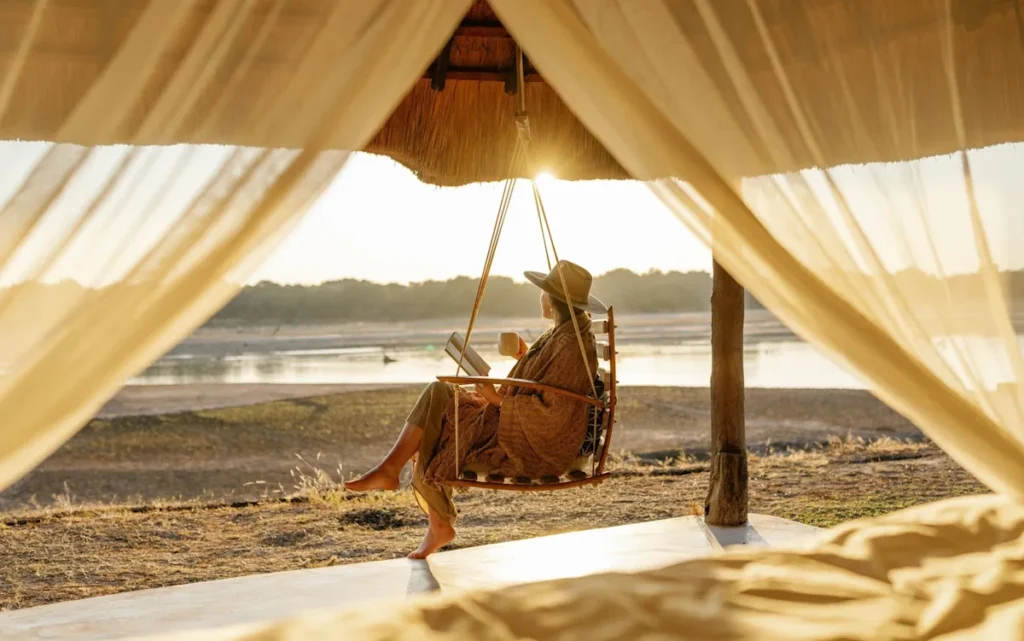
Kakuli is a far more elegant base than when Carr – nicknamed “Kakuli”, meaning “old buffalo bull” – was running his safaris from this perch overlooking the Luangwa river, but retains a nostalgic charm. Black-and-white photographs of Carr, flanked by two enormous lions – orphan cubs he raised and rewilded – hang in the open-to-the-elements thatched mess area; the five en-suite bungalows – with grass walls and retractable canvas fronts – are simply furnished; glamping, but far roomier and breezier than a tent.
Walking offers a frisson you don’t get on a vehicle. From stroking the petrified-leather of an 800-year-old leadwood, wood so dense it sinks, to studying the fresh paw prints of lion, the outside world, with its intrusive demands, is in complete abeyance.
Bush walks are not an uncommon offer, but here you walk between camps, an old-school pioneer experience, albeit hands free and bookended with rustic luxury. From Kakuli to Mchenja, following the Luangwa, accompanied by your guide and armed scout, takes about three hours; luggage is transported by vehicle. Or follow the Lubi rivercourse from Kakuli to Nsolo – the longest walk, at just under nine miles.
Tiny, remote Luwi is a five-mile walk from here. And from any of these bushcamps, a walk to the Lubi river bed to spend a night under the stars is optional – an exclusive set up, with chef and waiter, guide and scout to watch over you – a far more comfortable and safer set up than the one I had with blanket boy, but with feet still on the ground, toes dug into the coarse river sand.
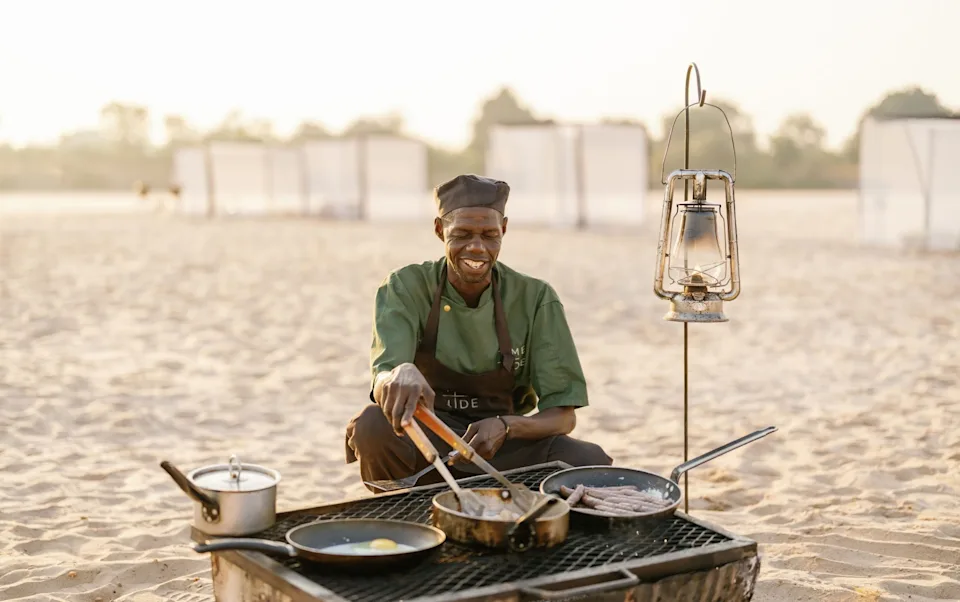
You can try a range of authentic African dishes, including game meat such as kudu – Oliver Fly Photography
“The main reason Zambia has stayed so true to the original safari ethos is because it’s so seasonal,” explains safari doyenne Suzanne Baylie, owner of Classic Portfolio, and ardent proponent of Zambia.
“Building a fancy-pants camp in Zambia just isn’t as financially viable as it is in better-known safari destinations. It gets really hot from October, then the rainy season starts in December, so the majority of camps have to close operations for at least four – sometimes to even six – months. It’s a limited period in which to make money, and the people operating in Zambia tend to do so for passion rather than commercial gain. It’s not for the namby-pamby. But this is why Zambia is relatively unchanged from 30 years ago: small, intimate camps – the average is still six rooms – in rustic set ups; privately run; committed to conservation.”
That said, the Zambian scene is evolving. Its government has woken up to the benefits of tourism, scrapping visa requirements to 53 countries, and streamlining regulatory red tape to increase flight links. Since the opening of the modernised terminal 2 at Kenneth Kaunda International – funded by a loan from the Exim Bank of China – Zambia has seen a huge increase in visitor numbers, up over 200 per cent from 2021 to 2024.
This in turn has encouraged investment: the opening of the ultra-luxurious Chichele Presidential in South Luangwa earlier this year now attracts a less intrepid traveller to the walkers paradise, offering the kind of luxury that is de rigueur in Botswana’s Delta – enormous suites with private plunge pools; a full-service spa; lap pool – and at $1,400 (£1,060) per person per night, good value.

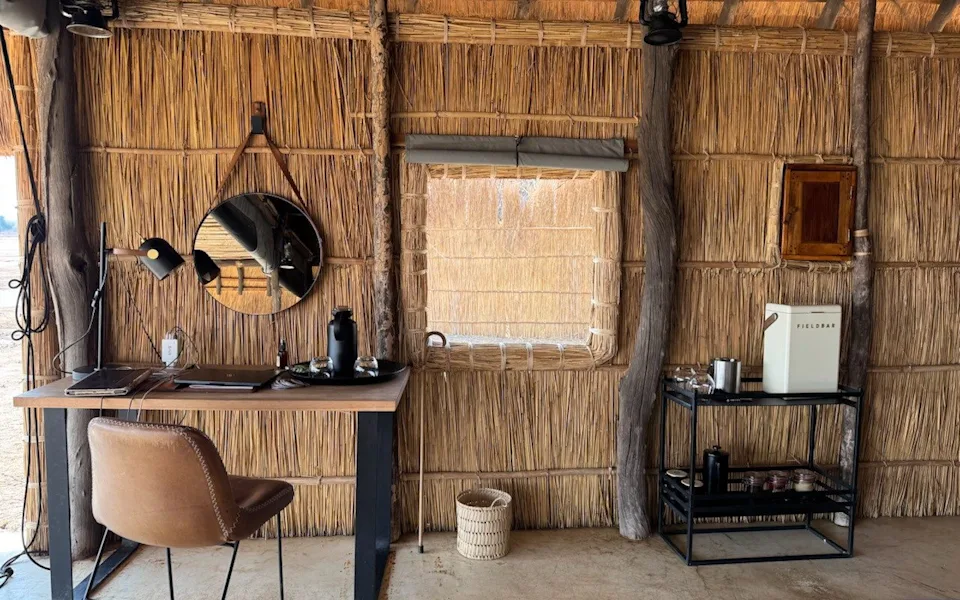
Time + Tide’s Kakuli bushcamp offers five bright and airy safari rooms
In Lower Zambezi National Park – one of the most ethereally beautiful parks in Africa, where river safaris and island sundowners augment the traditional safari experience – Time + Tide’s Chongwe House has been beautifully overhauled by design duo Silvio Rech and Lesley Carstens – it is your very own barefoot-chic four-bedroom safari home, with a private team looking after your every whim, and at around $900 (£680) per person, it is arguably the best-value exclusive-use experience you’ll find anywhere in Africa.
New entrants include class-act Botswana outfit Ker & Downey – who this year launched its Zambia division with King Lewanika Lodge in the remote Liuwa Plain National Park, a luxurious base from which to witness Africa’s second largest wildebeest migration, with nary another human in sight – and Anantara who open Kafue River Camp in 2026, creating a seamless connection with their Royal Livingstone in Victoria Falls. Anantara sales director Lindi Mthethwa’s response to “why” is succinct:
“Zambia is on the rise, but remains wonderfully unspoiled. For those seeking original Africa, the kind that feels raw and rare, now is the time to go.”
Essentials
Ethiopian Airlines flies daily from Heathrow to Lusaka (via Addis Ababa) from £680 return. Time + Tide offers a stay-seven-pay-six package (combining three nights each in their Mchenja and Kakuli bushcamps, optional walk between, one night sleep out, and one night at luxurious Chinzombo) for $8,215 (£6,220) per person.
Try full access to The Telegraph free today. Unlock their award-winning website and essential news app, plus useful tools and expert guides for your money, health and holidays.