

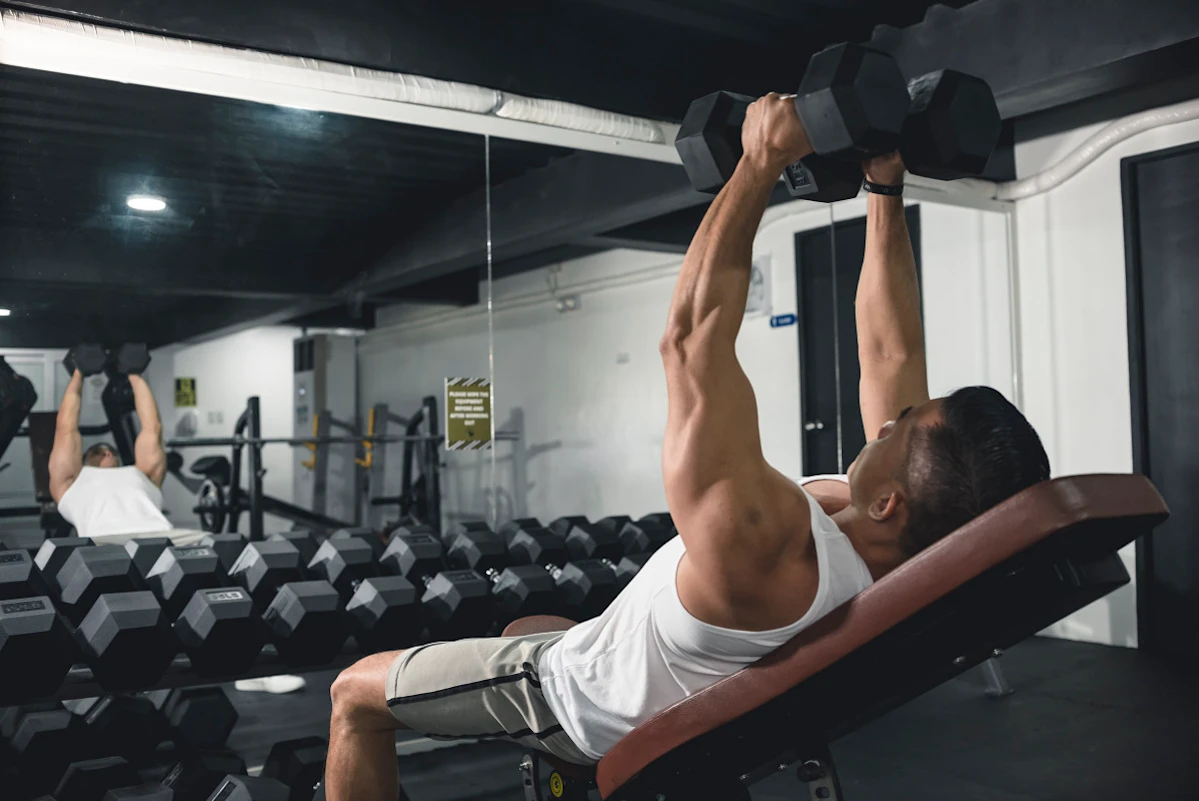
Just because you’ve got some years under your belt doesn’t mean your 50s and beyond have to be characterized by shrinking muscles and declining strength. Data consistently shows declining rates of physical activity as people enter their 50s and beyond, and though it makes sense to start slowing down with age, one trainer says avoiding the weights is the worst thing you can do.
Hitting 50 doesn’t mean your muscles stop responding to stimulus. Kris Herbert, a personal trainer and founder of The Gym Venice, who specializes in helping adults 40 and older build strength and age powerfully through coaching and community, says the body still adapts.
“What changes is consistency, recovery, and how intelligently you train,” he explains. “Most people in their 50s are not limited by age—they’re limited by inactivity and outdated beliefs. In many ways, your 50s can be the best time to build muscle because you finally understand the value of patience.”
Related: The Smarter Way to Build Strength After 50 (Without Heavy Deadlifts)
How to Build Muscle in Your 50s
Take a quick scroll through Reddit, and you’ll find tons of guys in their 50s and beyond feeling stuck when it comes to their fitness. They’re either frustrated by a lack of visible progress or confused and wondering if it’s even worth pushing hard in the gym anymore. The reality is, you can still build muscle in your 50s. It just requires a slightly different training approach.
“Your strategy shifts from intensity to precision,” Herbert says. “Movement quality becomes the nonnegotiable. Controlled tempo, full range of motion, and clean mechanics matter more than chasing numbers. Submaximal strength work performed consistently will outperform sporadic heavy lifting.”
It’s also just as important to program recovery into your weeks. Mobility work, soft-tissue care, and proper sleep become part of the training plan. As Herbert puts it, your 50s are about winning the decade rather than winning any single workout.
Muscle Building Myths After 50
Muscle Decline is Inevitable
Sarcopenia is the age-related loss of muscle mass and strength, which can begin as early as your 30s and speeds up later in life. While exact rates of decline vary, research suggests you can lose up to eight percent of your muscle mass per decade if you’re not actively working to preserve it. Luckily, strength training is one of the most effective ways to slow, prevent, and even reverse much of that decline.
“People assume stiff joints, weak backs, and low energy are just part of aging. More often, they are the result of not loading the body properly,” Herbert explains.
Strength Training is Dangerous at 50
“In reality, not strength training is far more dangerous,” he adds. “Muscle loss accelerates after 40. Doing nothing guarantees decline, but intelligent strength training slows it down.”
Sure, certain exercises may not agree with your body the way they did in your 20s. Maybe a traditional bench press bothers your shoulders. But those are signals to adjust rather than to abandon strength training altogether. Muscle is insurance. Higher levels are consistently linked with better long-term health outcomes and a lower risk of both injury and chronic disease.
Maintaining strength later in life is also what helps keep your independence. It’s the difference between putting a suitcase in the overhead bin on your own or asking for help. It’s the difference between standing up from the toilet in your 80s unassisted and needing an aid. The goal is to preserve your capability for the decades ahead.
Related: The 12 Best At-Home Kettlebell Workouts to Keep Men Over 50 Strong and Mobile
This story was originally published by Men’s Journal on Feb 17, 2026, where it first appeared in the Health & Fitness section. Add Men’s Journal as a Preferred Source by clicking here.