


In the colonized U.S., our history doesn’t feel nearly as ancient as Europe’s, so we tend to forget just how old the land truly is—and how much of that ancient world we walk through regularly, especially if you’re a city dweller like myself. Indigenous Americans established many communities and cultural centers for their people, and there are still remnants of those civilizations that are accessible to the public.
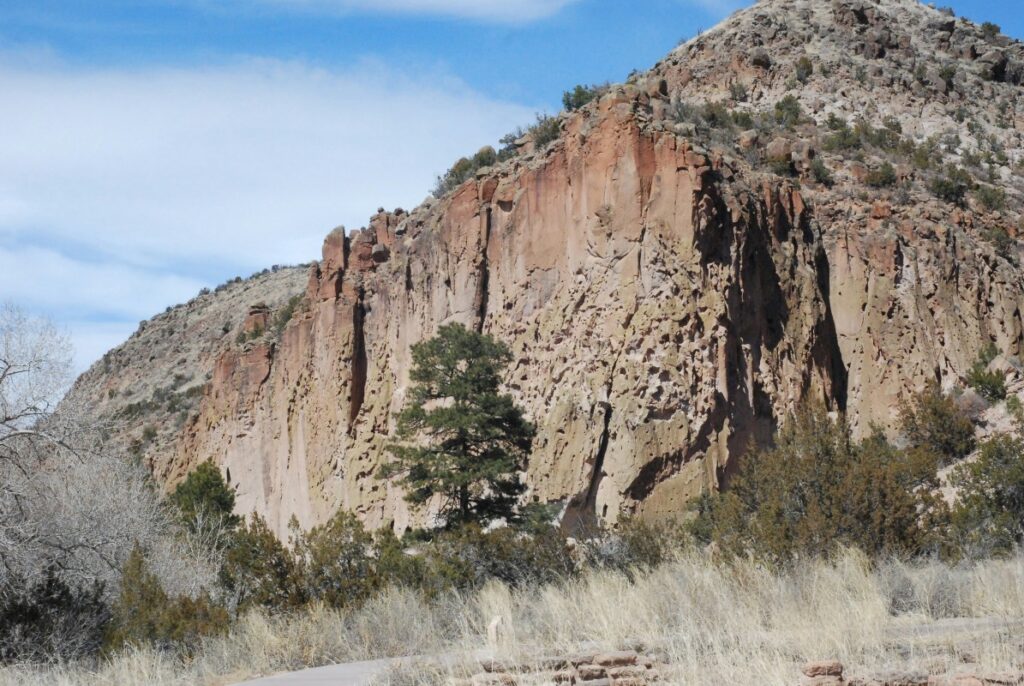
One of the most visually stunning and historically rich is New Mexico’s Bandelier National Monument. Visitors can explore 33,000 acres of canyon and mesa country shaped by the ancestors of the Pueblo people.
The people who lived here inhabited the area from approximately 1150 CE to 1550 CE, building homes from volcanic tuff and cultivating crops. By 1550, they were forced to move along the Rio Grande due to severe droughts, but many remnants of their communities still remain. Families once lived in both cliff dwellings and canyon floor homes by the thousands, and today you can still catch a glimpse of some of these ruins.
Related: Here’s how many national parks there are in the U.S.
What travelers can expect when exploring Bandelier National Monument
Bandelier is famous for its Ancestral Puebloan cliff dwellings, many of which are accessible by short wooden ladders. Adventurous visitors can climb into the cavates—hand-carved alcoves in the volcanic tuff—for an intimate look at village life long ago.
What to expect:
-
Easy-to-climb wooden ladders
-
Dark, cool interior cave rooms
-
Petroglyphs visible along canyon walls
-
Excellent interpretive signage along the trail
Visitors can also enjoy stunning views of New Mexico’s landscapes and mountain vistas along the upper trails.
Related: Starting in 2026 some visitors will be charged an extra $100 to visit these 11 U.S. national parks
Hiking in Bandelier National Monument
Trails throughout this landscape are not especially strenuous or long, but they are steeped in history. The Pueblo Route Trail weaves hikers through archaeological sites and typically takes 45 minutes to an hour to complete. The main Pueblo Loop Trail takes you past:
-
Big Kiva: A communal meeting place that once had a large roof.
-
Talus House: A 1920s reconstruction of the homes built into the cavates.
-
Long House: The ruins of multi-story homes built along the base of the cliff; hikers can spot hundreds of petroglyphs depicting various subjects.
-
Tyuonyi: The ruins of a former two-story village and food storage area that once contained more than 400 rooms.
Hikers can also explore the Falls Trail, which leads to a beautiful waterfall—though the route is moderately challenging.
Related: National parks ordered to remove certain items from gift shops
Other tips for exploring Bandelier National Monument
There’s plenty to keep in mind when venturing through this stunning area. Wildlife is abundant, with mule deer commonly seen grazing. There are also coyotes in the region, so visitors should stay aware of their surroundings.
Peak season runs from mid-May through mid-October, and during this time, visitors must take a mandatory shuttle from the White Rock Visitor Center due to limited parking inside the monument.
Weather can change rapidly here. Afternoons can be sweltering under the hot sun, giving way to cool evenings and crisp mornings. The area also experiences winter snow and sudden summer thunderstorms.
Overall, Bandelier National Monument is an unforgettable experience for travelers—rich with natural beauty, Indigenous history, and trails that hikers of most levels can enjoy.
Get the latest travel inspiration and news delivered straight to your inbox.
This story was originally published by TravelHost on Dec 10, 2025, where it first appeared in the Attractions section. Add TravelHost as a Preferred Source by clicking here.