


By Dan Walters, CalMatters
This commentary was originally published by CalMatters. Sign up for their newsletters.
Early 20th century political reformers such as Hiram Johnson saw the initiative process — placing measures on the ballot for voters to decide — as an antidote to a Legislature controlled by moneyed interests.
However, 125 years after voters adopted the process, it’s come full circle. More often than not, initiatives have become an arena in which moneyed interests joust for pieces of California’s vast wealth.
Drafting, qualifying and campaigning for an initiative — or opposing one — can cost tens of millions of dollars, thus making the process an industry unto itself.
The half-billion-dollar battle in 2022 between casino-owning Indian tribes and online gaming companies over control of sports wagering is a case in point. Both competing measures were rejected, but the clash underscored the underlying financial dynamic: While millions of dollars may be spent on initiative campaigns, the stakes can be worth billions. So if one ignores its civic aspects, investing in ballot measures makes perfect sense from a cost/benefit standpoint.
The upcoming November election will have an array of money-driven ballot measures clustered around one question: Who should be taxed to finance California’s public services, and how much should they pay?
Those who want tax increases — primarily unions of employees who provide the services — are arrayed against those who believe California already taxes enough, or even too much.
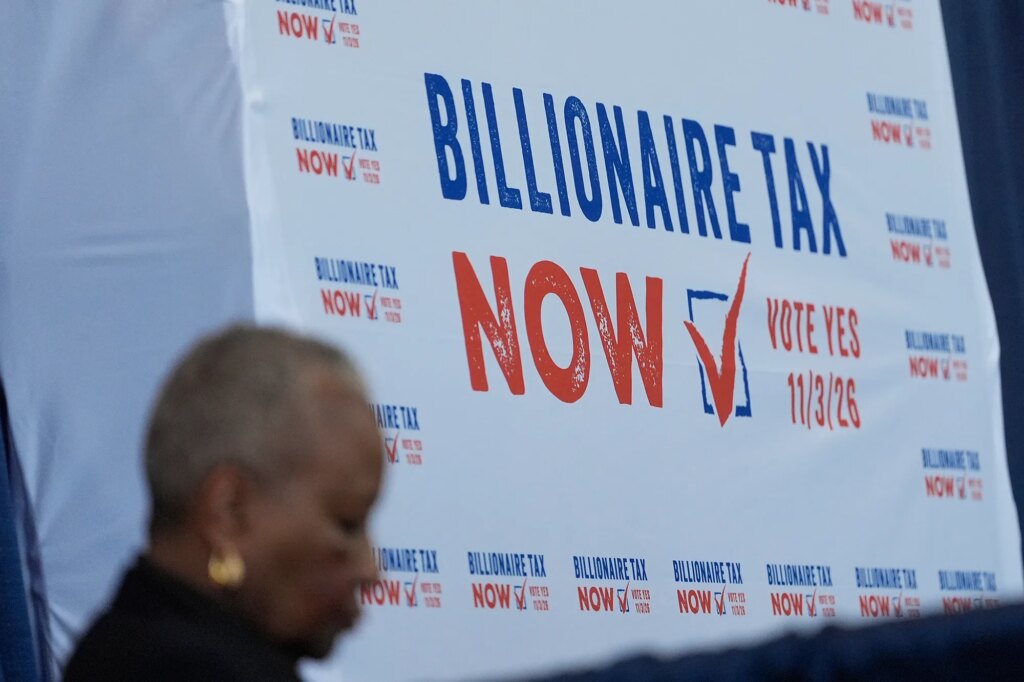
The centerpiece is a measure written by the SEIU-United Health Workers West, which represents workers in the health care industry. It would impose a 5% tax on the personal wealth of the state’s estimated 200 billionaires.
It has drawn the ire of those who would be taxed. A few have openly fled California to avoid its potential impact, and there may be others who have quietly changed addresses. They have also created organizations to oppose passage and qualify poison pill measures to counteract the wealth tax’s effects, as the San Francisco Standard reported this week.
Gov. Gavin Newsom is the most prominent wealth tax opponent and has been trying to bulldoze the SEIU-UHW’s leaders into removing the measure from the ballot before it is locked in. The deadline is scarcely a week away.
Newsom has marshaled a coalition of opponents, including other unions which are unhappy that 90% of the wealth tax proceeds — perhaps as much as $100 billion — would go to health care, with relatively small amounts for education and food assistance.
Newsom and other opponents argue that the wealth tax would spark an exodus of wealthy Californians, whose income taxes are the backbone of the state’s budget revenues, if they believe their estates could also be taxed. That argument is bolstered by provisions of the measure that would allow the Legislature to amend the tax if the amendment is “consistent with and furthers the purposes of the 2026 Billionaire Tax Act.”
The measure defines its purpose as “to protect access to high quality, equitable health care, and to support funding for kindergarten through grade fourteen public education and food assistance programs, by raising revenue from a one-time tax on billionaire wealth.”
Those passages could authorize the Legislature to extend the tax or broaden it to lower wealth levels, depending on how courts might define “purposes.”
There’s an historic reason to believe that if enacted, the wealth tax would not be a one-time levy. In 2012, voters passed a “temporary” surtax on the incomes of the state’s wealthiest residents. Four years later, public employee unions sponsored a measure to extend it to 2030. This year they have another measure that would make it permanent.
Once a new tax is in place, those who benefit from it are motivated to keep it in place as long as possible.
This article was originally published on CalMatters and was republished under the Creative Commons Attribution-NonCommercial-NoDerivatives license.