


When people think about aging, they usually think about wrinkles, memory, or slowing metabolism.
But one of the earliest and most important changes actually happens in your muscles.
Starting in midlife, the body gradually loses muscle if it isn’t regularly used. This shift is subtle — you may just notice stairs feel harder, heavy bags feel heavier, or recovery from activity takes longer. Yet it affects far more than strength. Muscle helps regulate blood sugar, supports balance, and plays a major role in how well the body handles illness and injury.
Because of that, clinicians often pay attention to physical function — things like standing from a chair, walking speed, or grip strength — when assessing long-term health. These simple abilities help estimate whether the body still has enough reserve to stay independent over time.
Why muscle matters beyond movement
Muscle isn’t just for lifting weights or exercising. It’s active tissue involved in whole-body health.
Your muscles:
-
stabilize joints and prevent falls
-
support recovery after illness or injury
When muscle declines, other systems often struggle too. People tend to experience slower healing, decreased balance, and reduced resilience to stressors like infections or hospital stays.
Why midlife is a turning point
Beginning in our 40s and 50s, adults naturally lose muscle if it isn’t challenged regularly. This is a normal biological process, but it has real consequences.
Muscle acts like a reserve system. With enough of it, the body can handle stress and recover. With too little, even small setbacks — a fall, a short illness, or a period of inactivity — become harder to bounce back from.
The encouraging part: muscle responds to use. Even later in life, resistance activity improves mobility and daily function, something shown repeatedly in exercise research in older adults.
What actually helps
Challenge your muscles regularly
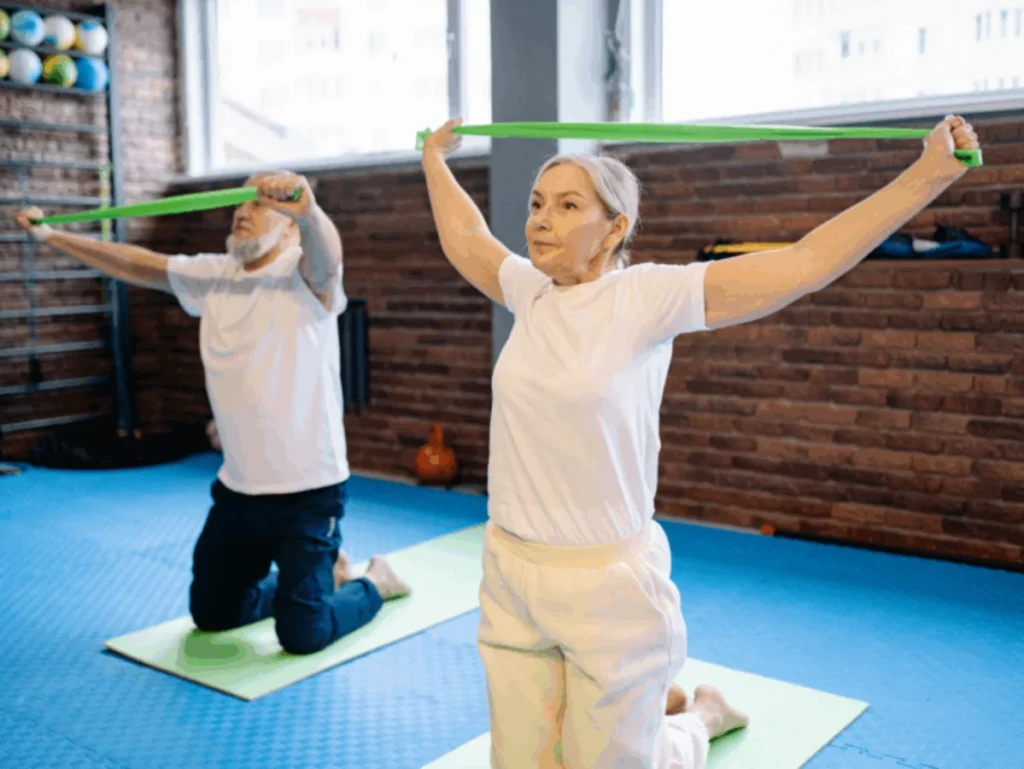
A gym can be one of the easiest and most effective ways to maintain strength, especially with basic weight training. But it isn’t required. Stairs, resistance bands, carrying groceries, and push-ups against a counter can all build meaningful strength if done consistently. What matters most is regularly asking your muscles to work against resistance.
Focus on useful movements
Squatting, pushing, pulling, lifting, and balancing translate directly to daily life and independence.
Eat to support muscle
Include a protein source at meals and maintain overall diet quality. Vegetables, beans, whole grains, and healthy fats help support the metabolism your muscles depend on.
The bottom line
Muscle strength isn’t the only factor in healthy aging, but it’s one of the clearest visible signs of resilience.
A body that can still stand easily, carry things, and recover from effort still has reserve capacity. And that reserve — more than perfection — is what helps people stay active and independent as the years go on.
Healthy aging isn’t only about living longer.
It’s about keeping your everyday life intact for as long as possible.
The post Why Muscle Strength Matters More With Every Decade appeared first on Clean Plates.