

 4 min read
Ahead of Matthieu Blazy’s first Chanel Métiers d’art show, Michel Gondry introduced the collection’s world through a surreal short starring Margaret Qualley and A$AP Rocky. Released as a prelude to the runway, the film follows the couple as they drift through New York along parallel paths before finding each other again on a downtown sidewalk, where Rocky proposes moments before they disappear into the subway station together.
When guests, including Rocky and Qualley, arrived at the show, the story continued where the film had left off. Bhavitha Mandava emerged in silk “jeans,” followed later by Mona Tougaard, Anok Yai, and Alex Consani, each embodying a different New York archetype, from the sharply tailored power executive to the impeccably dressed society woman. As they moved through the decommissioned station at Bowery and Kenmare Street in Blazy’s reimagined tweeds, the everyday commute took on a cinematic quality. “Designers are directors themselves, except we’re all their actors,” says Jane Rosenthal, an Academy Award-nominated producer, co-founder of the Tribeca Festival, and co-chair of the board of Tribeca Enterprises. “When they create characters this vivid, they’re creating not just a dress, but a feeling people want to inhabit.”
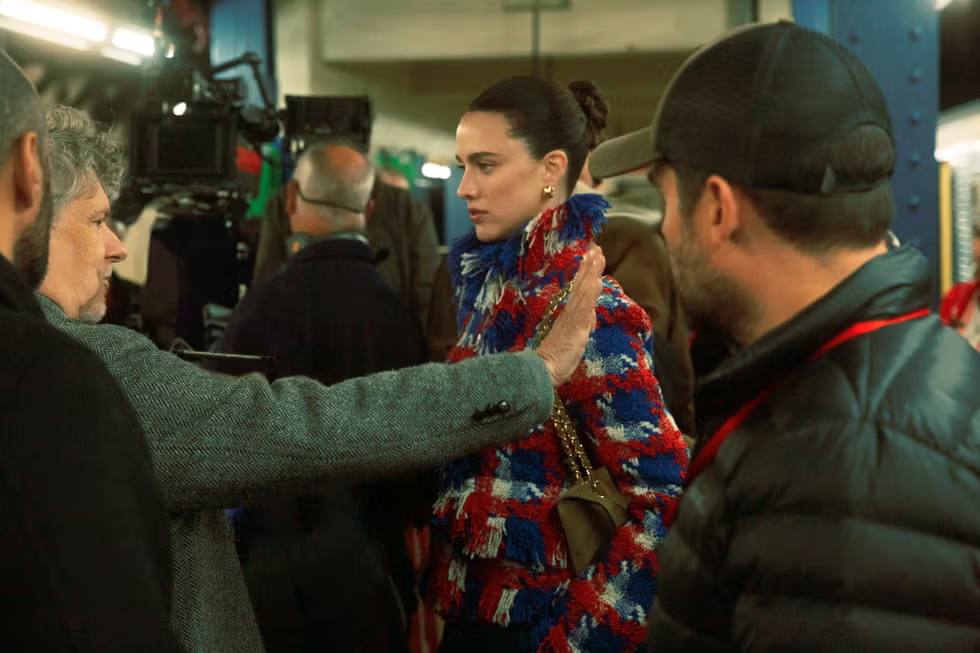
Michel Gondry and Margaret Qualley behind the scenes of Chanel Métiers d’art short film.
Fashion’s love affair with the silver screen stretches across decades. Coco Chanel designed costumes for two Jean Renoir films; Hubert de Givenchy created Audrey Hepburn’s black sheath dress for Breakfast at Tiffany’s. Today, the relationship runs in both directions. Julian Klausner’s spring/summer 2027 collection for Dries Van Noten borrowed the language of cinema through imagined movie posters splashed on slips and party skirts, while the Angelina Jolie-starring Couture turned its attention to the women behind the seams.
And as film culture enjoys a renaissance of its own, fashion is deepening its relationship with the medium. Letterboxd has turned cinephilia into a social, gamified experience, while celebrities now revel in the chance to highlight their most obscure Criterion Collection favorites. Fashion, ever attuned to shifts in culture, has followed suit, moving beyond the familiar fields of costume design and cinematic campaigns to support and sometimes produce filmmaking itself.
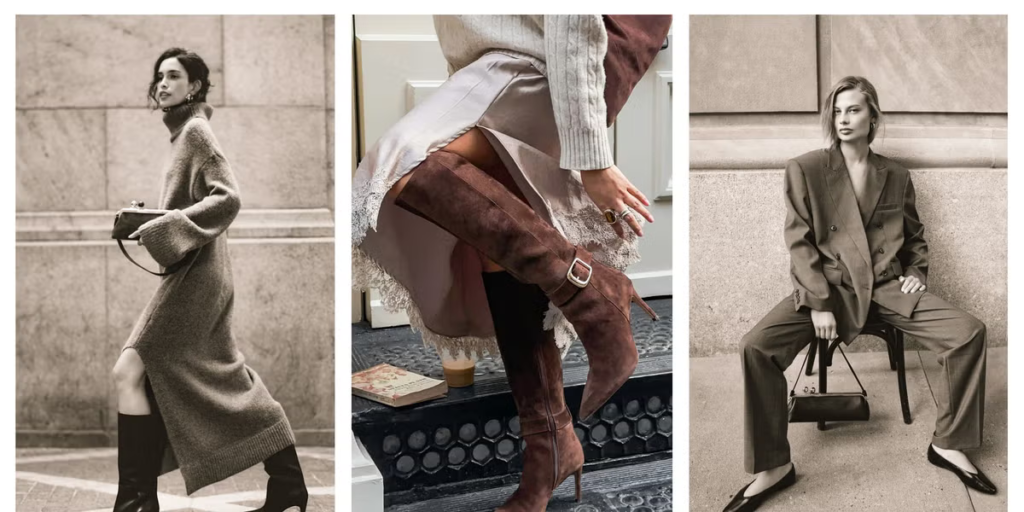
Dries Van Noten spring/summer 2027.
Since 2015, Through Her Lens: The Tribeca Chanel Women’s Filmmaker Program, co-founded by Rosenthal, has paired mentorship with financial support for emerging female and nonbinary filmmakers. This year’s program brought together mentors such as Celine Song and Gina Prince-Bythewood, who worked directly with participants.
Rosenthal points out that the number of female-directed films has, unfortunately, dipped in recent years. After over a decade of the program, “What we’re finding is that the community is really intentional,” she says. “Our advisory board wants to be here. They come back year after year. They want to be part of it, because they want to help support the next generation.” Miu Miu’s Women’s Tales, established by Miuccia Prada in 2011, has similarly become a platform for female filmmakers—including Ava DuVernay, Claire Denis, and Mona Fastvold—to tell original stories. Those initiatives were early signs of a broader shift.
Behind the scenes of Avec Kim by Claire Denis, part of the Miu Miu Women’s Tales series.
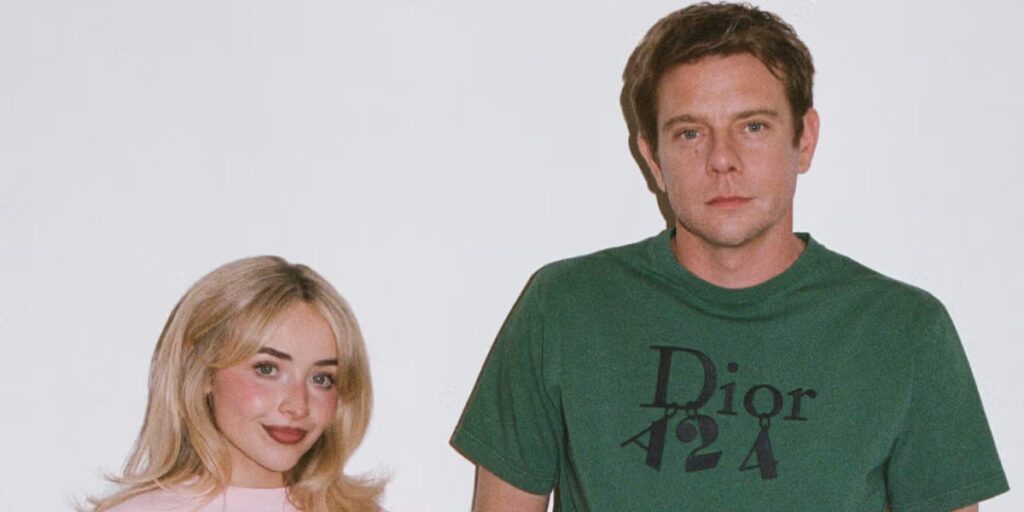
In September, Dior announced a two-year creative partnership with A24, the studio behind auteur-driven hits like Marty Supreme and Everything Everywhere All at Once, spanning film, theater, and live events at the Cherry Lane Theatre in Manhattan’s West Village. The collaboration was introduced online with a tongue-in-cheek short directed by Aidan Zamiri, in which Sabrina Carpenter, Josh O’Connor, and Drew Starkey auditioned to play Dior creative director Jonathan Anderson. (The announcement kicked off with a companion teaser, featuring Carpenter dressed as Anderson himself, complete with his now instantly recognizable formula of a plaid shirt, jeans, and Salomons.)
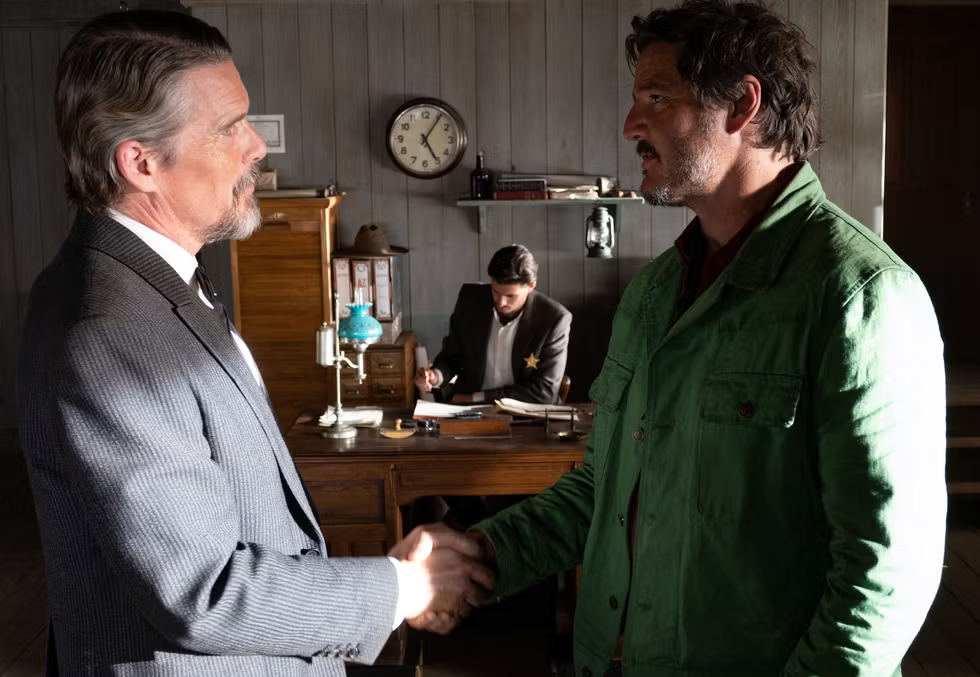
Ethan Hawke and Pedro Pascal in Strange Way of Life, produced by Saint Laurent Productions.
Under its former creative director Anthony Vaccarello, Saint Laurent launched Saint Laurent Productions in 2023, backing acclaimed films including Pedro Almodóvar’s Strange Way of Life and Jacques Audiard’s Oscar-winning melodrama Emilia Pérez. And Rolex has also invested in cinema’s future, supporting the Student Academy Awards, which platform emerging filmmakers, partnering with festivals like the New York Film Festival and the Sundance Institute as an official partner and exclusive timepiece, and serving as a founding supporter of the Academy Museum of Motion Pictures.
Tara Maria Gonzalez, a fashion writer and author of the Substack newsletter Cult Classic, notes that film allows brands room to build worlds rather than simply present collections or have their designs live in the endless scroll of social media. “People are growing tired of seeing the same trends,” she explains. “It’s like, ‘Well, why do I need to buy that if everybody else has it?’ When designers align themselves with directors, that adds a level of depth that can also connect to a wider audience.”
Look no further than Balenciaga, which enlisted Past Lives and Materialists director Song to helm the short film A New York Minute. Song built a character study around Sarah Pidgeon, using Pierpaolo Piccioli’s designs as a narrative thread rather than the main attraction. It leaves the viewer to focus on a mood before a product, an inversion of what fashion advertising has traditionally asked us to do. “Brands are [showing] that fashion isn’t just for people who self-identify as ‘fashion people,’” Gonzalez notes. “Fashion has the mass appeal that can speak to anybody who’s interested in storytelling. And one of the most accessible forms of storytelling
is film.”
Like Gondry’s lovers disappearing into the subway station, the most memorable fashion stories don’t end when the collection arrives on the runway or on the shop floor. They only become more interesting out on the streets, where clothes become characters and the city becomes the set.
A version of this story appears in the December 2026/January 2027 issue of ELLE.
GET THE LATEST ISSUE OF ELLE
Source: ELLE
Source link