Sausage already comes seasoned. That’s the part people don’t think about enough. When you brown Italian sausage or cook it into a soup, the fat it releases carries herbs, fennel, garlic (whatever’s in there) into everything else in the pan. You’re not starting from scratch. You’re starting ahead.
That’s why sausage makes such a strong anchor for dinner. It doesn’t need much to turn into something complete.
Brown it first, always.
Sausage that goes into a casserole or soup without browning first is a missed opportunity. When you get a sear on it, good color and a crust, the flavor built in that step carries into the whole dish. If you’re making a soup, the browned bits left in the pot after you pull the sausage out aren’t a mess. Don’t rinse the pot. Let the liquid deglaze them. That’s free flavor.
Use it in soups when you want something that fills you up.
Sausage in soup is different from chicken in soup. The fat content gives the broth body, and the seasoning already in the sausage means you don’t have to work as hard with your spice rack. Kale and white bean sausage soup is a good example: the sausage carries the base, and the white beans and kale fill it out without making it heavy. It’s the kind of bowl that’s actually filling.
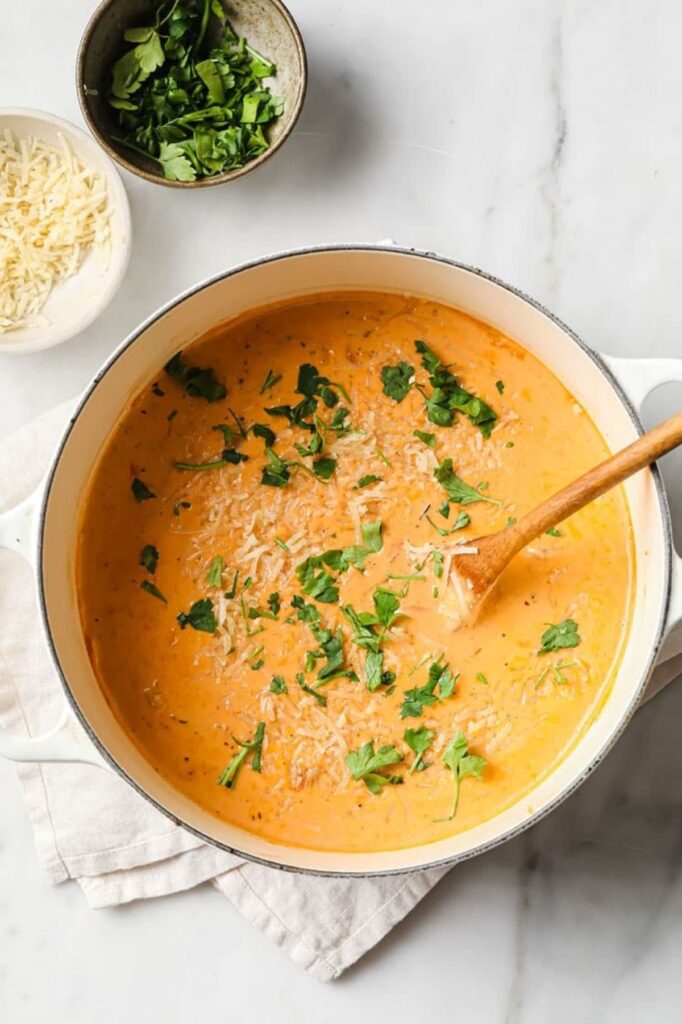
Creamy Italian sausage soup takes a different direction. The broth is rich and the sausage does the heavy lifting on flavor.
Sheet pan is the easiest way to build a full dinner around it.
When you roast sausage with vegetables on a sheet pan, the fat renders out and coats everything around it. The vegetables pick up that flavor, and nothing dries out because there’s fat in the pan the whole time. The sausage and veggies sheet pan dinner comes together fast on one pan.
The main thing to watch: don’t crowd the pan. A crowded pan steams instead of roasts, and you lose the browning that makes it worth eating. Use a large sheet pan, or do two if you’re making more. The sausage should have good color before the vegetables are done, that’s how you know the heat is working.
Casseroles let sausage do its best work.
In a casserole, sausage seasons every layer. There’s nowhere for that flavor to go except into whatever surrounds it. Stuffing, vegetables, eggs, whatever’s in there absorbs what the sausage puts out. The finished dish tastes more cohesive than the individual parts would suggest.
A few things worth knowing about the ingredient itself.
Italian sausage comes in sweet and hot. Sweet works well when you want the dish to be approachable. Hot adds heat without needing extra spices. They’re interchangeable in most recipes, it’s a flavor direction choice, not a structural one.
Pork sausage is fattier than chicken or turkey sausage. That fat is what does the flavor work in soups and on a sheet pan. If you swap to a leaner sausage, add oil to the pan so you don’t start dry. Leaner sausage also dries out faster, so watch the cook time more closely.
Links versus bulk: bulk sausage (the crumbled kind) gets into more surface area in a casserole or soup. Sliced links hold their shape and give you texture. Both work. The question is what role you need the sausage to play in the dish.
Cooked sausage keeps in the refrigerator for four days. It’s worth cooking a larger batch when you have time, the second dinner is faster than the first.
Sausage is one of those ingredients that makes dinner feel more substantial without requiring much from you. The seasoning is already there. The fat does the work. You just have to not overthink it.
By Sara Nelson, Creator of Real Balanced.