The sun was breaking the horizon. We had one shot at this window. When you are wedged into a narrow regional turboprop climbing above a solid deck of clouds in Guatemala, you do not get a second pass to line up your exposure.
I flew into Central America with a clear mission to capture the massive volcanic peaks piercing through the morning cloud inversion from an angle most tourists never see. Everyone tries to hike Volcan Acatenango in the dark for a ground-level sunrise photo, which is incredible, until thick fog rolls across the summit and wipes out your visibility completely.
To guarantee the high-altitude scale I wanted, I booked an early morning commuter flight and deliberately chose the seat directly beside the starboard engine nacelle. The stakes were simple. If the cabin window was too scratched or the direct sunrise flare washed out my sensor, the entire flight would be a wash.
Advertisement
Advertisement
Shooting through commercial aircraft glass right next to a spinning prop is a masterclass in managing reflections and shutter speed. You are dealing with intense vibration, tiny dust specks on the acrylic pane catching the direct sunlight, and the risk of getting ugly stroboscopic bending on the propeller blades.
To solve this, I started my camera movement behind the interior window frame for a clean reveal, pressed my lens hood flush against the glass to block cabin glare, and dialed my shutter speed down to 1/50th of a second so the spinning blades blurred into a smooth, cinematic disc.
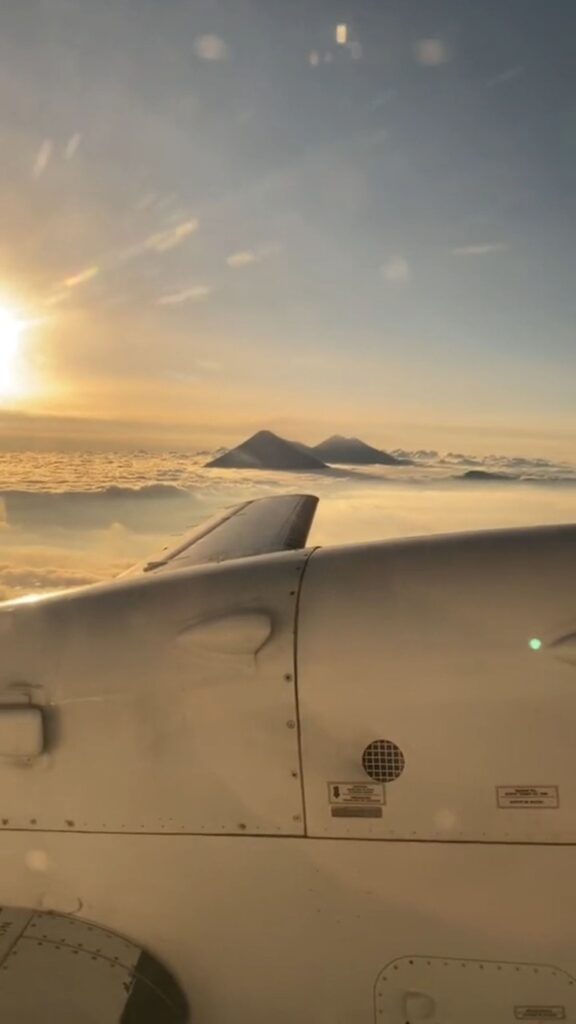
The result? Pure magic. As the camera pans across the white engine cowling and out past the wingtip, the endless sea of golden clouds suddenly parts to reveal twin volcanic cones rising like islands into the sky. That diagonal rainbow lens flare catching the edge of the nearest peak adds an organic, unscripted texture that you simply cannot fake in post-production.
When I brought this clip back into the edit bay, the direct sun on the left side of the frame was blowing out the highlights while the shadow side of the volcanoes looked flat. I applied my custom Golden Dawn LUT to roll off the harsh solar highlights while deepening the warm amber tones across the cloud deck, giving the entire frame that rich, documentary film finish.
Advertisement
Advertisement
You do not always need a chartered helicopter or a massive cinema rig to capture aerial footage that stops people mid-scroll. Sometimes, the best shot comes from knowing which side of the plane the sun rises on, controlling your shutter speed for natural motion blur, and keeping your camera out when everyone else is asleep.
If you ever take a morning flight out of Guatemala City, grab a window seat right over the wing, clean the glass with your sleeve, and be ready before the wheels even leave the tarmac.