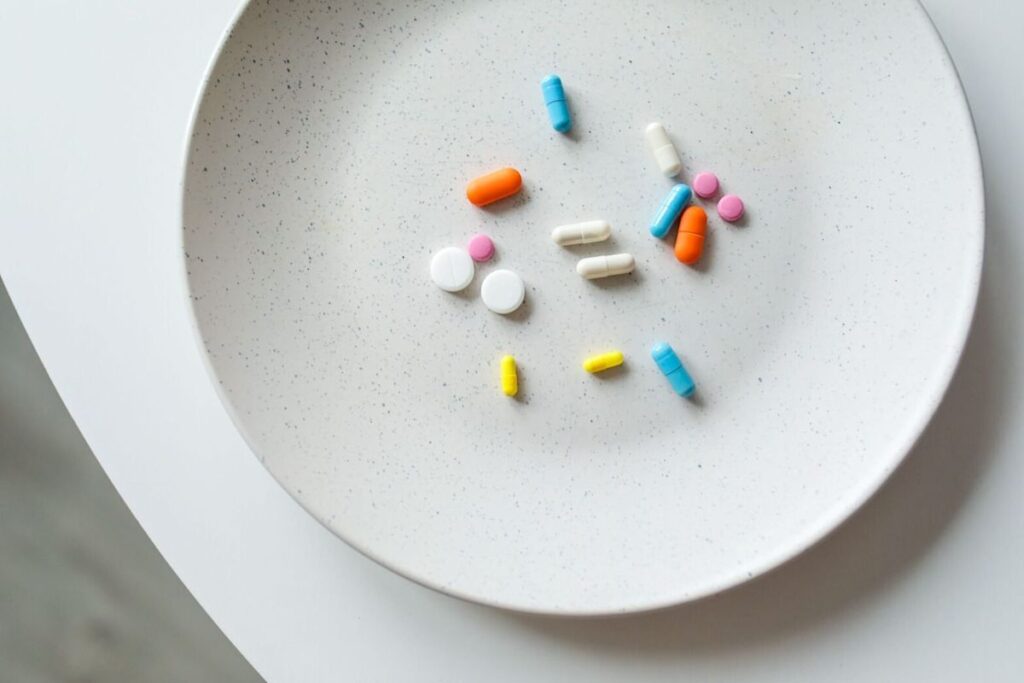
Protein powders, fiber gummies, collagen, electrolyte packets, and self-proclaimed “GLP-1 support” blends are flying off virtual shelves. Between viral TikTok trends and high-profile figures like Serena Williams normalizing transparent conversations around metabolic health, public adoption of medications like Ozempic and Wegovy has surged. Alongside these prescriptions has come a secondary gold rush: patients spending anywhere from $110 to $300 a month on companion supplements marketed specifically to GLP-1 users, according to a Reuters report.
Much of that momentum is fueled by social algorithms. In 2025 alone, TikTok Shop generated over $1 billion in dietary supplement sales, according to Nutrition Business Journal data, prompting federal regulators to weigh tighter oversight of online health claims. While targeted nutrition can bridge genuine dietary gaps, aggressive marketing often blurs the line between functional support and predatory hype. Before adding bottles to your cart, here is what clinicians and nutrition experts urge you to know.
How GLP-1s reshape your body’s nutritional needs
To understand the appeal of companion supplements, it helps to know how the drugs work. GLP-1 medications lower appetite and slow how quickly the stomach empties. As a result, many people simply eat less, which can leave nutritional gaps.
Advertisement
Advertisement
Holly Forbes, RDN, a registered dietitian and founder of The Hair Loss Nutritionist, has seen this firsthand. “Recent research has identified inadequate intakes of protein, fiber, calcium, iron, vitamin D and potassium among GLP-1 users,” she told Blavity Health.
That research includes a 2025 study in Frontiers in Nutrition of 69 GLP-1 users. On average, participants fell short on fiber, calcium, iron, magnesium, potassium and vitamin D. Their protein intake was also below daily needs for their body weight.
Because of these risks, four major nutrition and obesity groups issued a joint advisory in 2025. It calls for preventing nutrient deficiencies and pairing adequate protein with strength training to protect muscle.
The truth behind berberine and the “nature’s Ozempic” hype
Many “GLP-1 support” products contain berberine, a plant compound often called “nature’s Ozempic.” However, berberine is not a GLP-1 drug. Studies on it have been small and mostly focused on blood sugar, not weight loss, according to the American Academy of Family Physicians.
Advertisement
Advertisement
Hector Perez, MD, a Mexico-based bariatric surgeon and advisor at BestSurgeons.com who prescribes GLP-1s, called the label misleading. “It’s an oversimplified overstatement, in my opinion, to basically take the reputation of a powerful research-backed prescription drug and transfer it to a supplement with weak, unverified claims of modest improvements,” he told Blavity Health.
Sarah Bonza, MD, MPH, FAAFP, a family physician and founder of Bonza Health, agreed. “In the STEP 1 trial, semaglutide produced roughly 15% average body-weight loss over 68 weeks. Berberine’s effect on weight is small by comparison,” she told Blavity Health. “Calling it ‘nature’s Ozempic’ sets false expectations and can delay treatment that would genuinely help someone with metabolic disease.”
The hidden dangers of influencer-driven supplements
Unlike prescription drugs, supplements don’t need FDA approval before they’re sold, according to the NIH Office of Dietary Supplements. In other words, no one checks that a product works or that it’s safe before it hits shelves.
Also, many recommendations for GLP-1 support blends come from influencers who earn commissions or are paid by brands. That doesn’t make every product bad. Still, it means a glowing review may not be a neutral one.
Advertisement
Advertisement
Perez is especially wary of multi-ingredient blends. With these products, “it can be difficult to identify the ingredient responsible if liver damage develops,” he said.
The compounding risks
GLP-1 drugs already cause side effects such as nausea, constipation and diarrhea. “One risk I’ve seen with supplement usage on GLP-1s is the overlapping of side effects because some supplements may cause GI symptoms or interact with medications, on top of the GI side effects of GLP-1s themselves,” Perez said.
Pharmacists see the fallout, too. Danny Barnes, PharmD, BCSCP, is a board-certified sterile compounding pharmacist and president of Triangle Compounding Pharmacy, which compounds GLP-1 medications. “We see a lot of side effects from patients over-supplementing,” he told Blavity Health.
Bonza knows those side effects firsthand. “In 2022, a single semaglutide injection left me unable to keep down food or water for five days,” she said. “I ended up in my own hospital’s emergency department, dehydrated, in ketosis, with low potassium.” Now, when a patient on a GLP-1 starts taking supplements, she pays close attention to what she’s taking.
Advertisement
Advertisement
-
Hypoglycemia: Botanical compounds such as berberine and chromium directly lower circulating blood sugar. Dr. Perez warns that layering these supplements onto prescription diabetes therapies substantially increases the risk of dangerous hypoglycemic crashes.
-
Dehydration and Kidney Strain: Combining GLP-1-related fluid loss from vomiting or diarrhea with over-the-counter herbal laxatives or diuretic blends depletes vital electrolytes, exposing patients to acute kidney injury.
-
Botanical Liver Toxicity: “Natural” doesn’t always mean safe, and some botanicals can harm the liver, according to the NIH Office of Dietary Supplements. For example, Perez said, “Products containing green tea extract or garcinia cambogia have been linked to rare but sometimes severe liver injury, including cases requiring transplantation.”
Who faces the highest risk when mixing supplements with GLP-1s?
Anyone on a GLP-1 should check with a clinician before adding supplements. However, some groups face higher risks.
-
People Taking Insulin or Sulfonylureas: Stacking glucose-lowering botanicals with standard diabetes medications can trigger severe, unexpected drops in blood sugar.
-
Individuals With Liver or Renal Impairment: Impaired kidneys cannot efficiently clear high supplemental doses of potassium and magnesium, while compromised livers are disproportionately vulnerable to toxicity from concentrated herbal weight-loss blends.
-
Patients on Narrow Therapeutic Index Medications: Delayed gastric emptying alters drug absorption rates, and compounds such as vitamin K can directly counteract life-sustaining medications like warfarin.
-
Women Using Oral Contraceptives or Navigating Midlife: Because GLP-1s alter gastrointestinal transit times, pill absorption can become unpredictable. Tirzepatide labeling explicitly advises women on oral contraceptives to add a non-oral backup method when initiating the medication and following every dose escalation. Additionally, women in perimenopause and menopause face accelerated baseline declines in bone density and lean mass, making unsupervised weight loss without adequate dietary protein especially damaging to long-term musculoskeletal health.
Real nutrition over quick fixes: How to fill gaps safely
The good news is that most GLP-1 users don’t need a cabinet full of supplements marketed to GLP-1 users. Instead, a few targeted steps can cover the basics.
Tell your prescriber about side effects
Many people quietly treat side effects on their own. “I think many also fear their doctor will reduce their dosage or stop their treatment if they complain,” Perez said. Yet a dose adjustment may be the safer fix, and he urges his own patients “to come to me if they’re bothered by side effects.”
Advertisement
Advertisement
Similarly, Barnes said pharmacists want to hear about side effects, too. “Many times we can help your prescriber adjust your Rx to minimize your side effects and you don’t have to take more supplements,” he said.
Trust plays a role, too. “Many have been gaslit by their doctors, told that fatigue, brain fog, or weight gain is ‘just your age,'” Bonza said of her female patients. As a result, many turn to social media for answers. “When patients feel truly heard, they bring these questions into the exam room instead of to an algorithm,” she said.
Start with food
Forbes recommends spreading meals out. “I recommend eating smaller, more frequent meals rather than trying to force down three large meals,” she said. In practice, that might mean four to six small meals, each with a source of protein and fiber.
Also, the joint advisory recommends pairing protein with strength training to protect muscle as you lose weight. That matters because faster weight loss can change how your body looks and feels, a trend often called “Ozempic butt.”
Only fill real gaps
Some supplements do have a role. “Protein shakes can be helpful for people struggling to meet their protein needs through food alone and it is important because of its role in preserving muscle during weight loss,” Forbes said. “Fiber supplements like psyllium can also help with constipation, which is a common side effect of GLP-1 medications.”
Advertisement
Advertisement
On the other hand, “Electrolytes may be helpful if someone is experiencing significant vomiting, diarrhea or dehydration, but they’re not automatically necessary,” she said. As for “GLP-1 support” blends, Forbes said there isn’t strong evidence they’re necessary.
To find your real gaps, Forbes suggests tracking what you eat for three days. Then, look at your protein, fiber and produce before buying anything.
Before You Buy a “GLP-1 Support” Supplement
-
Bring the exact product and dose to your doctor or pharmacist.
-
Ask whether it interacts with your GLP-1 or other medications.
-
Track your food for three days to see what you’re actually missing.
-
Look for a USP, NSF or ConsumerLab seal, which shows independent testing.
-
Skip products that promise prescription-level weight loss.
Advertisement
Advertisement
Keep in mind that quality seals confirm what’s in the bottle, but they don’t guarantee a product is safe or effective, according to the NIH Office of Dietary Supplements.
Bottom line
Ozempic supplements can fill real nutrition gaps, but many “GLP-1 support” products are mostly marketing, and some can cause harm. Before adding anything, talk to your prescriber, focus on protein and fiber from food and choose only what your body actually needs.
Frequently Asked Questions
Why are people turning to supplements instead of standard medical care?
Most people add supplements alongside their prescription rather than replacing care, often because supplements are easy to buy, heavily promoted on social media and feel less risky than telling a doctor about side effects.
What should you do before starting any supplement?
Talk to your doctor, pharmacist or dietitian first, and bring a list of everything you take so they can check for interactions, according to the NIH Office of Dietary Supplements.
Citations
Brown NP. As Weight-Loss Drug Users Turn to Dietary Supplements, Doctors, Regulators Raise Flags. Reuters. Published October 20, 2026. https://www.reuters.com/legal/litigation/weight-loss-drug-users-turn-dietary-supplements-doctors-regulators-raise-flags-2026-10-20
Advertisement
Advertisement
Nutrition Business Journal. 2026 Supplement Business Report. New Hope Network. Published June 2026. https://store.newhope.com/product/reports-list/supplement-business-report-2026
Johnson B, Milstead M, Thomas O, et al. Investigating nutrient intake during use of glucagon-like peptide-1 receptor agonist: A cross-sectional study. Frontiers in Nutrition. 2025;12:1566498. doi:https://doi.org/10.3389/fnut.2025.1566498
Middleton J. Weight loss fad berberine (“nature’s Ozempic”) lacks rigorous evidence, has potential harms. American Family Physician Community Blog. Published July 3, 2023. https://www.aafp.org/pubs/afp/afp-community-blog/entry/weight-loss-fad-berberine-natures-ozempic-lacks-rigorous-evidence-has-potential-harms.html
NIH Office of Dietary Supplements. Dietary supplements: What you need to know. National Institutes of Health. Accessed October 23, 2026. https://ods.od.nih.gov/factsheets/WYNTK-Consumer/
Advertisement
Advertisement
The Obesity Society. Nutritional Priorities to Support GLP-1 Therapy for Obesity. The Obesity Society. Published May 30, 2025. https://obesity.org/nutritional-priorities-to-support-glp-1-therapy-for-obesity
The post Why Doctors Are Concerned About The Growing ‘Ozempic Supplement’ Trend appeared first on Blavity.