Bacon-wrapped appetizers go fast at parties for a reason that has nothing to do with trickery. It’s the combination: salty, fatty, crispy on the outside, tender inside. The bacon does real work here. As it renders, the fat bastes whatever it’s wrapped around, and the outside crisps while the inside stays moist. That’s a texture combination that’s hard to put down, and it’s why that tray empties first.
Bacon is already seasoned, which is the whole point. When you wrap something in it, you’re adding salt and fat to a filling that might otherwise need a sauce to get anyone excited. A plain water chestnut is fine. A bacon-wrapped water chestnut brushed with a sweet, savory glaze is something people reach for twice before they’re back at the table. The filling is mild, the bacon is not, and together they’re more interesting than either one alone.
Most hot appetizers have a short window. Fried things go soft. Dips get a crust at the edges. Bacon-wrapped bites hold their texture better than a lot of hot appetizers, which matters when you’re not standing over the food the entire time. The bacon wraps the filling, so it doesn’t dry out as fast. Hot from the oven is still when they’re best, but they stay good longer than most fried food does. That matters when guests arrive in waves and you can’t watch the clock.
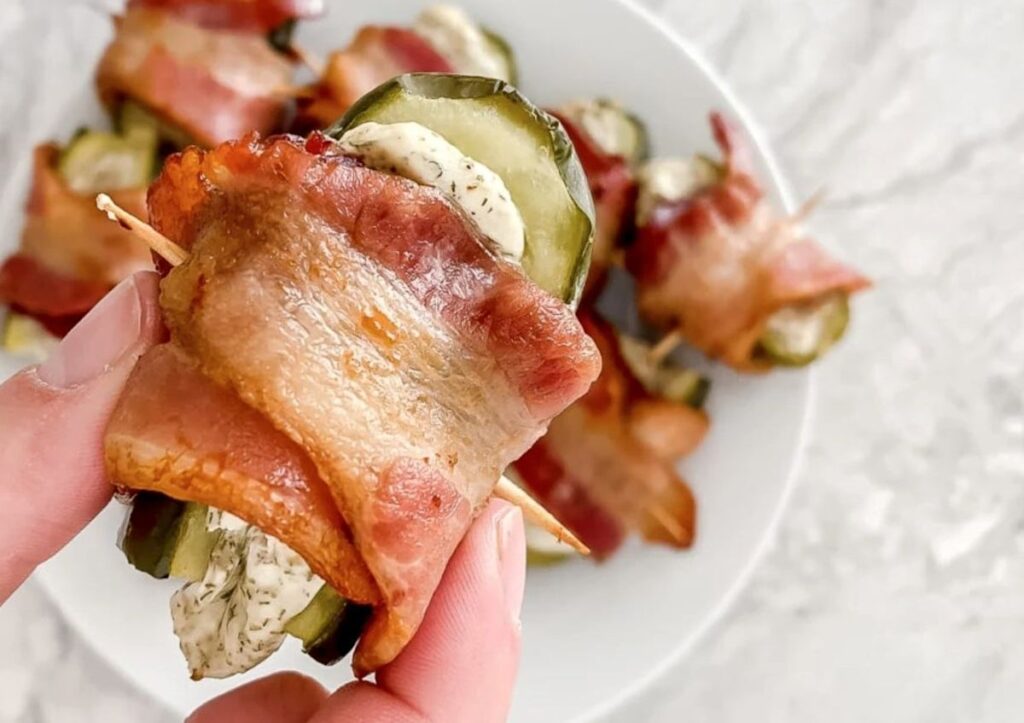
The filling is where you make the choice. The bacon is the constant. What you put inside changes everything else about the recipe. Pickle bites are briny and sharp. My bacon-wrapped pickle bites spread dill cream cheese on each pickle piece before the bacon goes on, which gives them a salty-sour, creamy note that sits differently than anything else on a party table. Bacon-wrapped water chestnuts are the opposite, mild, with a crunch that holds up through the cook and a ketchup, brown sugar, and soy glaze brushed on near the end. Peppers bring sweetness and color. Asparagus adds something bitter and green that balances the richness of the bacon.
You can match the filling to what else you’re serving. If everything on the table is rich, go with something sharp like pickle bites. If you want something mild that doesn’t compete with anything, water chestnuts or mini peppers are the right call. If you want something more composed on the table, my bacon-wrapped maple Parmesan asparagus bundles bring maple and Parmesan into the mix, which adds contrast that goes well next to something briny.
Prep the fillings ahead, and cook the bacon the day you serve. The pickles can be seeded, blotted, and sliced, the cream cheese filling mixed, and the water chestnut glaze stirred together a day early and kept covered in the fridge. The bacon is different. All three of these recipes give it a head start in the oven until it’s partly cooked but still bendable, so it can crisp in the short second bake without overcooking the filling. Partly cooked bacon should go straight on to finish cooking, not into the fridge overnight, so do the par-bake, wrap, and final bake in one stretch. With the fillings ready, that’s a short job, and you’re still not frying at the last minute.
Two things actually make a difference in the result. First, toothpicks, not for looks, but for structure. When bacon-wrapped bites aren’t secured, the bacon unravels before it gets a chance to crisp, and the filling ends up half-exposed. A toothpick through the seam keeps everything in contact during the cook. Second, space on the pan. Bacon that’s crowded steams instead of crisps. The difference between a crispy, well-rendered bite and a pale, soft one comes down entirely to how much room you give each piece. One layer, enough space between them.
The reason bacon-wrapped anything disappears first isn’t complicated. It’s crispy and salty next to something tender and mild. People keep reaching until there are none left. Get the bacon crisp and give each piece enough room on the pan. The texture contrast does the rest.