

“Hearst Magazines and Yahoo may earn commission or revenue on some items through these links.”
Quick Overview
Dealing with menopause comes with a string of challenges and changes, but many people don’t expect acne to be one of them. Board-certified dermatologist Dr. Elizabeth Hale explains to ELLE that the hormonal influence that occurs during menopause can be similar to teenage acne. The difference is that the skin being treated at this stage is very different from your younger skin, and the hormonal changes are different. “As estrogen and progesterone fluctuate and decline, the relative influence of androgens like testosterone becomes more noticeable,” says Hale. “That can increase oil production and trigger breakouts even while the rest of the skin is getting drier, thinner, and more sensitive,” Hale says. She adds that teenage skin is usually oily, resilient, and tolerant of aggressive treatment.
On the other end, Dr. Suzan Obagi, a board-certified dermatologist, associate professor of dermatology and plastic surgery, and director of the UPMC Cosmetic Surgery & Skin Health Center, explains that menopausal or perimenopausal acne differs from typical acne because it localizes to the chin and upper neck. “Patients will get flares with their menses of large, tender papules and cysts that take time to resolve. By the time they do resolve, the next round comes out,” says Obagi.
Advertisement
Advertisement
Menopausal acne also differs from the adult acne women may have had in their 20s and 30s, which often tracked with your monthly cycle. “During perimenopause, cycles become irregular, so flares can feel unpredictable,” Hale clarifies.
Acne at any age can be very frustrating. Obagi says this is especially true for women who have not had to contend with acne before. But left untreated, it can lead to scars, so it is imperative to try to get it under control. While it’s yet another annoyance to add to the menopause side effect checklist, menopausal acne is treatable. Hale and Obagi explain how to manage menopausal acne.
Does menopausal acne show up differently than other types of breakouts?
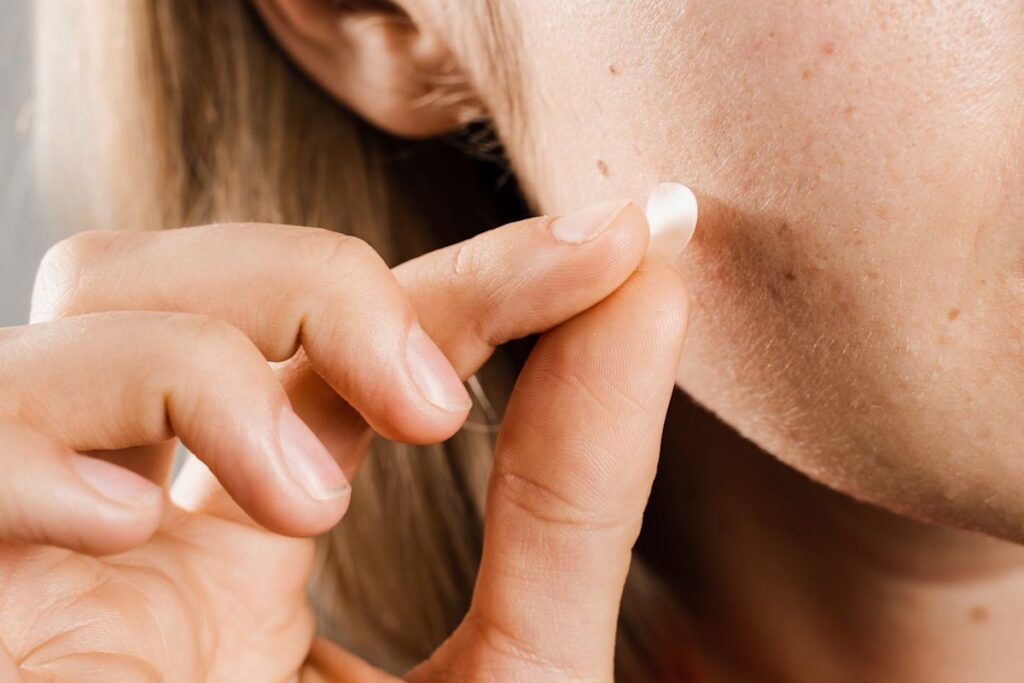
According to Hale, menopausal acne usually clusters along the jawline, chin, around the mouth, and sometimes the neck. “It’s more likely to be deeper, tender, inflamed bumps that linger, rather than surface blackheads and whiteheads,” says Hale.
Skin renews more slowly at this stage, so blemishes can also take longer to heal. With this slow healing process, acne marks are more likely to leave behind dark marks or lingering redness. “That’s especially true for women with deeper skin tones, who are more prone to post-inflammatory hyperpigmentation,” Hale notes.
How should you treat menopausal acne?
The goal is to treat the acne without stripping the rest of the skin. Hale suggests looking for these key skin care ingredients:
Advertisement
Advertisement
A mild, non-stripping cleanser
Over-the-counter adapalene or a prescription retinoid to help keep pores clear and also support collagen and texture. “Start low and slow, a few nights a week. And make sure to moisturize on top to prevent dryness,” Hale instructs.
Azelaic acid helps with breakouts, fades dark marks, and is generally well tolerated by sensitive skin, including skin prone to rosacea.
Benzoyl peroxide and salicylic acid. Hale says to use these sparingly. “They’re best used as a spot treatment to avoid drying out the skin, or as a wash-off cleanser,” she notes.
Niacinamide supports the skin barrier, calms redness, and helps even tone.
Obagi goes the prescription route with her patients. “Oftentimes I will discuss with my patients starting an oral anti-androgen medication called spironolactone. In high doses, it functions as a diuretic/anti-hypertensive medication,” says Obagi. However, at low doses, she explains, it seems to offset the effects of male hormones on oil glands and hair follicles. “It helps reduce the cyclical flare of hormonal acne while protecting against hair loss on the scalp,” Obaji adds.
Does diet impact menopausal acne?
Diet isn’t the main driver of menopausal acne; it’s primarily hormonal. However, Hale notes that some research has linked high-glycemic diets and dairy, particularly skim milk, to acne in some people. “A balanced diet with whole foods, adequate protein, healthy fats, and fewer refined sugars supports overall skin health,” says Hale.
Increasing your protein intake for muscle and bone health at this stage of life can also prove beneficial. However, Hale warns that whey protein supplements have been associated with breakouts in some people. “If you started a protein shake around the time your breakouts began, that’s worth noticing,” Hale says.
Advertisement
Advertisement
Although it’s not a food, Obaji points out that hormonal changes from medications can also play a role in emerging breakouts, whether it’s stopping birth control or starting or changing hormone therapy. Some progestins have more androgenic activity than others, so make sure to talk to your doctor about this.
How should you adjust your antiaging regimen or ingredients while treating menopausal acne?
Adjust is the key word here, not overhaul. “The good news is that many of the best antiaging ingredients are also acne-friendly,” says Hale. Retinoids, niacinamide, antioxidants, and azelaic acid all address both concerns.
Timing is also key. “During the monthly flares of hormonal acne, the patients may feel that their skin is temporarily more oily. They may have to adjust their topical regimen to include a cleanser designed for blemish-prone skin, such as the Veea Face Clarifying Gel Cleanser, which contains salicylic acid, witch hazel, and burdock root extract,” Obaji recommends. Also swap in a non-comedogenic moisturizer to avoid aggravating breakouts.
Hale says you also want to avoid heavy occlusives that can clog pores in breakout-prone areas, and avoid stacking too many actives, which can lead to irritation. SPF is still important, too, so finish off your routine with a lightweight, non-comedogenic formula.
Advertisement
Advertisement
If you’re using a serum, choose a hydrating one since menopausal skin tends to be on the drier side.
Can you prevent menopausal acne? If so, how?
Unfortunately, you can’t stop or prevent the hormonal transition, but Hale says you can reduce how often breakouts happen and how severe they are by choosing the right ingredients and adjusting your routine.
“It’s also important to support sleep and manage stress as best you can. Stress hormones can worsen breakouts, and night sweats and disrupted sleep are common and can contribute to breakouts as well,” says Hale.
Although there’s no way to prevent menopausal acne, Obaji says the most important thing is to recognize it early and treat it before it leaves any scars. “Sometimes, if a patient’s estradiol levels have dipped enough, starting on hormone replacement therapy may help offset hormonal acne,” she says.
Advertisement
Advertisement
Keep in mind, too, that most acne treatments can take 8-12 weeks to show real results, and mature skin may take a little longer to turn over, so be patient with the process and your products as you navigate menopausal acne.
1) Veea Face by Dr. Suzan Obagi Clarifying Gel Cleanser
2) Meaningful Beauty Youth Activating Melon Serum
3) Sunday Riley A.I. Adaptive Retinoid Serum
4) La Roche-Posay Effaclar Adapalene Gel 0.1% Acne Treatment
5) The Ordinary Azelaic Acid Suspension 10%
6) Paula’s Choice Skin Perfecting 2% BHA Exfoliating Toner
7) Anua Niacinamide 10 TXA 4 Serum
Why Trust ELLE
Every product featured on ELLE.com is independently researched, tested, or editor-approved. We only recommend products that we stand behind, and the merchandise featured on our site is always driven by editorial and product testing standards, not by affiliate deals or advertising relationships. Any content created in partnership with advertisers is marked as such.
You Might Also Like
Source link