


Lunges and squats are both popular strength exercises for your lower body. There are a ton of variations of these moves — some that may even look and feel almost identical. When it comes to lunges and split squats, which is better for you?
It depends on your goals and where you are in your fitness journey, says Stephanie Mansour, certified personal trainer and TODAY fitness contributor.
At a glance, lunges and split squats may be hard to distinguish, she says. In both moves, one foot will be in front of the other and you’ll be using your leg and glute muscles to dip your body down and back up.
But, Mansour explains, there are subtle differences in the positioning that may make one exercise better for you than the other.
Benefits of Split Squats
Squats are a foundational strength-building exercise, which use functional movements to efficiently strengthen the lower body, particularly your quadriceps, hamstrings and glutes.
And, when using a split stance with one leg in front of the other, you’re better able to target one side of the body at a time. That allows you to pinpoint and address strength imbalances that many of us have.
Mansour explains how to perform a split squat:
-
Stand with your feet a little more than hips-width distance apart.
-
Step one foot forward (or behind you).
-
Slowly lower down until your right knee touches (or almost touches) the ground.
-
Drive through the front leg to straighten your legs and lift your body.
Unlike in a lunge, you don’t necessarily have to bring your back knee directly toward the ground in a 90-degree angle, Mansour explains. While it’s very important to keep that right angle in both your knees in a lunge, that’s not required for a split squat.
For even more of a challenge, try variations such as a Bulgarian split squat, which even more effectively target the glutes by raising the back leg. Have a trainer talk you through them in this 30-Minute Full-Body Strength Routine.
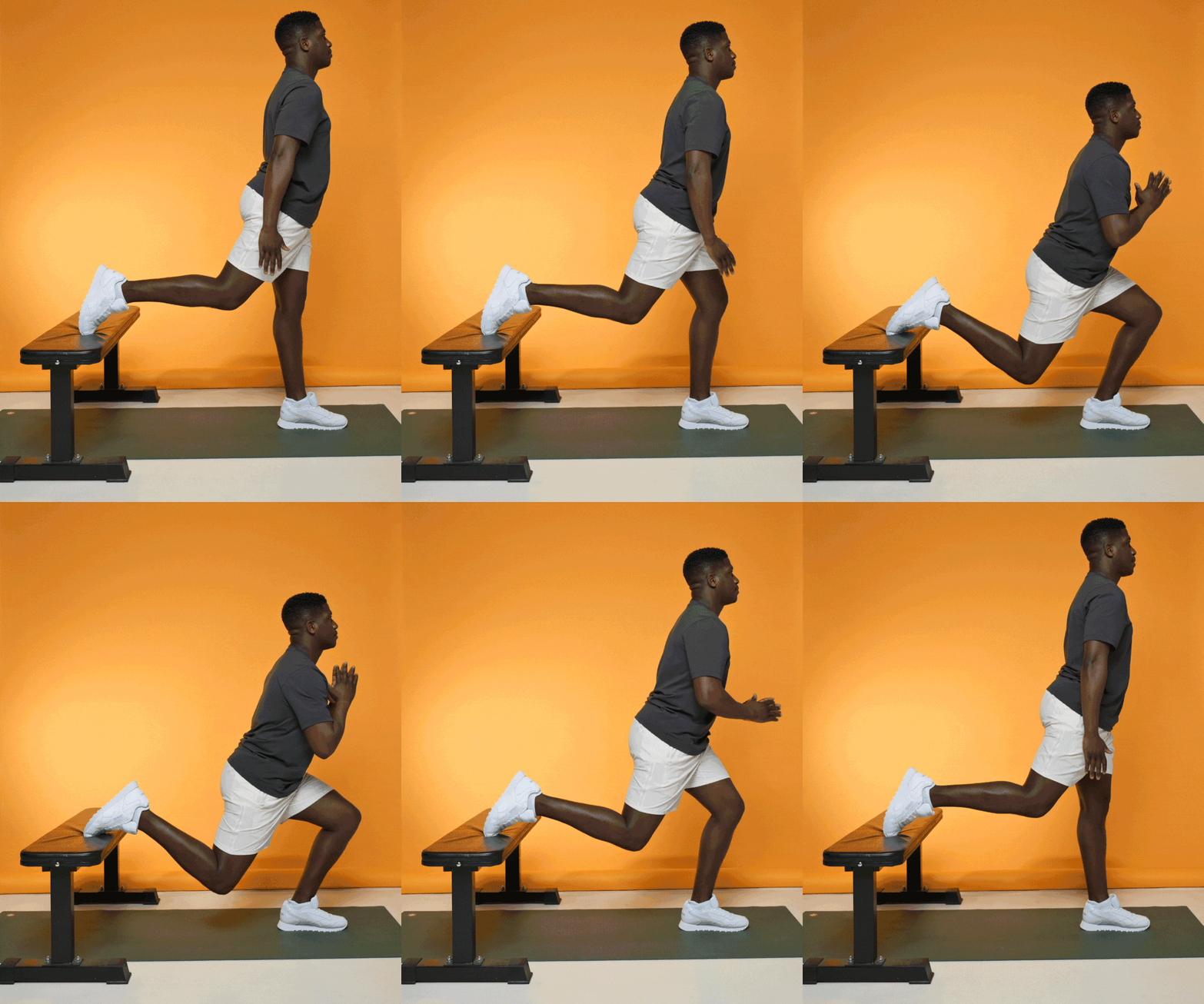
A Bulgarian split squat is an even more challenging variation of the classic split squat. (Tyler Essary / TODAY)
Benefits of Lunges
As with squats, lunges target multiple muscles in the lower body. That includes your legs (your quads and hamstrings), as well as the muscles of your calves and glutes.
Because a lunge is in motion, it will also work the muscles of the inner and the outer thighs, Mansour says. Lunges also strengthen a little more of the core and hip stabilizers as you work to stay balanced, she adds.
And, as with split squats, lunges require a split stance that gives you a better window into any imbalances in muscle strength on one side of your body compared to the other.
But, unlike squats, lunges are typically a dynamic exercise, which means they involve motion. That can make lunges more challenging for your balance and get your heart rate up a little higher, which has benefits for fat loss.
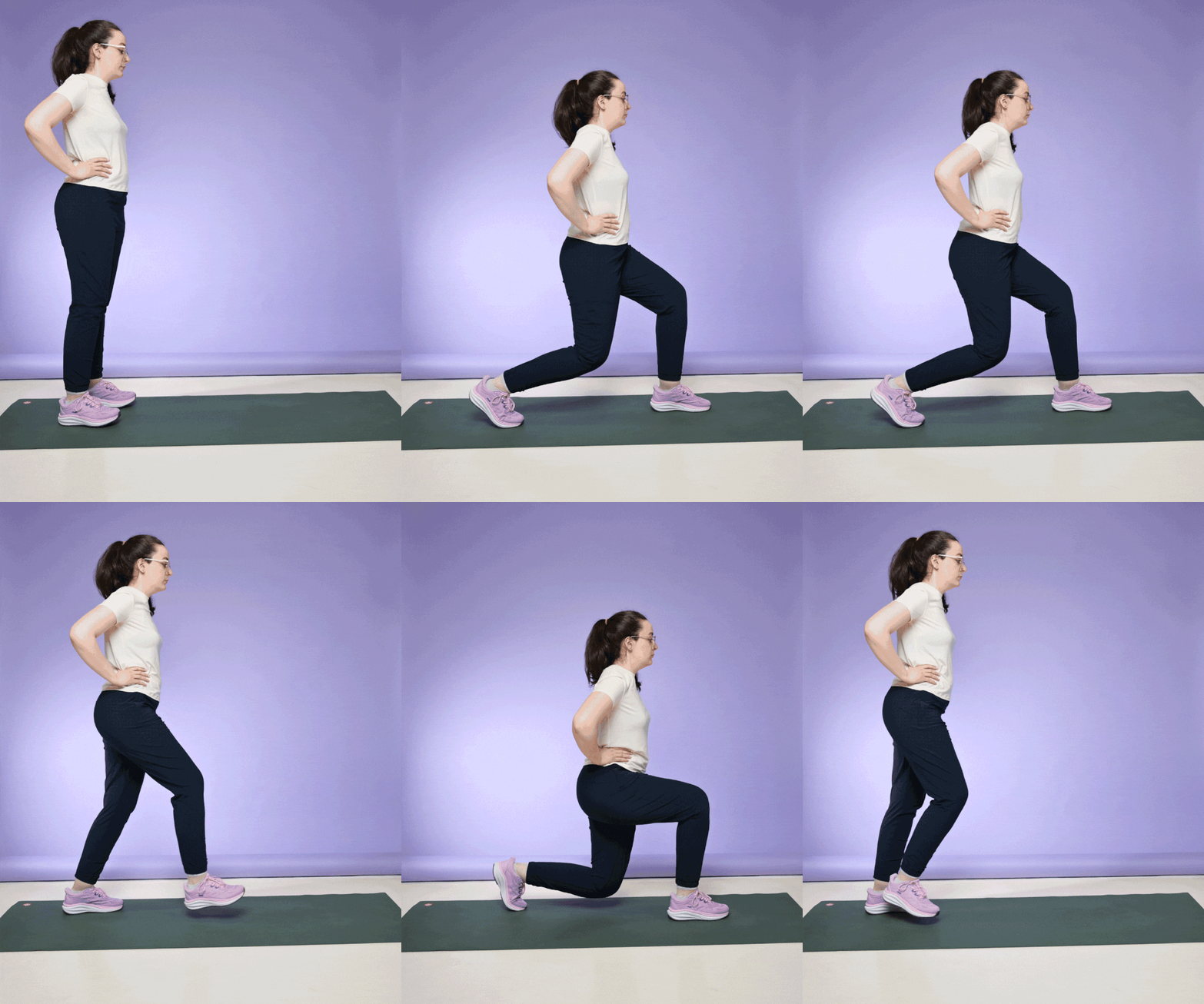
A forward lunge is a dynamic movement that strengthens the lower body. (Tyler Essary / TODAY)
How to perform a lunge:
-
Stand up straight with your feet hip-width distance apart.
-
Take a step forward (or backward for a reverse lunge) with one leg.
-
Lower your body by bending your legs so that your knees are both at a 90-degree angle. Your back leg should almost touch the ground.
-
Push through the heel of your front foot to straighten your legs and raise your body. Bring your front foot back in line with your back foot.
-
Repeat the exercise with the opposite foot in front.
The catch, Mansour says, is that there are many variations of lunges — including stationary lunges.
With a stationary lunge, you will still perform the raising and lowering parts of the exercise, but you won’t bring your legs back together in between repetitions, she says. That makes it look almost identical to a split squat.
Still there are subtle differences in your positioning and movement between a split squat and a stationary lunge.
In a split squat, your legs should be a little wider than hips-width distance apart, she says. But your stance should be a little tighter and short than you’d have in a lunge. Ultimately, the differences between a split squat and stationary lunge are minimal, and you should do whichever is more comfortable for your body, Mansour says.
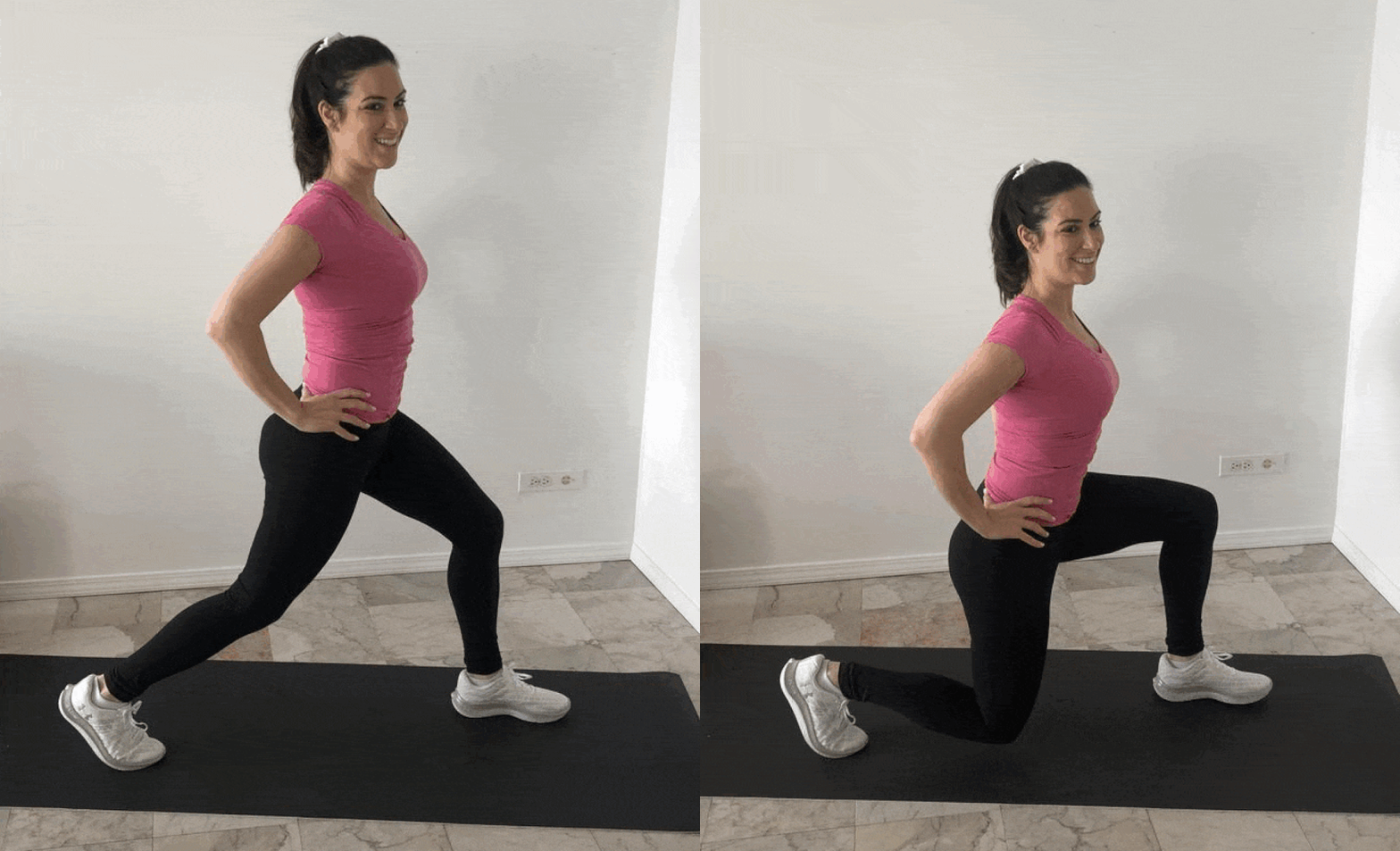
A stationary lunge is a static version of the traditional forward or reverse lunge.
Should You Do Split Squats or Lunges?
Both a split squat and a lunge are going to strengthen generally the same muscle groups. So, when deciding between these two exercises, “it’s really about what’s more comfortable,” Mansour says.
For most people, a lunge is going to be more comfortable than the tighter, more compact form required for a split squat, she adds.
If you’re a beginner, Mansour recommends starting with a stationary lunge. Of all the lunge variations, “stationary lunges are the most stable because you’re always having both feet contacting the ground,” Mansour says. A dynamic lunge “requires more balance, control and coordination,” she adds.
That stability also makes stationary lunges (or split squats, if they’re more comfortable for you) the best place to start when you want to add weights, such as light dumbbells, to the movement.
Mansour leads you through stationary lunges — plus beginner and more advanced modifications for the move — in this Lower-Body Basics Routine.
Once you’ve mastered stationary lunges, she recommends opting for reverse lunges, which are often a little easier on the knees than forward lunges.
With a forward lunge, “all your momentum is going forward because you’re stepping forward,” Mansour explains. That makes it easy to step too far forward or to bend your front knee more than 90 degrees, both of which load the front knee more than is safe.
“It’s harder to control that when you’re stepping forward with momentum,” Mansour says. “It’s easier to control that when you go backwards.”
This article was originally published on TODAY.com