
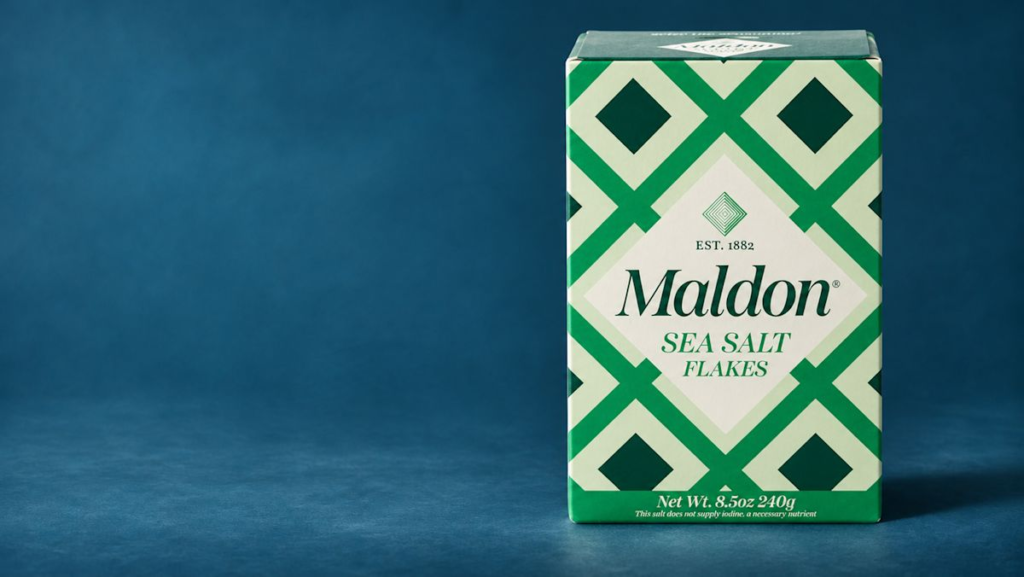


Maldon Salt has built its reputation on a clear sense of place: pyramid-shaped flakes made in Essex using water from the Blackwater Estuary. But a recent Observer investigation found that German-mined rock salt is also used in the company’s production process.
The finding puts a spotlight on a question shoppers may not have considered when reaching for the familiar green-and-white box: When a label says “100% sea salt flakes,” what does that tell you about where the salt comes from—and how it was made?
How Maldon says its salt is made
Good Housekeeping / Susan Choung
Maldon says it uses a long-established “salt-on-salt” method. The company adds rock salt to seawater to make brine, which is then heated and evaporated to create its signature flakes. Maldon describes the rock salt as “ancient sea salt” and says its products and labeling comply with applicable laws. The company also says the method produces the same taste and texture cooks have known for generations.
The Observer reported that residents documented deliveries of German rock salt to Maldon’s Essex production site. It also reported that regulators investigated the process in 2019 to 2020 and took no further action; officials said there was no specific legal definition distinguishing sea salt from other salt. Those findings don’t establish a food-safety concern, but they do sharpen the question of how much detail shoppers should get about a product’s origins and manufacturing.
How does the rock salt affect the product?
Mike Garten – Hearst Owned
“From a nutrition standpoint, both sea salt and rock salt are predominantly sodium chloride, so I wouldn’t expect the addition of German rock salt to make a meaningful difference to the overall nutritional profile,” says Stefani Sassos, a registered dietitian and Good Housekeeping’s Nutrition Director.
Sassos adds that specialty salts aren’t inherently healthier than table salt. “They’re all primarily sources of sodium, and switching between them doesn’t offer any significant health advantage,” she says. Specialty salts, whether they’re labeled sea salt or Himalayan pink salt, can differ in flavor, texture, crystal size and mineral composition, she explains. This may appeal to cooks—but those differences don’t translate into meaningful health benefits. Whatever type you use, salt should be consumed in moderation, Sassos advises.
What does the label tell shoppers?
Good Housekeeping / Susan Choung
For shoppers, the bigger question may be whether the product’s label and marketing give them the full picture. Maldon’s U.S. product page lists the ingredient as “sea salt flakes (100%)” and describes the product as hand-harvested in Maldon, Essex.
“The main issue here, in my eyes, is you want to get what you’re paying a premium for,” Sassos says. “When shoppers see ‘100% sea salt flakes’ alongside imagery of the Essex coastline and traditional salt harvesting, it’s painting a specific picture and the premium appeal of the product is built around this. If imported rock salt is being added, that should be explained clearly and transparently.“
People may still be happy to pay more for the finished product, Sassos says, “but they deserve the full information to make that decision themselves.”
The difference shows up on the packaging, too. On the Canadian tub, the ingredient is listed as “salt flakes”; on the U.S. tub, it’s “sea salt flakes.” The Canadian Food Inspection Agency says salt from a mine cannot be labeled “sea salt.” That rule doesn’t determine U.S. labeling requirements, but the two tubs show how shoppers in different markets may see different ingredient descriptions.
1) Ingredient List in Canada
Photo credit: Costco
“Ingredients: Salt Flakes”
The Canadian Food Inspection Agency says salt from a mine cannot be labeled “sea salt.”
2) Ingredient List in the U.S.
Photo credit: Costco
“ingredients: sea salt flakes”
Maldon’s method may not change how you use the flakes at home. But for shoppers who choose products based on where ingredients come from, more detail about the process can help them decide whether the label matches what they expected.
Good Housekeeping reached out to Maldon for comment and will update this story if we hear back.
You Might Also Like
Source link


