
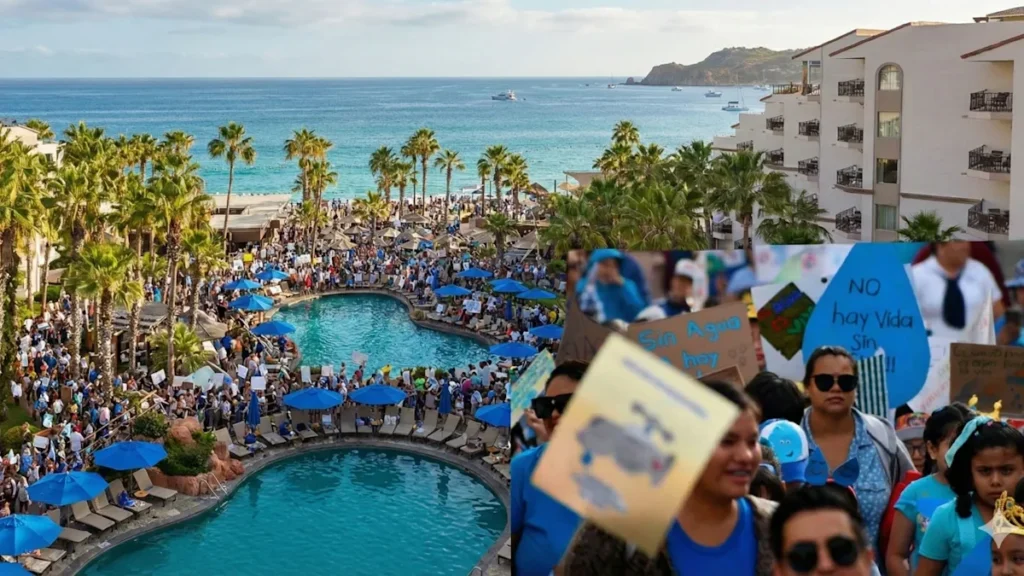
The area known as Cabo in Mexico sits at the very bottom of the Baja California Peninsula. It’s where the Pacific Ocean meets the Sea of Cortez/the Gulf of California. It is one of Mexico’s most visited coastal destinations, drawing more than three million travelers a year according to the Los Cabos Tourism Board. Most visitors come from the United States, especially California and Texas, because it is an easy flight, warm year-round, and feels both luxurious and familiar. That demand has helped the region build a booming hospitality economy, from high-end resorts and golf courses to an active expat community that has grown steadily over the last decade.
On the surface, Cabo looks like the ultimate getaway. It’s considered a paradise. Picture-perfect pools, manicured gardens, oceanfront suites, and every version of leisure a traveler could want. But here is the truth that rarely makes it into the brochures. Cabo is a desert. The entire southern tip of the peninsula receives very little rainfall and has limited freshwater sources, yet it supports one of the most water-intensive tourism corridors in the country.
So where does all the water in Cabo come from?
When you start reading the research, the picture gets complicated fast. Many luxury resorts rely on private desalination plants and steady fleets of water trucks to keep their grounds green and their pools full. They have uninterrupted water access and built-in redundancy that ensures guests never feel the strain.
But for many of the workers who keep this tourism engine running, the reality is the opposite.
In hillside colonias, residents are on a rationing schedule called tandeos. Some neighborhoods receive running water for only a few hours a week. Others report waiting up to fifteen days. Families often spend a significant portion of their income buying water from private trucks just to cook, clean, and make it through daily life.
The contrast is sharp. Visitors swim in overflowing pools while the people who staff those pools may not have enough water to wash dishes at home.
This is why local activists and journalists have used the phrase water apartheid. It reflects two parallel water systems: one shaped by high-end tourism and private infrastructure, and one shaped by scarcity and inconsistent public supply.
And yet, tourism is essential to Baja California Sur. It funds jobs, small businesses, and much of the region’s economic stability. So, the goal is not to discourage people from coming. The goal is awareness: to encourage visitors to understand the context and support a fairer water system.
How travelers can visit Cabo more responsibly
Choose hotels that publicly share their water practices.
Try to loook for properties that use water-efficient landscaping, greywater recycling, and transparent conservation plans. (This is not always possible or even feasible. But it is worth a try.)
Cut back on nonessential water use.
Be aware that even though at your resort it feels like the water flow is the same as home, you can still act responsibly by taking shorter showers, limit your laundry and towel service, and avoid unnecessary water waste. Yes, you are just one person or one family. But, collectively all of the “one persons at a time” will help lower overall demand.
Spend your money in locally owned businesses.
This the the foundation for responsible travel practices. You can always take the extra step to see who gets the money when you spend. When small operators thrive, they gain more of the benefits from tourism, and a bigger voice in environmental and community planning.
Support local water-equity groups.
Even a modest donation goes far in Baja California Sur, especially with the strong exchange rate of the U.S. dollar compared to the Mexican peso.
Learn about the water challenges before you go.
A simple google search will let you know what’s going on with that destination. Awareness changes how you move through a place and how you support the people who live there.
With that, it’s a good time to acknowledge that the land on which I traveled to in Baja California Sur is the traditional territory of the Indigenous Peoples whose history and presence precede resort development.
If you want to take your support further, here are four credible organizations working directly on water issues across the peninsula.
Sociedad de Historia Natural Niparajá (Niparajá)
A respected nonprofit based in La Paz focused on watershed protection, sustainable water management, and community education.
Coalición por el Agua de Baja California Sur
A regional coalition advocating for clean, reliable water access and long-term planning across all five municipalities of Baja California Sur.
International Community Foundation (ICF)
A US-based foundation that funds community-led projects throughout Baja California Sur, including efforts to improve water access, infrastructure, and environmental equity.
Waterkeeper Alliance, Baja Peninsula Programs
Part of the global Waterkeeper network, supporting local groups that monitor water quality, protect watersheds, and push for fair water policies along the Baja peninsula.
Cabo is a wonderful and beautiful place to visit. Tourism supports families across the region, and locals want travelers to enjoy it. But responsible travel means seeing the place clearly and acknowledging the systems behind the experience. When you show up with awareness, you respect both the destination and the people who call it home.


