

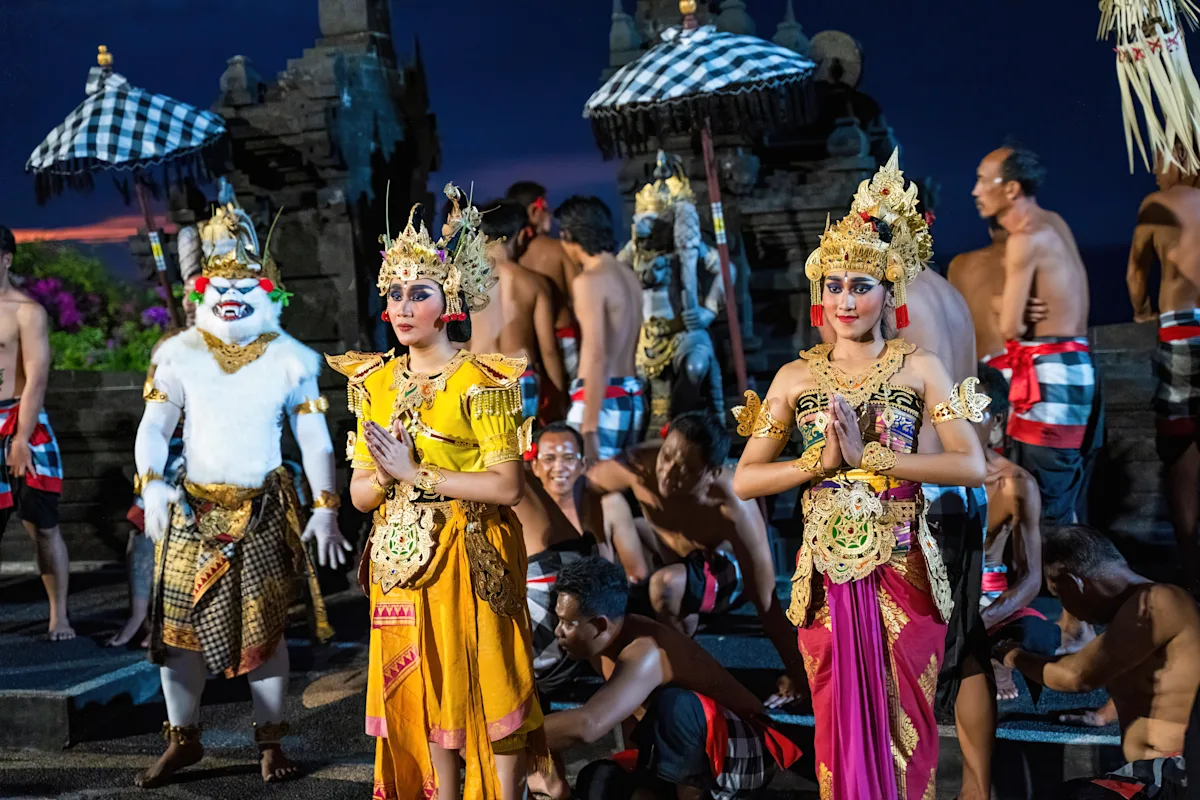
Fresh off my arrival, I was ushered into the bleachers of a performance area. We were not really told what was going to happen, but as I sat, all the signs were there that I was about to watch a cultural performance. As I prepared to watch, I had no clue what to expect. I remember the fascinating characters, the women with entrancing hand movements and bulging eyes, the ornate costumes, the waves of sound coming from the chorus. And as someone who studies and reports on local cultures, all the signs pointed to a story rooted in deep tradition and sacred meaning.
That is exactly why so many visitors believe the Kecak fire dance is ancient. It feels like a ritual pulled straight from the past. But the real story is more nuanced, blending sacred origins, outsider influence, and decades of cultural evolution.
What Most Travelers Think They’re Seeing
On the surface, Kecak looks and sounds unmistakably spiritual.
The setting alone sells the myth. A cliffside temple. Sunset turning the sky gold. Hundreds of men forming a human ring, chanting “cak cak cak” in layered rhythms that sound like they are rising from the earth itself.
The performers move in unison, bodies rocking like they are pulled by something beyond themselves. The dancers who portray Rama, Sita, Ravana, and Hanuman appear through torchlight with exaggerated expressions, precise eye movements, and hand gestures that look coded with meaning. If you do not already know the Ramayana, the story feels mysterious, but the emotional beats still land. Good versus evil. Love, loyalty, triumph.
Everything about the performance signals “ancient ritual.”
And that is exactly the point. Kecak is staged in a way that feels immersive and otherworldly, so visitors often fill in the gaps themselves. They assume they’re watching a ceremony that has been carried out the same way for centuries.
That assumption is understandable. But this version of Kecak—the one staged for tourists at sunset—has a very different origin story. One that is still rooted in tradition, but not bound to the past in the way many people believe.
This sets up the real question underneath the performance: If the show looks ancient, why isn’t it actually ancient? And where did it come from?
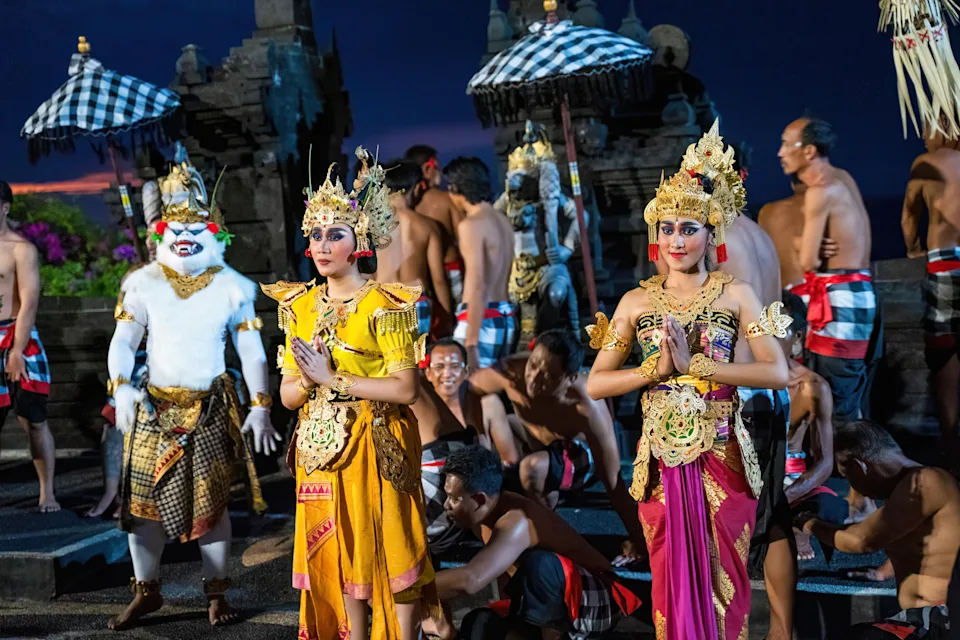
The Sacred Roots: Sanghyang, the Trance Exorcism Ritual
The chanting you hear in a Kecak performance did not come out of nowhere. It comes from sanghyang, one of Bali’s oldest trance-based rituals. Sanghyang is a spiritual practice meant to protect a community, especially during times of disease, imbalance, or uncertainty. The ritual is not entertainment. It is a form of spiritual intervention.
Sanghyang revolves around the belief that certain individuals can become vessels for protective spirits. In the ritual:
• A designated participant enters a deep trance, guided by community elders and priests.
• A spirit is believed to take temporary residence in their body, speaking or acting through them.
• A male chorus surrounds the participant, chanting in repetitive layers to sustain the trance.
• Ritual leaders ensure the spirit departs safely and the individual returns to consciousness unharmed.
These ceremonies can involve fire, sharp objects, or feats of endurance—depending on the village’s traditions. The chanting is rhythmic, relentless, and transformative, creating the sonic environment that allows the trance to happen.
Why You Will Never See the Real Sanghyang Ritual
It is important to know that the sanghyang is not performed for tourists. It is intimate, sacred, and often restricted to the community. Outsiders rarely witness it, and photography is usually forbidden. Some villages do not even discuss the details publicly, because the ritual is considered spiritually potent and vulnerable to misuse.
In sanghyang, the stakes are real. A participant entering an uncontrolled trance can be physically harmed or spiritually unbalanced if the ritual is interrupted or performed incorrectly. That is why access is tightly protected and why the ceremony remains rooted in community need, not visitor curiosity.
This is where the confusion begins.
The chanting in Kecak is real—deeply traditional, spiritually rooted, and tied to one of Bali’s oldest trance rituals. But the performance tourists know today is a reinterpretation. It borrows the sound, not the ceremony.
Understanding that difference unlocks the real story of how Kecak became the global performance it is now.
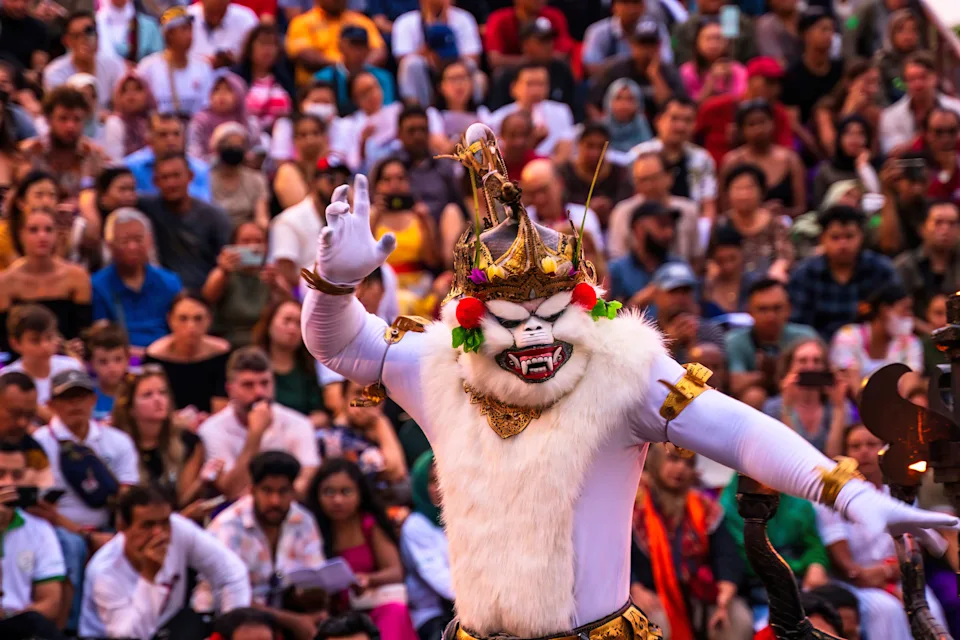
Where the Modern Kecak Comes From
Most travelers are surprised to learn that the staged Kecak fire dance we see today did not exist before the 1930s. Its foundation is ancient, but its current form is a collaboration—a cultural remix shaped by Balinese artists and foreign creatives during a period when Bali was attracting global attention.
A German artist and a Balinese dancer reshaped it
In the 1920s and 30s, Bali became a haven for international artists who were captivated by its rituals, landscapes, and layered cultural practices. Among them was Walter Spies, a German painter and musician who immersed himself in Balinese life. Spies was fascinated by the sound and structure of the sanghyang trance ritual, particularly the hypnotic male chorus that supported the trance state.
Spies began working with Wayan Limbak, a respected Balinese dancer and performer. Together, they experimented with ways to present Balinese art in a format that non-Balinese audiences could follow.
What they created was intentionally hybrid:
• They lifted the chanting chorus from sanghyang.
• Removed the trance—which is considered dangerous and spiritually sensitive.
• Added a clear narrative structure based on the Ramayana.
• Built a performance that could be shown safely outside a ceremonial context.
• Structured it for evening audiences and tourist schedules.
The result was the first version of the Kecak performance we see across Bali today. It was artistic, theatrical, and designed to be shared with the world.
It was designed for global audiences
Wayan Limbak later took Kecak on tour internationally, introducing the performance to audiences across Europe. As its popularity grew, Balinese communities began forming their own Kecak groups. Each village shaped the performance slightly differently—through costuming, pacing, vocal arrangements, staging—until Kecak became both widely recognized and deeply Balinese.
Far from being a foreign invention implanted onto Bali, Kecak evolved into a cultural expression that Balinese performers themselves embraced. It became part of Bali’s identity precisely because communities continued to adapt and reinterpret it.
And that evolution tells you everything you need to know about how culture survives: by changing, not freezing in time.
So, Is It “Fake”? Absolutely Not.
When travelers learn that the Kecak fire dance is less than a century old, their first reaction is often disappointment. I know I was a little. But that reaction comes from a misunderstanding of what “authentic” culture is.
Culture is not a fossil. It is alive. It responds to history, economy, tourism, politics, and creativity. It absorbs, resists, adapts, and evolves.
For many Balinese artists, Kecak is a source of pride. It preserves sacred elements—like the rhythmic chanting—while allowing communities to present their heritage on their own terms. Groups rehearse weekly, sometimes for months, refining timing, voice layering, and choreography. Performers are not “acting ancient”; they are creating something meaningful in the present.
Kecak also supports livelihoods. Ticket sales fund community groups, temple upkeep, and training programs for young performers. In many villages, participating in Kecak is considered a contribution to community life.
So while Kecak is not an unbroken chain stretching back a thousand years, it is no less authentic.
It is authentic to now. To the Bali that exists today.
It’s important to remember that traditions that cannot evolve often disappear. Kecak survived, and thrived, precisely because it changed. It also seems to be a positive example of how globalization and tourism has shaped modern cultural expression without erasing heritage.
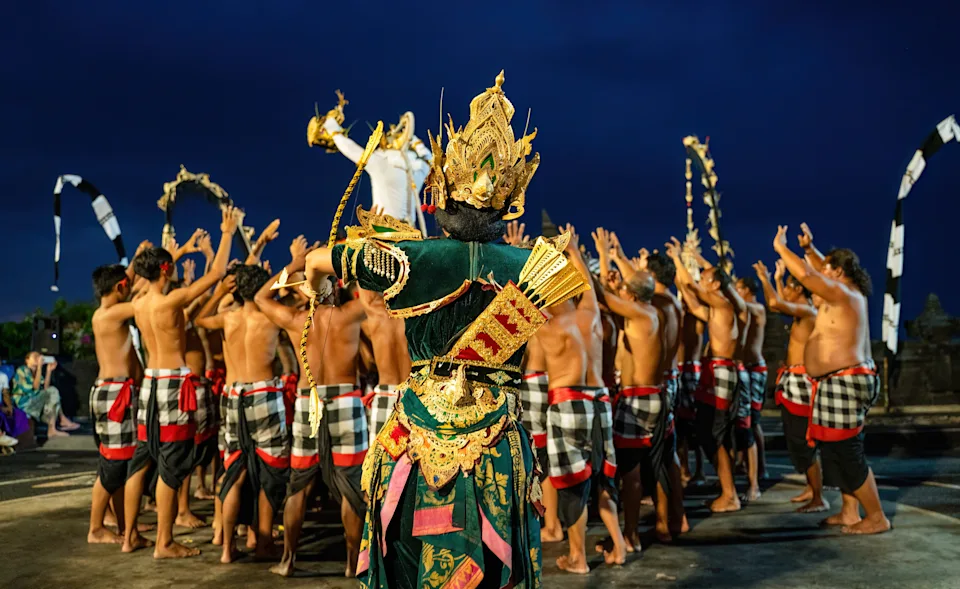
How to Experience Kecak More Respectfully
Now that you understand more about this experience, I encourage you to still visit a performance during your trip to Bali. This article isn’t intended to discourage you; rather to just to bring a little awareness to enhance your appreciation behind this cultural experience.
Learn the story before you go
Understanding the characters—Rama, Sita, Ravana, Hanuman—makes the performance click into place. I knew nothing about what was going on during my visit, so many times I felt lost. There’s plenty of resources and videos to explain the basic story. And, if all else fails, you’ll be given a little pamphlet before the start of the performance you attend that also gives an overview. Their motivations, gestures, and movements will then make sense, transforming the dance from impressive spectacle into narrative drama.
Choose your venue intentionally
The Uluwatu Temple is the best-known Kecak show in Bali. It’s located in a dramatic cliffside setting and typically timed for sunset. This venue is popular, and often crowded. So early arrival is key, as there is also limited seating.
But, the dance is performed many places, including smaller villages and cultural parks. By visiting one of the smaller venues, you are directly supporting a local community with your tourism. If supporting local artists matters to you, ask who manages the show and where your ticket money goes.
Respect the temple and performers
When you attend a Kecak performance, remember that many of the venues are active temple grounds, not just stages. Dress modestly and accept a sarong or sash if one is offered. Once the performance begins, remain seated and avoid stepping into the ring for photos, which is one of the most common missteps visitors make. Flash photography and bright screens can break the atmosphere and distract performers, especially during the fire scenes. And if you are at Uluwatu, keep a close eye on your belongings. The temple monkeys are clever, curious, and have a long history of snatching sunglasses, phones, and anything shiny enough to catch their attention.
Support official channels
When purchasing tickets, use official sellers or buy directly from the venue. This ensures your money supports the performers, the temple, and the community that maintains the space. Outside the gates, you may encounter scalpers offering marked-up or even invalid tickets. Avoid these, both to protect your experience and to make sure your contribution goes where it should.
What the Kecak Dance Can Teach Us About “Authenticity”
Travelers often chase the idea of the untouched, the ancient, the unchanged. The buzz word “authentic experiences” is often used in the travel advertisements. But the truth is that living cultures rarely stay still. They respond to influence. They reinterpret themselves by modern people tasked to keep it alive. The cutlures adapt to survive.
Kecak embodies this perfectly.
It blends sacred roots with modern performance.
It reflects collaboration across cultures.
It shows how tourism can reshape tradition without hollowing it out.
If anything, understanding Kecak’s real history makes it more powerful; not less. Because once you know where it came from, you can appreciate what it represents today: a cultural expression that honors its past while speaking confidently in the present.
And that is far more interesting than any myth about “ancient ritual unchanged for centuries.”