


Dana Santas, known as the “Mobility Maker,” is a certified strength and conditioning specialist and mind-body coach in professional sports. She is also the author of “Practical Solutions for Back Pain Relief.”
When elite athletes compete while injured, it captures attention. Three-time Olympic medalist Lindsey Vonn’s recent return to alpine ski racing despite a torn ACL ignited conversations about grit, resilience and the idea of pushing through pain. For fans at home, watching a professional athlete battle through injury can be inspiring. But these performances can also be misleading.
What pro athletes do while injured is not a road map for how regular folks should approach activity during recovery. The difference isn’t a matter of toughness. It’s about real-life risk tolerance, access to health care resources and lifestyle context. Understanding those distinctions matters.
When recreational exercisers get hurt, they tend to gravitate toward two ends of the spectrum: stopping moving altogether or training through pain in an attempt to emulate pros like Vonn. Both extremes have the potential to slow recovery and lead to greater injury.
The best approach is usually somewhere in the middle — engaging in the right types of movement to support healing rather than disrupt it.
Athletes play by different rules
Working in professional sports as a mobility coach for the past two decades, I’ve been involved in the rehabilitation programs of hundreds of athletes. When athletes resume training or return to competition with an injury, it’s always an informed decision.
Sports stars operate within tightly managed systems that include physicians, physical therapists, strength and movement coaches, sports psychologists, and other performance staff who monitor physical symptoms, movement patterns, mental well-being and overall capacity.
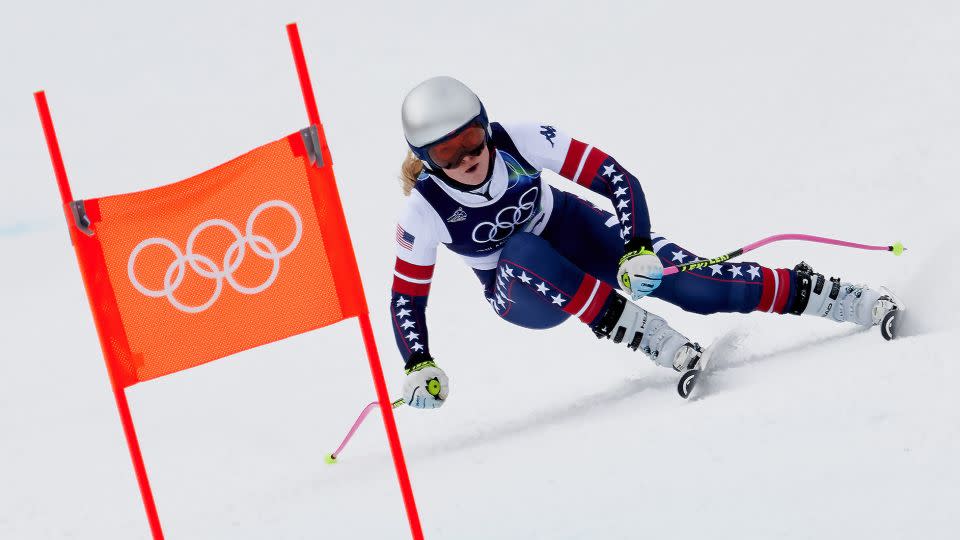
Team USA’s Lindsey Vonn skis during training at the Milano Cortina 2026 Winter Olympics on February 6 in Cortina d’Ampezzo, Italy. – Mattia Ozbot/Getty Images
A different risk-reward equation is also at play in elite competition spheres. In those environments, a professional athlete and her team may accept high risk in the short term in service of long-term or long-standing goals — as was likely the case with Vonn. That doesn’t mean the path forward is safe or pain-free. It means the decision to compete is informed, supervised and specific to that athlete’s situation.
Why exercising through injury ‘like a pro’ backfires
Unlike athletes who have a team of specialists interpreting their pain signals, everyday exercisers generally try to override their pain without interpretation. Training injured without guidance can delay healing, create compensation patterns and cause new problems elsewhere in the body.
Without close monitoring, there is a danger of loading the injured area too much or too soon, as well as unknowingly shifting stress to surrounding joints and tissues.
What feels manageable in the moment can quietly compound — a knee injury then leads to an ankle, hip or back problem. That’s why “pushing through” an injury is rarely productive outside of the support of elite, high-performance settings.
The false choice between rest and exercise
One of the biggest misconceptions about injury recovery is that the choice is either total rest or full training. In reality, recovery is about choosing the right kind of movement at the right time.
Complete rest, when it isn’t warranted, can lead to stiffness, strength loss and reduced coordination. Aggressive training overwhelms healing tissue. Strategic movement, however, preserves neuromuscular connections, supports healthy blood flow, and helps the body maintain strength and mobility.
How movement can be medicine
Rehabilitation science has long shown that intelligently applied movement can support healing. One example is cross-education training, in which actively training the uninjured limb helps maintain strength and neural drive on the injured side as well.
I often leverage this approach in my work with professional athletes. In Major League Baseball, for example, a pitcher recovering from a torn ulnar collateral ligament in the elbow may be unable to load that arm for up to two months following surgery. Training the opposite side helps preserve strength, coordination and nervous system engagement on the injured side, resulting in a more efficient return to play.
This same principle applies to lower-body injuries such as ACL injuries, such as Vonn’s. ACL tears typically require surgery followed by six to 12 months of recovery before returning to full activity, as previously reported on CNN. During that time, maintaining movement ability in the rest of the body remains critical. Training programs focusing on strengthening the posterior chain muscles — hamstrings, glutes and calves — support the rehabilitation process and help prevent future injury.
The key to using exercise to help you heal is being strategic about what you do.
What smart exercise during injury looks like
First and foremost, it’s important to rely on the advice of a qualified doctor or physical therapist who understands your specific issue.
For most people dealing with an injury, the primary goal is being able to meet the demands of their everyday lives. As such, your training should focus on maintaining as much functional capacity as possible while protecting the injured area.
Depending on your specific injury and health care guidance, that often means:
• Training parts of the body that are not injured (i.e., employing cross-education training)
• Prioritizing controlled, high-quality movement over intensity
• Staying within pain-free or low-symptom ranges of motion
• Paying attention to proper breathing, alignment and form
• Progressing gradually rather than emotionally
Pain should be treated as feedback, not a challenge to conquer. Discomfort that resolves quickly without altering movement or feeling cautionary can be a positive sign. Pain that lingers, worsens or changes how you move is a signal to stop and modify your approach. It’s important to talk with your health care professional about how to interpret and respond to your pain.
This approach allows people to remain engaged in exercise without turning recovery into a test of willpower.
The takeaway for everyday exercisers
Watching elite athletes compete through injury can be motivating, but it shouldn’t redefine what smart recovery looks like for most people. Professional performances are impressive, not instructional.
Remember, the goal during injury is not to prove toughness. The objective is to protect future capacity. That means choosing movement that supports healing rather than showcasing resilience.
Exercise can absolutely be part of injury recovery — it just needs to be the right types of movement, applied with patience and perspective.
Get inspired by a weekly roundup on living well, made simple. Sign up for CNN’s Life, But Better newsletter for information and tools designed to improve your well-being.
For more CNN news and newsletters create an account at CNN.com