


In the month since a major section of the Potomac Interceptor sewer line collapsed near the Clara Barton Parkway, spilling hundreds of millions of untreated into the Potomac River, D.C. Water is nearing a crucial point in the recovery process.
This page contains a video which is being blocked by your ad blocker.
In order to view the video you must disable your ad blocker.
See what’s keeping sewage spill away from Potomac River
In the month since a major section of the Potomac Interceptor sewer line collapsed near the Clara Barton Parkway, spilling hundreds of millions of gallons of untreated wastewater into the Potomac River, D.C. Water is nearing a crucial point in the recovery process.
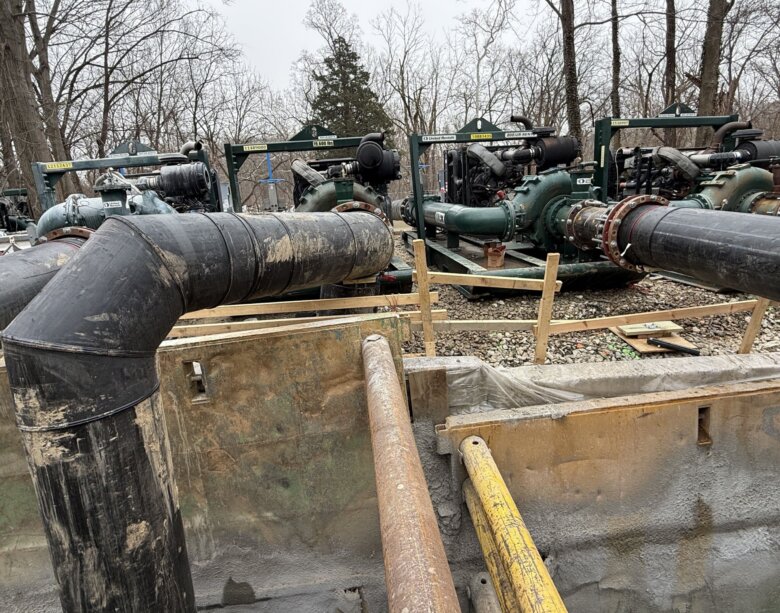
Five high-capacity pumps have been installed to facilitate the utility’s near-term goal of reaching the break in the massive sewer pipe and removing boulders wedged inside the broken Interceptor.
The bypass pumps will increase D.C. Water’s ability to divert sewage upstream of the pipe collapse into an isolated section of the C&O Canal.
A few hundred yards downstream, D.C. Water has installed three wastewater flumes that steer the sewage from the canal back into the Interceptor for the duration of its trip to the Blue Plains Advanced Wastewater Treatment Plant.
Later this week, after a steel bulkhead is completed and the pump system is coordinated and checked, D.C. Water spokeswoman Sherri Lewis said the goal is to drop a gate to block sewage from entering the damaged section of pipe.
“That’s going to keep that downstream section by the collapse site as dry as possible, so we can go in and safely remove the rock dam that is blocking our access to the damaged section,” Lewis said.
“Over the past week, we’ve brought in five more high-capacity pumps because we were facing challenges with wipes that were clogging the pumps,” she added. “And when they have to get taken out of service, particularly during a high-flow period, we run the risk of having an overflow situation and having that wastewater go into the Potomac.”
Lewis said the extra pumps add redundancy to the system.
“With all the pumps we have on site, once they are all in place and operational, we will have the ability to pump more than 100 million gallons a day, which is well over the capacity that flows through the Potomac Interceptor,” she said.
With the pump bypass system diverting sewage temporarily into the C&O Canal, the utility company estimates it will take approximately four to six weeks to remove the boulders and replace the broken pipe.
After the emergency work is completed, D.C. Water will accelerate a section of the planned rehabilitation of the Interceptor, which is scheduled to take approximately nine months.
Lewis said the utility is already coordinating with other agencies about long-term cleanup plans to ensure human and environmental safety along the portion of the canal that has been used as the bypass; in addition to D.C. Water’s promises of doing what is necessary to ensure the health of the Potomac River.
Get breaking news and daily headlines delivered to your email inbox by signing up here.
© 2026 WTOP. All Rights Reserved. This website is not intended for users located within the European Economic Area.