


Building bigger biceps is one of the most common fitness goals we all share and for good reason. Strong arms don’t just look impressive; they help us lift groceries, carry kids, improve posture and perform nearly every upper-body movement we do throughout the day. Not to mention looking good in a t-shirt or tank top.
But bigger arms don’t come from endless curls alone. Their growth depends on understanding how your biceps are structured, how they function and how recovery supports adaptation.
And knowing how to train these muscles properly — including frequency and technique — can make all the difference between stalled progress and noticeable growth.

What are the biceps?
The biceps are the prominent muscles on the front of your upper arm, best known for creating that classic “flexed” look. The primary muscle, the biceps brachii, runs from the shoulder to the elbow and helps bend the elbow and rotate the forearm so your palm turns upward — a movement called supination.
While the biceps brachii gets most of the attention, it’s not working alone. That region of the arm “is composed of other important muscles,” says Dr. Chantal Nguyen, chief resident at Stanford Medicine’s Physical Medicine and Rehabilitation Clinic.
You’ve probably heard of ’75 Hard.’ What to know about the new ’75 Soft’ trend
She explains that beneath the biceps brachii lies the brachialis, a powerful elbow flexor that does much of the work when you bend your arm. And along the outer forearm is the brachioradialis, which assists with elbow flexion, especially when your hand is in a neutral, thumbs-up position.
How to get bigger arms
Growing your arms and your biceps in particular requires progressive resistance training, which means gradually increasing the demand placed on the muscles over time. “The biceps curl is the traditional exercise needed to grow your biceps, and there are many different ways it can be done,” says Jeremy Loenneke, PhD, associate professor of exercise science at the University of Mississippi.
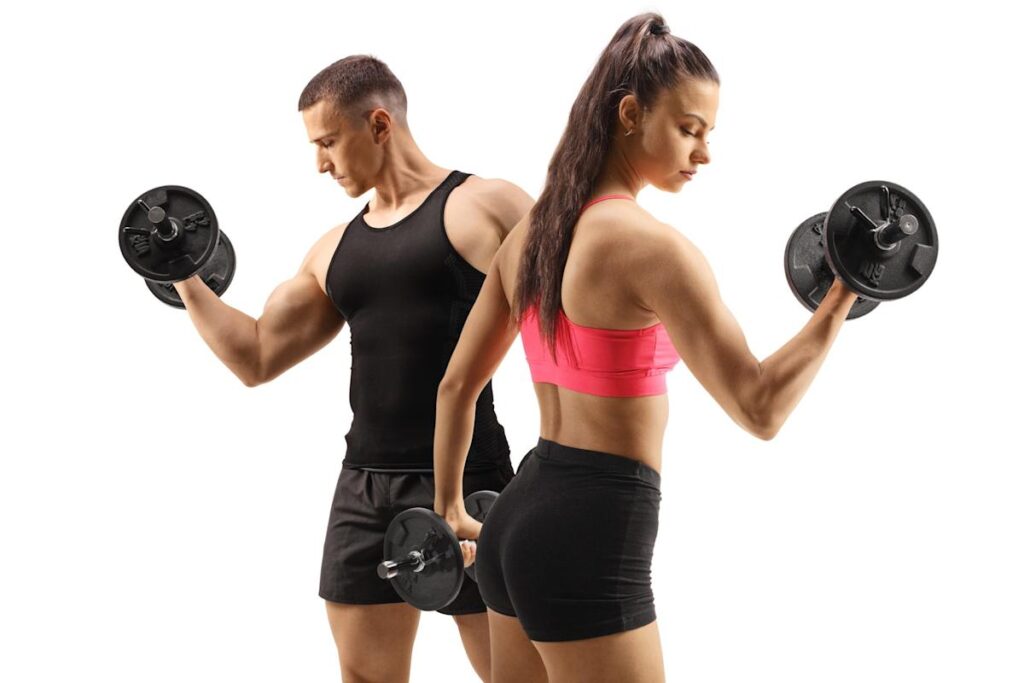
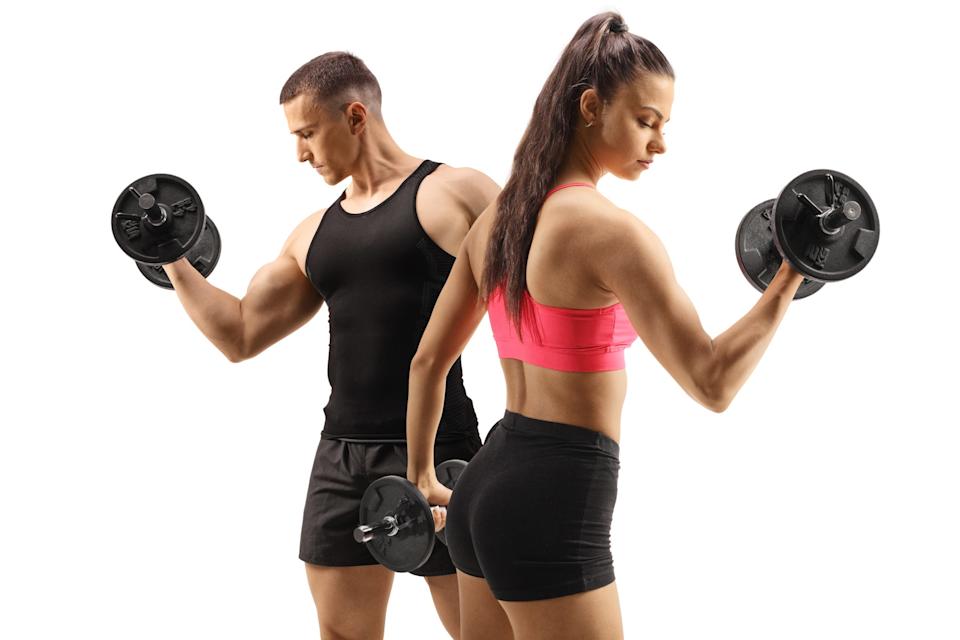
He explains that curls can be performed with cables, machines, dumbbells, barbells or resistance bands. Regardless of equipment chosen, the movement begins with your arms extended and your palms facing up while gripping the weight. You then contract (or “squeeze”) the biceps to lift the load toward your shoulders, before lowering it back to the starting position. That full lift and controlled return count as one repetition, or rep.
“If a machine is used, the elbows will usually be stationary against a pad,” he adds, “but if using a dumbbell or barbell, you should keep your elbows close to your body as the load is being lifted.”
More: Enter 2026 stronger than ever with these expert-approved fitness tips
Varying grips, angles and equipment can also help stimulate different portions of the muscle and reduce plateaus. “Resistance training with the elbow more extended (between zero and 50 degrees) yields greater improvements in strength and muscle mass than keeping the elbow at a more flexed (between 80 and 130 degree) angle,” Nguyen says.
You can also use your bodyweight to create the needed resistance. Hanging curls from a pull-up bar (where you lean back and curl your body toward the bar) or chin-ups (underhand pull-ups) challenge the biceps while also engaging the back and shoulders.
Regardless of the exercise, proper technique matters. “If you are not seeing results, it may be that you are not doing exercises that appropriately target those muscles,” Loenneke says.
How often should you train biceps?
To increase the size and density of your arms, Loenneke recommends performing two to four sets of eight to 12 repetitions per exercise, at least a couple of times per week. “If you can do more than 12 repetitions, increase the weight to stay in the eight to 12 repetition range, but if you do fewer than eight repetitions, you need to lower the weight,” he says.
Frequency may vary depending on experience level. “For novice individuals, the American College of Sports Medicine recommends training each muscle group two to three times per week, with two to three days of rest between exercise sessions that focus on the same muscles,” Nguyen says. “For individuals with more experience, training each muscle group four to six days per week — with appropriate interval rest between sessions that focus on the same muscles — can be beneficial.”
Happy New Year! A beginner’s guide to exercising at home, according to fitness experts
Nutrition plays an equally important role to getting plenty of rest between workouts. “Training the muscles with exercise is the stimulus for growth, but the building of muscle itself occurs through nutrients during the recovery period,” Nguyen says.
Adequate calorie intake, especially sufficient protein, she explains, supports muscle repair and growth “by creating a positive muscle protein balance, where growth or protein synthesis exceeds breakdown.”
More: A complete, science-backed guide to getting bigger pecs
Working your arms safely is also essential. To do so, Nguyen advises maintaining proper form, controlling the weight through the full range of motion and avoiding any movement that causes sudden pain. And gradual progression, rather than sudden increases in load, further helps reduce the risk of strain or tendon injury.
In the end, Loenneke says, “consistent training, smart planning and patience remain the foundation for building stronger, fuller arms.”
This article originally appeared on USA TODAY: Want to know how to get bigger arms? Do this for your biceps.