

Picture the movie version of an overnight train: a velvet-curtained cabin, a glass of wine and a perfect night’s sleep while the miles roll by. The real thing is stranger, louder, colder and, for the right rider, far better. People who ride long-distance trains again and again keep a private rulebook that never appears on any ticket.
Some of these rules are tiny and almost funny. A couple will change how you plan an entire trip. And the one veterans rank above everything else has nothing to do with packing at all.
#17 – The Small Bag Trick That Saves Your Entire First Night
#17 – The Small Bag Trick That Saves Your Entire First Night (Image Credits: Gemini)
Most first-timers haul a full suitcase down the aisle and regret it within minutes. A sleeper room is tiny, and on many trains the big bags go to racks away from your seat or room. Veterans pack a small overnight bag with only what they need before morning. Think toothbrush, medication, charger, socks and a light layer.
Advertisement
Advertisement
Try This: Pack the night bag last, then put it on top inside your main luggage. You can pull it out in seconds at the station, before you ever have to board.
The payoff is simple. You skip the 11 p.m. luggage rummage in a dim, swaying car while strangers try to sleep. Many regulars say this one small bag is what separates calm riders from frazzled ones. But it’s nothing compared to the battery mistake waiting at #16.
#16 – Why Your Phone at 100% Still Isn’t Enough
#16 – Why Your Phone at 100% Still Isn’t Enough (Image Credits: Gemini)
Outlets on long-distance trains are common, but they’re not a guarantee. Some seats share outlets, and some simply stop working. Seasoned riders board with every device already full and a power bank in the bag. They also pack a short charging cable, since a long cord is a tripping hazard in a cramped aisle.
A dead phone is more than an annoyance when your ticket, your trip updates and your entertainment all live on it. That’s why some riders carry a printed copy of their reservation. It looks old-fashioned right up until the battery hits 1%. And the next myth has left plenty of people staring at a blank screen.
#15 – The Wi-Fi Myth That Leaves Riders Staring at a Blank Screen
#15 – The Wi-Fi Myth That Leaves Riders Staring at a Blank Screen (Image Credits: Gemini)
Many people assume a modern train means reliable internet. In reality, onboard Wi-Fi on long-distance routes is often slow or unavailable. Cell coverage also drops out across remote stretches of the country, sometimes for hours. Regulars treat any signal as a bonus, never a plan.
Advertisement
Advertisement
Why It Works: Downloading shows, books, maps and playlists before departure removes the single biggest source of boredom. You stay entertained even when the signal vanishes for hours.
The smartest riders download everything at home on fast Wi-Fi. They also screenshot confirmation numbers and station addresses. The best entertainment, they’ll tell you, is usually the window. But comfort also depends on what you wear, and #14 is where people get it wrong.
#14 – The Train Can Be Colder Than the Weather Outside
#14 – The Train Can Be Colder Than the Weather Outside (Image Credits: Gemini)
Passenger cars are often kept cool, and it’s hard to adjust the temperature from a coach seat. Riders who boarded in summer clothes have learned this the hard way, somewhere around midnight. Veterans wear layers they can peel off or pile on. A light jacket, a scarf and thick socks cover most situations.
At a Glance: The Midnight Layer Kit
Top layer: a light jacket you can fold into a pillow
Neck: a scarf that doubles as extra warmth or a light eye cover
Feet: thick socks, since cold toes are what keep many people awake
Cover: a small blanket or large shawl, not a thin airline-style wrap
Advertisement
Advertisement
Many also bring a small blanket or large shawl, because a thin airline-style cover rarely cuts it. Warm feet matter more than most people expect when you’re trying to fall asleep. Seasoned riders swear socks do more for sleep than any gadget. Now for a sound problem you can’t see coming at #13.
#13 – The 3 a.m. Horn Nobody Warns You About
#13 – The 3 a.m. Horn Nobody Warns You About (Image Credits: Gemini)
Trains are loud, and the nights are not silent. Federal rules generally require train horns to sound as the train approaches public grade crossings. On a route threading through many small towns, that can mean blast after blast while you’re trying to sleep. Station stops, door chimes and announcements pile on top of it.
The Science Behind This: Sudden sounds can pull the brain out of deep sleep even if you don’t fully wake. That’s why steady white noise or earplugs help more than simply hoping you’ll adapt.
Foam earplugs and a contoured eye mask are the standard fix. Some riders add a sleep-friendly playlist on headphones. Many are surprised that the bright lights at station stops can be as disruptive as the noise. Meanwhile, the food rule at #12 is where wallets take a hit.
#12 – The Snack Stash That Beats the Café Car Line
#12 – The Snack Stash That Beats the Café Car Line (Image Credits: Gemini)
Café cars on long-distance trains have limited hours and limited menus. Veterans never count on them being open when hunger hits. They pack sturdy snacks like nuts, fruit, sandwiches and granola bars. A refillable water bottle is nearly universal.
Advertisement
Advertisement
Coach passengers feel this most, since they usually pay for food separately. Sleeper passengers on many long-distance trains get dining-car meals included, but even they pack something for odd hours. The most underrated item is a simple piece of fruit that survives a long night. The next rule is about the dining car itself, and riders are split on it.
#11 – The Dining Car Debate: Best Value or Overhyped?
#11 – The Dining Car Debate: Best Value or Overhyped? (Image Credits: Gemini)
The dining car is the part of the trip people talk about longest. Seating is often communal, so you may end up sharing a table with strangers. Many regulars love that. Others quietly skip it and eat in their room.
Insider Tip: Ask your sleeping car attendant how and when dining reservations work on your specific train. Procedures vary by route, and popular slots can fill early.
Here’s the friction. Some riders call the dining car the best part of the whole trip. Others call it overhyped and say you’re paying in time for a meal that’s fine rather than memorable. Either way, the table conversation is often the real attraction. But the person who can make or break your trip is waiting at #10.
#10 – The One Staff Member Veterans Always Befriend
#10 – The One Staff Member Veterans Always Befriend (Image Credits: Gemini)
On sleeper cars, the attendant is your guide to the entire journey. They make up the beds, know the stops and can answer almost any practical question. Regulars introduce themselves early and stay friendly. A little respect goes a long way at 2 a.m. when you need something.
Worth Knowing: What to Ask Your Attendant
When the beds will be made up, and when they’ll be put away
Which upcoming stops are long enough for a quick walk
How dining reservations work on your specific train
Where to find coffee, water and the nearest shower
Advertisement
Advertisement
Tipping the attendant at the end of the trip is customary among experienced riders, and many tip a bit more on longer routes. Veterans say the attendant often knows which stops are long enough for a quick walk. Speaking of stops, #9 is a rule that has stranded real passengers.
#9 – The Platform Stroll That Can Leave You Behind
#9 – The Platform Stroll That Can Leave You Behind (Image Credits: Gemini)
Fresh-air stops are a beloved ritual on long-distance trains. They’re also risky if you get careless. Stops can be shortened when the train is running behind, and crews announce how long you have for a reason. Step too far and the train does not wait for a good story.
The Psychology Behind This: After hours of confinement, people get relaxed and lose track of time. Setting a phone alarm for a few minutes before departure keeps the stroll from becoming a sprint.
Veterans stay close to their door and keep one eye on the clock. They carry their ticket and phone every time they step off. Miss the train and your luggage may keep right on rolling without you. Next is a rule about valuables that most people only learn after a scare.
#8 – The Three Things That Never Leave Your Pocket
#8 – The Three Things That Never Leave Your Pocket (Image Credits: Gemini)
In a sleeper room or a coach seat, it’s tempting to spread out like you’re at home. Regulars don’t. They keep their ID, phone and any necessary medication on their person. Everything else can stay in the bag.
Advertisement
Advertisement
If you sleep in a private room, lock the door as instructed. In coach, keep valuables in a small bag under or near you. Travel thefts are often crimes of opportunity, so a simple habit beats any gadget. But the scenery rule at #7 can change how you plan the whole trip.
#7 – The Scenery Runs on a Schedule, Not a Wish
#7 – The Scenery Runs on a Schedule, Not a Wish (Image Credits: Gemini)
Long routes cross spectacular country, but not always in daylight. A famous stretch can land in the middle of the night if the timetable lines up that way. Delays can also shift when you reach it. Veterans research the route before they book.
Did You Know: Amtrak owns little of the track outside the Northeast, so long-distance trains usually run on lines owned by freight railroads. That’s a major reason schedules can slip.
Route guides and rider forums usually point out the best daylight stretches. Some regulars even pick their direction of travel just to catch a favorite view in sunlight. The same route can feel like a completely different trip depending on which way you go. The best place to enjoy it is waiting at #6.
#6 – The Lounge Car Seat That Even Coach Riders Can Use
#6 – The Lounge Car Seat That Even Coach Riders Can Use (Image Credits: Gemini)
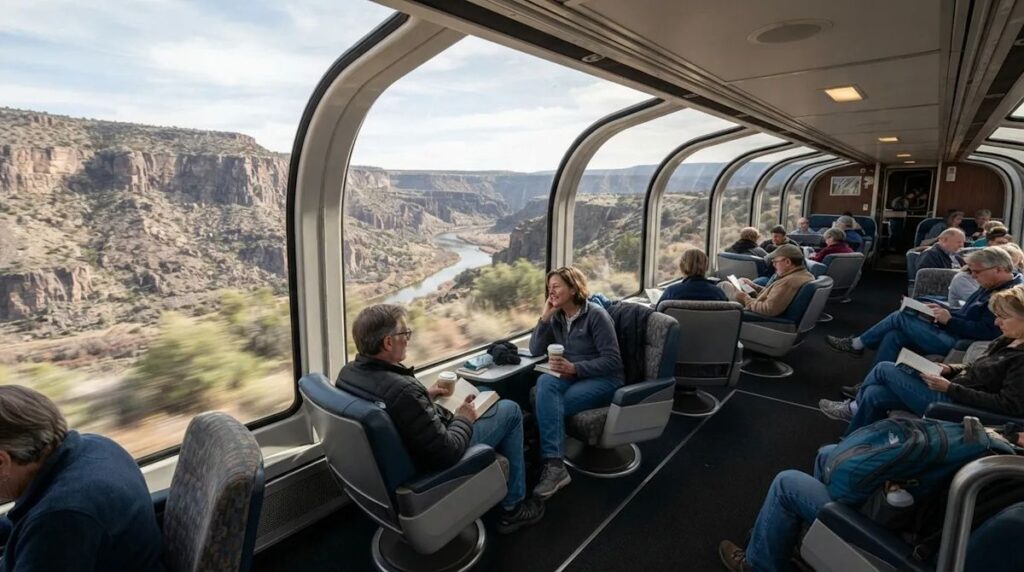
On the two-level Superliner trains, the Sightseer Lounge is open to all passengers. Large windows curve up into the roof, so you see far more than you would from a standard seat. Many veterans spend hours up there. It’s also where strangers start talking.
Why It Stands Out
Roof-curving windows show cliffs, canyons and night skies a regular seat can’t
Open to coach and sleeper passengers alike on Superliner trains
Swivel-style lounge seating makes conversation easy, so it’s a natural place to meet fellow riders
Seats near scenic stretches fill early, so timing matters
Advertisement
Advertisement
Good seats go fast near scenic stretches, so regulars arrive early and bring a snack. Some say the lounge car is the real reason to ride a western route. But the next rule starts a loud argument among riders at #5.
#5 – Coach vs. Sleeper: Is the Upgrade Actually Worth It?
#5 – Coach vs. Sleeper: Is the Upgrade Actually Worth It? (Image Credits: Gemini)
Long-distance coach seats recline a long way and have leg rests. Plenty of veterans swear they sleep fine in them. A sleeper costs far more, but includes a bed, privacy and, on many routes, meals. The right answer depends on your budget and your back.
Editor’s Note: For a single night, plenty of experienced riders argue coach is the better value. On a multi-night trip, many of those same riders say the sleeper stops being a luxury and becomes a necessity.
Here’s the honest trade-off. A roomette is closet-sized and not for everyone. Some riders call the extra cost the biggest waste of money on short trips. But the perks that come with a sleeper are bigger than most people realize, and #4 shows how.
#4 – The Hidden Perks of a Sleeper Ticket Most People Never Use
#4 – The Hidden Perks of a Sleeper Ticket Most People Never Use (Image Credits: Gemini)
Sleeper passengers often get extras that coach riders never hear about. These can include priority boarding and access to station lounges in some major cities. Many long-distance sleeper cars also have showers. Coffee and water are typically available in the sleeper car.
Advertisement
Advertisement
Insider Tip: Perks differ by train and station, so check your booking details and ask your attendant on day one. Unused benefits are the most common regret among first-time sleeper riders.
Veterans scan the fine print before they board and treat every perk as part of the price they paid. Plenty of people pay for a sleeper and never once step into the lounge. The next rule involves a policy that surprises plenty of travelers at #3.
#3 – The Drink Rule That Trips Up Celebrating Passengers
#3 – The Drink Rule That Trips Up Celebrating Passengers (Image Credits: Gemini)
Many first-timers assume a train is a place to pop a bottle and toast anywhere they like. Amtrak’s policy has generally allowed passengers to drink their own alcohol only in private rooms. Public areas like coach seats and lounge cars are typically off-limits for it. Staff can and do enforce that.
Quick Compare: Where the Toast Usually Works
Private room: generally the one place your own alcohol is allowed
Coach seat or lounge car: typically off-limits for drinks you bring
Café car: the simpler route, since you buy your drink onboard
Advertisement
Advertisement
The café car sells drinks, which is the simpler route for most riders. Veterans check the current policy on the official site before they travel. Rules like this can change, and not knowing rarely works as an excuse. But the safety rule at #2 matters even more than any policy.
#2 – The Walk Between Cars That Looks Easier Than It Is
#2 – The Walk Between Cars That Looks Easier Than It Is (Image Credits: Gemini)
A moving train sways, lurches and shakes, especially between cars. The vestibules and heavy doors can catch you off guard. Veterans always keep a hand on a rail or seatback. They also wear shoes, even for a quick trip to the restroom.
Why It Works: Keeping a hand on something while you walk means your body adjusts to each lurch before it throws you. Hot drinks and phones are the first things to hit the floor.
Carrying a hot coffee through a moving car is a classic mistake, so use a lid and go slowly. Rushing through a dark, swaying car is how a simple walk turns into a bruise or worse. Now for the rule every veteran puts at the very top, at #1.
#1 – Stop Racing the Clock: The Rule That Changes the Whole Trip
#1 – Stop Racing the Clock: The Rule That Changes the Whole Trip (Image Credits: Gemini)
The single habit that defines veteran riders is giving up the idea of arriving exactly on time. Delays happen on long-distance routes, often because freight traffic, track work and weather stack up across hundreds of miles. Regulars never book a tight connection, an important meeting or a flight right after arrival. They leave a generous cushion, sometimes half a day.
The Psychology Behind This: Stress comes from the gap between what you expected and what happens. Expecting a possible delay shrinks that gap, so a late arrival feels like a small detour rather than a failure.
That mindset is the whole secret. A late train becomes extra time with a window, a book and a stranger’s story. The riders who enjoy it most are the ones who stopped checking the clock. It’s the one rule that costs nothing and changes everything.
The most useful overnight rules turn out to be the least glamorous ones. Pack a small bag, charge everything, dress in layers and keep your valuables on you. Know the stop times, hold the rail and bring earplugs for the 3 a.m. horn.
Underneath all of it sits one quiet idea. The journey is the point, so leave room for it to run late.
Source link