


Dan Ortiz Leizman admitted the pieces are a bit strange, but also bold, and they’re connecting with people who have memories of sitting in chairs just like them, known as monobloc chairs.
This page contains a video which is being blocked by your ad blocker.
In order to view the video you must disable your ad blocker.
U.Md. art teacher strikes a chord with strange, bold instruments made from chairs
A University of Maryland art teacher is striking a chord with people through musical chairs — not the game, but pieces of art made from plastic lawn chairs and harp strings.
Dan Ortiz Leizman admitted the pieces are a bit strange, but also bold, and they’re connecting with people who have memories of sitting in chairs just like them, known as monobloc chairs.

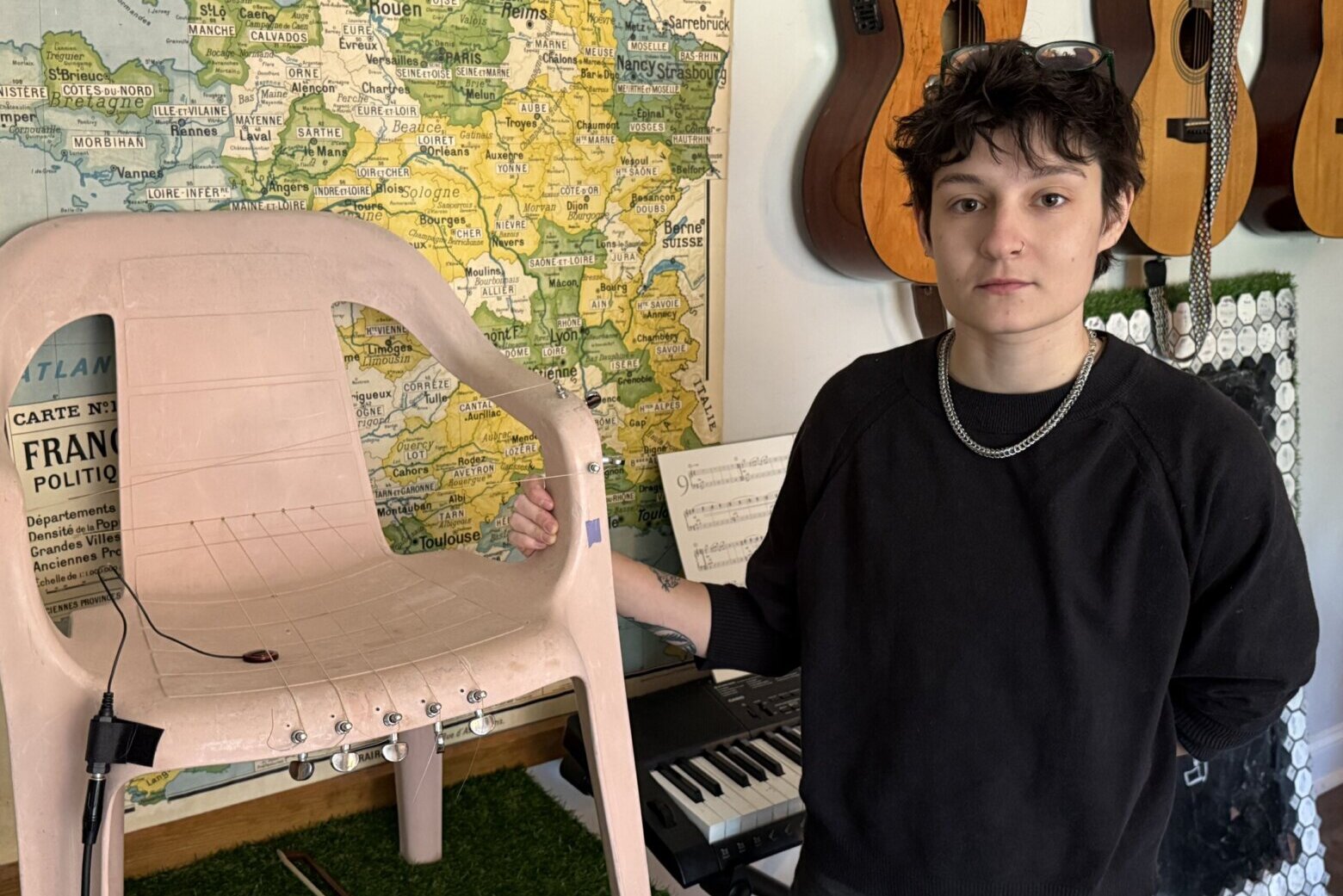
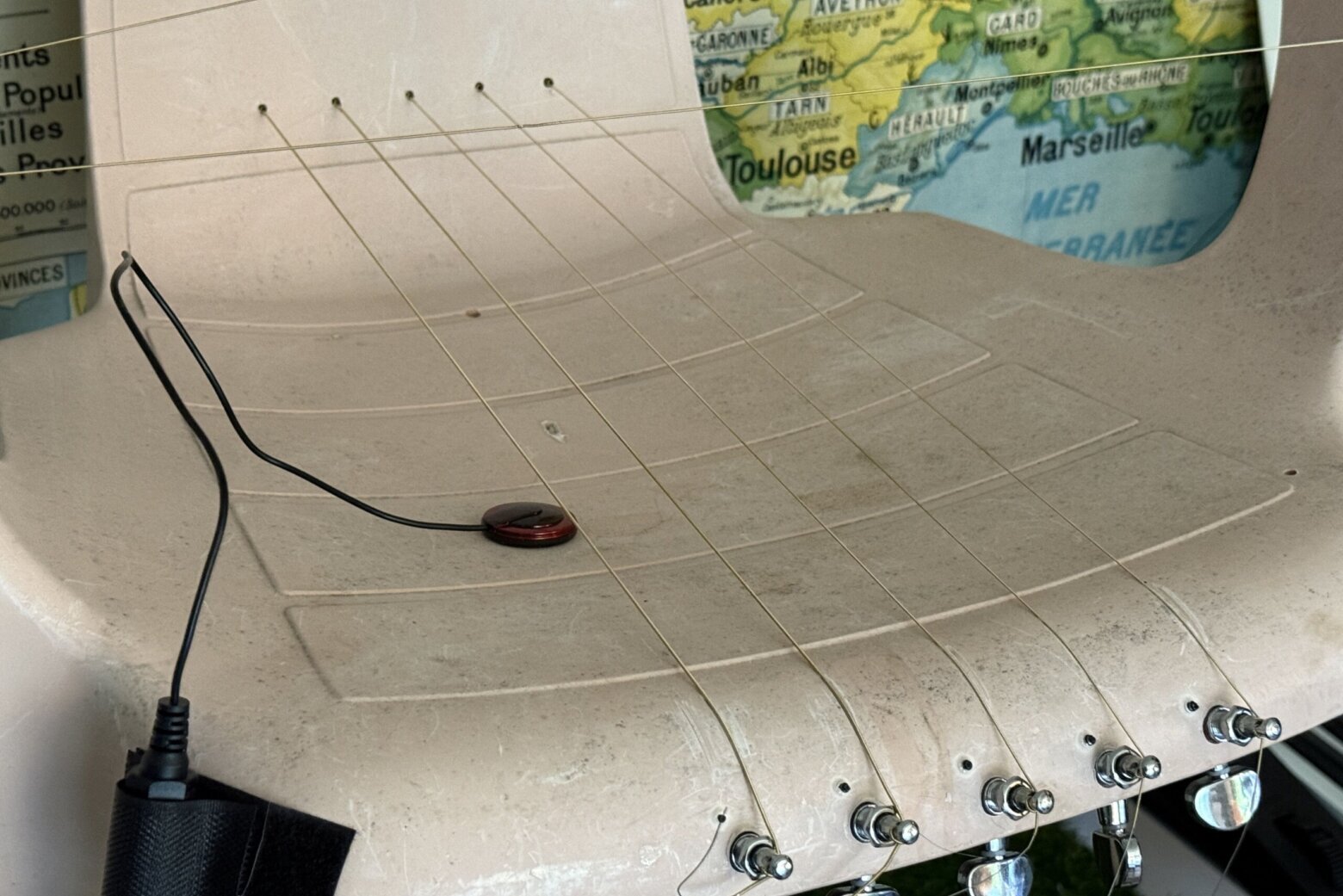
One day, Leizman took some harp strings and attached them to one of the chairs. Why? Even they admitted that’s a good question.
“It sort of was an accident,” Leizman said.
Feeling kind of stuck artistically, they just started trying things, not knowing how much it would resonate with people.
“I sort of feel like the town jester a little bit, especially with how much attention these have gotten online,” Leizman said.
“It is a little ridiculous. They’re very silly, but I think also, as a teacher, my goal is to make weird stuff.”
The musical chair is just that, and yet they’re all over Leizman’s apartment too. They’re still figuring out the right way to play this new instrument that doubles as an art piece; sometimes Leizman uses a bow, as if it were a violin or cello, and sometimes they just pluck it like a guitar.
“It’s sort of been compared online to something between, like, a guitar and a piano,” Leizman said.
“Especially because these strings are low, so I’m playing it with both hands often. It feels a little bit more like I’m playing a piano, but it sounds a little more like a guitar.”
But it’s the visual of the chair itself, not necessarily the sound it produces, that is striking a chord with audiences.
“People all over the world have either a physical memory of sitting in it, or some sort of, like, visual association with it,” Leizman said.
“But there are associations everywhere you go, and I think that that’s something that makes it sort of invisible until you realize it’s there. Then suddenly we’re all like, ‘Oh my gosh,’ like we all have a connection to this thing that invites us to rest, and to rest often in groups with other people.”
It’s those memories, conveyed to them by people who see the chair and start recounting their memories, whether happy or sad, that made Leizman think they had something more significant than just a cheap piece of plastic.
“Being as human as possible is a big motivator. Especially AI — you can’t tell what’s real online, oftentimes,” Leizman said.
“I’m trying to be as weird and myself as possible, even though that goes against everything that my brain is telling me to do, because it’s for the sake of being human in public. I think that’s a good reason.”
Get breaking news and daily headlines delivered to your email inbox by signing up here.
© 2026 WTOP. All Rights Reserved. This website is not intended for users located within the European Economic Area.