

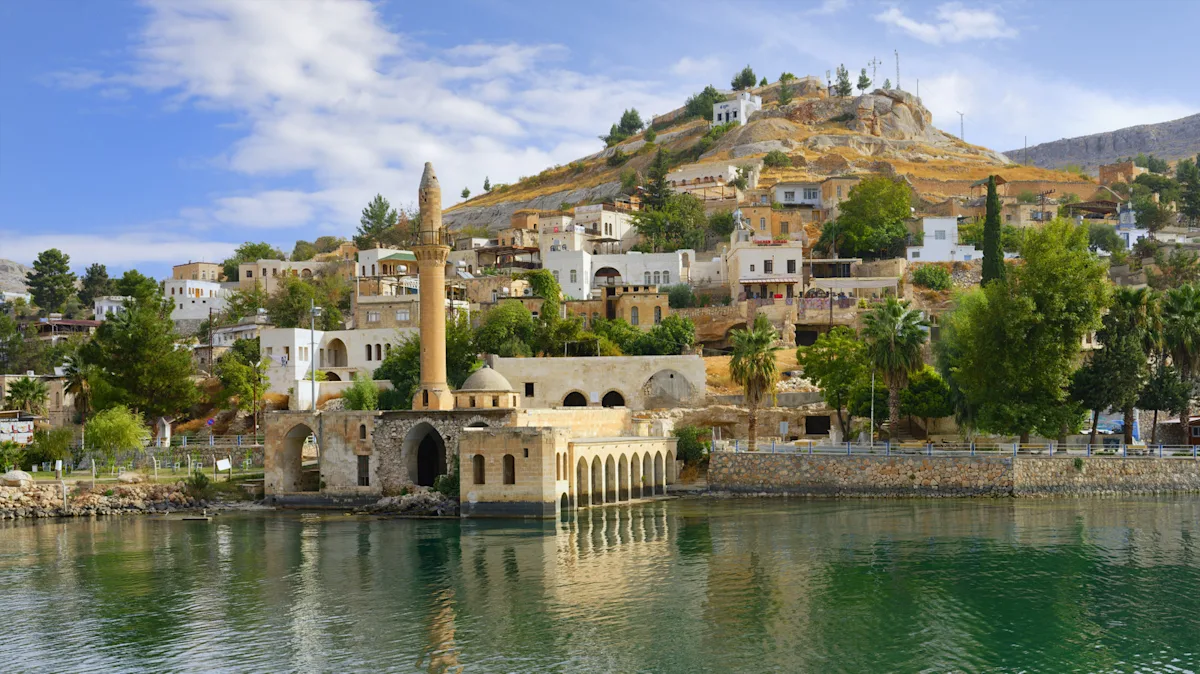
A real-life version of the lost underwater city of Atlantis exists — and no, it’s not Venice. To see it, you’ll have to travel to Turkey, and head to either the town of Halfeti or the island of Kekova. Situated on the banks of the Euphrates River in the country’s Şanlıurfa province, Halfeti is a paradise for snorkelers and history buffs alike, offering a window into the past by taking a simple look underwater. Kekova island is even more untouched by time and civilization.
Halfeti can be enjoyed by both the water adventurer and the landlubber in your life. Much of the underwater ruins are visible above the surface, and the town’s quaint shops, restaurants, and hotels dot the riverfront. When you arrive in Halfeti, be prepared to do some walking — and maybe some swimming — as you explore this one-of-a-kind place both on dry land and in the water. The nearest airport is in Gaziantep, about a 90-minute drive from Halfeti, connecting through Istanbul, home to one of the world’s best airports for layovers.
Kekova Island is just off the Turquoise Coast, the Turkish Riviera packed with ancient cities and golden sands, making for an unforgettable experience best enjoyed in summer — especially if you plan on seeing the ancient structures beneath the water’s surface. However, you don’t even have to take a dip to get an up-close-and-personal look at the ruins; a kayak or a glass-bottom boat is a great way to poke around the crystal-clear bays and coves. It’s a fascinating, if not haunting, experience to connect with the relics of a once-bustling community. Getting here is simple: Fly from Istanbul into the sunny, tourist-friendly coastal town of Antalya, and then book a boat tour out of cities like Antalya, Alanya, and Kemer.
Read more: Rick Steves’ Expert Tips To Not Get Pickpocketed On Your Trip To Europe
Dive into history and gather a unique bouquet in Halfeti
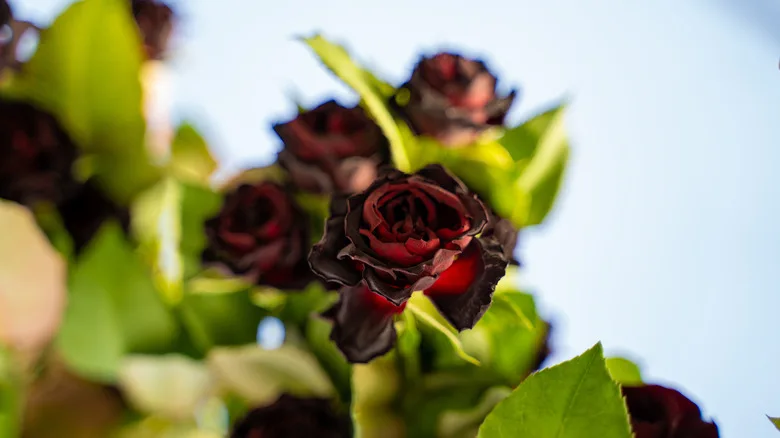
“Black” roses blooming in Halfeti, Turkey – Erman Gunes/Shutterstock
The settlement of Halfeti might have been established in the ninth century B.C., but its story as a half-underwater city doesn’t date back thousands of years; in fact, it doesn’t even go back to the last century. The construction of the 200-foot-tall Birecik Dam in 2000 led to the flooding of nearly half of the town, leaving several stone homes, shops, and much of the Merkez Camii, or Central Mosque, submerged in the raised Euphrates.
You can get a sense of what lies beneath by looking at Halfeti from the surface, with boat tours down the Euphrates being a popular way of experiencing the above-water remains of the old town. Getting underwater where you can navigate buildings like the sunken mosque requires a bit more pre-trip effort. Divers must have their scuba license, be accompanied by a licensed Turkish guide, and get permission from the local city tourism body. And, of course, look, but don’t touch anything!
Halfeti boasts another claim to fame you won’t find anywhere else on earth: Black roses. Okay, they’re not actually black; instead they lean more toward maroon or deep red, though it’s still surprising to see such dark blooms. The scientific reason behind the coloring remains debated, though locals and experts credit everything from Halfeti’s soil composition to the sunny weather burning the petals as they grow. One local legend even says the roses started growing after the mosque’s architect’s granddaughter was forbidden from a romance with an orphaned boy across the river, and both jumped into the water and drowned.
Snorkel the ancient city of Kekova island
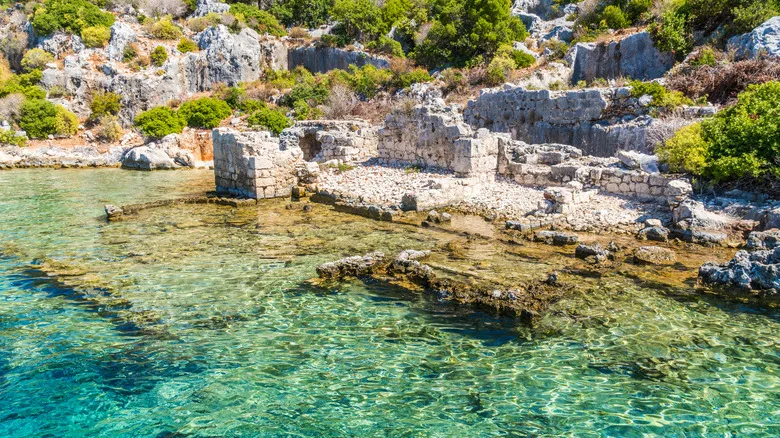
Part of ancient submerged city on Kekova Island in Turkey – Kenanolgun/Getty Images
Halfeti isn’t the only sunken city in Turkey. In fact, the country’s other notable underwater destination is even closer to resembling the lost city of Atlantis, and it lies partially below the surface in the pristine blue waters of the Mediterranean Sea. And unlike in Halfeti, at Kekova you can get great views of what’s underwater with just a mask and snorkel, no scuba license required.
Kekova’s history dates back thousands of years. The island was called Dolichiste when the region in southwest modern-day Turkey was known as Lycia in the second millennium B.C. Dolichiste was a key part of a trading route along the Mediterranean coast with other ancient, lost-to-history Lycian cities like Simena, Teimioussa, Aperlae, and Andriake. The island is believed to have become partially submerged due to rising sea levels and earthquakes, and eventually abandoned by the eighth century A.D. Today, the remains of stone buildings, staircases, water channels, and pipes are visible both above and below the water’s surface.
You can schedule private or group boat tours that depart from nearby coastal towns and tour the waters around Kekova. Or stay in the sleepy village of Kaleköy, offering unmatched views of Kekova across the water. If you’re looking to snorkel, confirm the tour you book includes a snorkeling component and that you’ll be provided with or can rent equipment if you’re wondering whether to bring your snorkeling gear while traveling.
Ready to discover more hidden gems and expert travel tips? Subscribe to our free newsletter and add us as a preferred search source for access to the world’s best-kept travel secrets.
Read the original article on Islands.